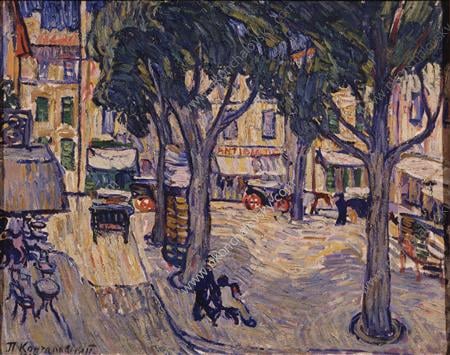
Expert analysis of Pyotr Konchalovsky’s The city of Arles. The square.
Style: Post-Impressionism · Genre: cityscape
Expert Analysis: "The City of Arles. The Square." by Pyotr Konchalovsky
Pyotr Konchalovsky’s The City of Arles. The Square. stands as a vivid testament to the cross-pollination between French Post-Impressionism and the Russian avant-garde of the early 20th century. Created during a period when Konchalovsky—a founding member of the radical “Jack of Diamonds” group—was deeply influenced by the works of Paul Cézanne and the Fauves, this cityscape captures the sun-drenched, rustic energy of the Provençal town made legendary by Vincent van Gogh.
Significance within Post-Impressionism:
What makes this work noteworthy is its bold synthesis of Cézanne’s structural logic and Fauvist chromatic intensity. Konchalovsky does not merely transcribe the square; he constructs it through thick, energetic brushstrokes and a palette that pushes naturalism toward expressive autonomy. The warm ochres, deep umbers, and bursts of cerulean and vermilion evoke the heat and texture of southern France, while the compressed, slightly tilted perspective (a hallmark of Cézanne’s influence) flattens space into a rhythmic pattern of planes. This approach bridges the analytical rigor of Post-Impressionism with the more instinctive, decorative tendencies of the Russian avant-garde.
Cultural and Historical Context:
As a Russian artist painting in Arles—a site indelibly associated with Van Gogh’s late, tormented masterpieces—Konchalovsky engages in a conscious dialogue with that legacy. Yet his vision is distinctly his own: cooler, more architectonic, and less psychologically turbulent. The square becomes a stage for everyday Provençal life, rendered with a robust, almost sculptural solidity that contrasts with Van Gogh’s swirling emotionalism. This reflects Konchalovsky’s commitment to “faktura” (the material handling of paint), a concept championed by the Jack of Diamonds group, elevating the physicality of the canvas as much as the depicted subject.
Artistic Techniques:
The painting’s significance also lies in its confident handling of form and color. Konchalovsky builds the scene with short, loaded dabs of pigment—green foliage, red rooftops, blue shadows—that coalesce into a shimmering mosaic. The square’s architecture is simplified into geometric blocks, yet the brushwork remains lively, preventing any stiffness. This balance of structure and spontaneity exemplifies the Post-Impressionist ideal of using color and form to evoke sensation rather than mere description.
Legacy:
The City of Arles. The Square. is a key example of how Russian modernists absorbed and reinvented Western Post-Impressionism. It shows Konchalovsky at his most assured, demonstrating that the language of Cézanne and Matisse could be adapted to convey a distinctly Russian temperament—one of earthiness, vitality, and a profound respect for the painted surface. For scholars, it remains a compelling case study of international modernism in flux, where a Russian artist turns a French square into a field of painterly experimentation.
Visually similar
20 works with related composition and palette
Tree of Vence
Chaim Soutine
The Garden of St. Paul's Hospital at St. Remy
Vincent van Gogh
Trees and Shrubs
Vincent van Gogh
Trees in the garden of the Hospital Saint-Paul
Vincent van Gogh
The Chestnut Grove at Chatou
Maurice de Vlaminck
The Restaurant de la Sirene at Asnieres
Vincent van Gogh
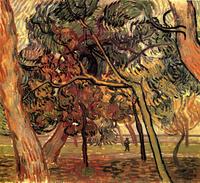
Study of Pine Trees
Vincent van Gogh
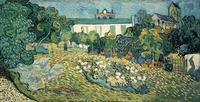
Daubigny's Garden
Vincent van Gogh
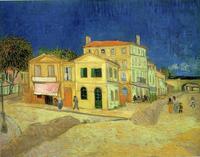
The Yellow House
Vincent van Gogh
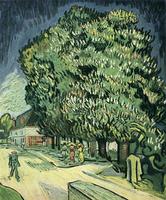
Chestnut Trees in Blossom
Vincent van Gogh
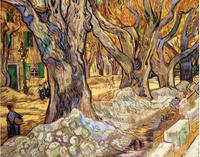
Large Plane Trees
Vincent van Gogh
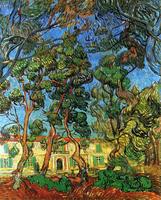
The Grounds of the Asylum
Vincent van Gogh
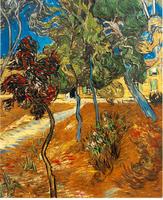
Trees in the Asylum Garden
Vincent van Gogh
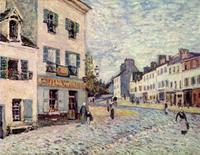
Street in Marly
Alfred Sisley
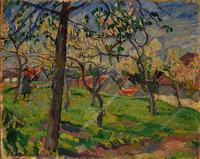
Apple tree in blossom
Pyotr Konchalovsky
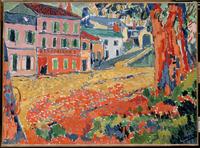
Restaurant de la Machine at Bougival
Maurice de Vlaminck
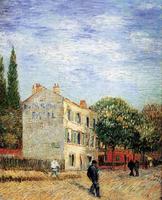
The Rispal Restaurant at Asnieres
Vincent van Gogh
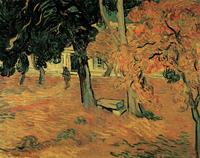
The Garden of Saint-Paul Hospital
Vincent van Gogh
The Walk - Falling Leaves
Vincent van Gogh
Landscape with Trees and Figures
Vincent van Gogh