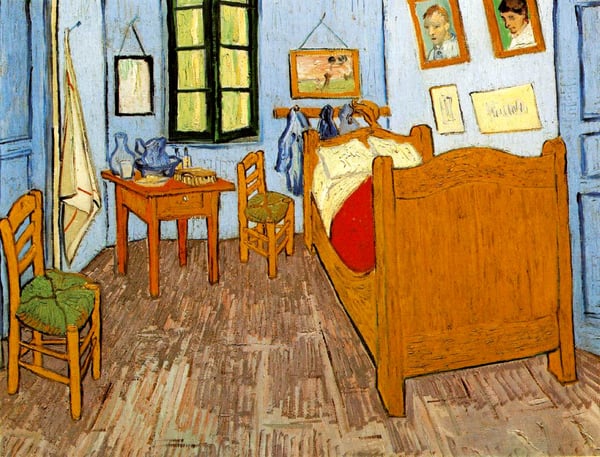
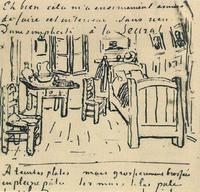
This analysis is based solely on the provided structured facts: the artwork is Vincent's Bedroom in Arles by Vincent van Gogh, executed in the Post-Impressionist style and belonging to the interior genre.
The significance of this work lies in how it exemplifies the core tenets of Post-Impressionism through the seemingly simple genre of interior painting. Van Gogh does not aim for a photographically accurate depiction of his bedroom. Instead, he distorts perspective, flattens space, and employs radically expressive, non-naturalistic colors—all characteristic of Post-Impressionism's break from Impressionist naturalism. The tilted floor and skewed walls, the intense blues and yellows, and the bold, heavily outlined forms transform a mundane domestic space into a powerful emotional and psychological statement. This interior becomes a vessel for van Gogh’s personal vision, conveying feelings of comfort, refuge, and perhaps anxiety, making the ordinary profoundly subjective. The painting's significance is thus its demonstration of how Post-Impressionist techniques—emotional color, symbolic form, and exaggerated perspective—elevate the interior genre from mere representation to a deeply felt, autonomous work of art that reveals the artist’s inner world.