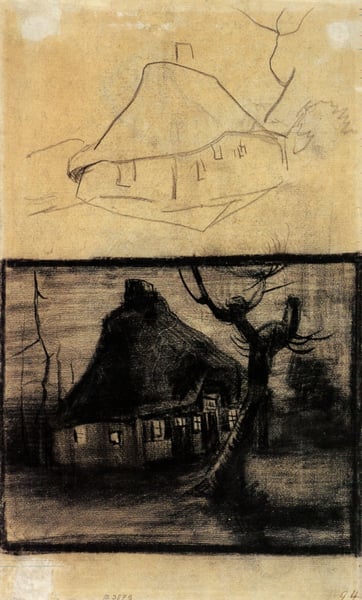
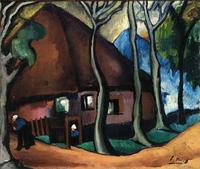
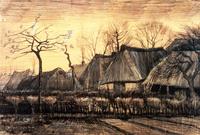
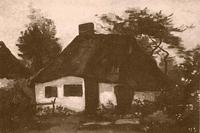
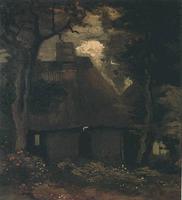
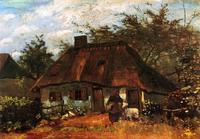
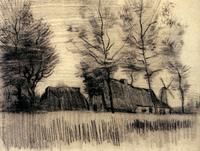
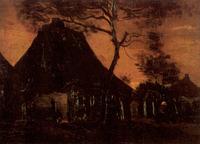
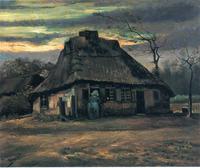
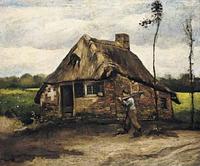
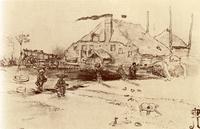
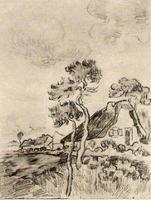
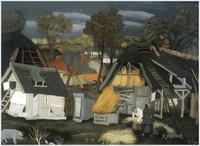
As a Realist sketch and study, "Two Studies of a Cottage" by Vincent van Gogh is significant for its demonstration of the artist's early commitment to direct observation and the depiction of rural life. Unlike his later, more expressive Post-Impressionist works, this piece grounds itself in the Realist tradition, emphasizing precise draftsmanship and the unidealized portrayal of a humble subject. The dual composition—two sketches on one support—allows van Gogh to experiment with perspective, lighting, and structural detail, revealing a methodical approach to capturing the textures of thatched roofs, rough walls, and the surrounding landscape. This study functions as a crucial foundation for his later mature style, showing his dedication to mastering form and atmosphere from nature before breaking into the bold color and brushwork that define his most famous works.