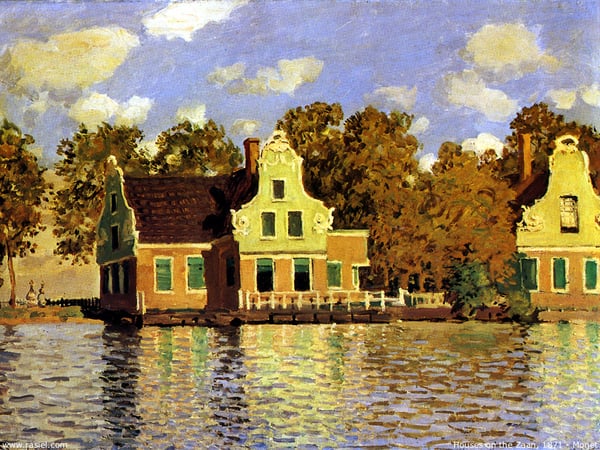
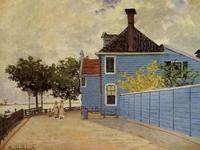
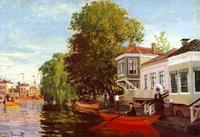
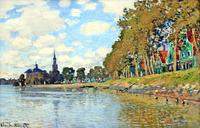
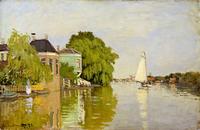
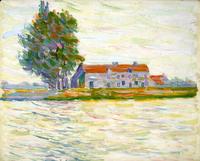
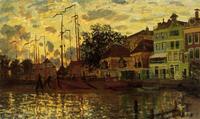
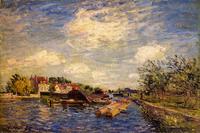
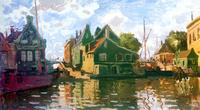
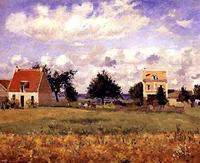
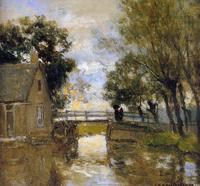
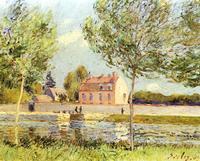
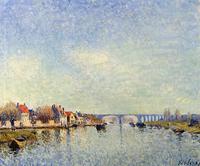
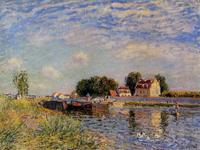
As an Impressionist cityscape, Claude Monet's Houses on the Zaan River at Zaandam captures a fleeting moment of light and atmosphere rather than offering a precise architectural record. The work is significant for demonstrating how Impressionism revolutionized the depiction of built environments: instead of rigid outlines and local colors, Monet uses broken brushwork and a vibrant, often cool-toned palette to dissolve the riverfront houses into reflections, shimmering water, and shifting shadows. This painting exemplifies the movement’s core interest in the sensory experience of a scene—how the Zaan River’s surface and the Dutch rooftops are transformed by the angle of sunlight and the time of day. By choosing a subject far from the more famous Parisian boulevards or Rouen Cathedral, Monet also reveals the Impressionist eagerness to find beauty and novelty in ordinary, even provincial settings, elevating a humble riverbank into an exercise in pure optical perception.