Edgar Degas sanatçısının Alexander and Bucephalus (detail) eseri hakkında uzman analizi
Tarz: Impressionism · Tür: history painting
Analysis of "Alexander and Bucephalus (detail)" by Edgar Degas
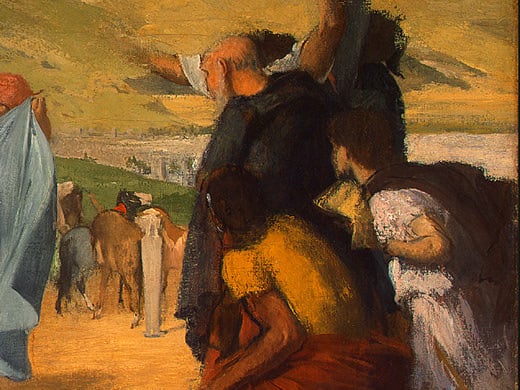
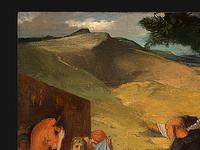
The significance of this work lies in its fusion of two seemingly contradictory elements: the grand tradition of history painting and the revolutionary visual language of Impressionism. Degas, best known for his depictions of modern Parisian life, here takes up a classical theme—the young Alexander the Great taming the wild horse Bucephalus—but treats it through an unmistakably Impressionist lens.
The term "detail" in the title is telling. It suggests a cropped, close-up viewpoint, a hallmark of Degas’s approach that he borrowed from photography and Japanese prints. Rather than presenting a sweeping, heroic tableau in the manner of academic history painters, Degas isolates a fragment of the scene, inviting the viewer to focus on the raw energy of the horse and the tense bond between rider and beast. The brushwork is likely loose and sketchy, emphasizing light, color, and atmosphere over precise narrative clarity—a radical departure for a genre that traditionally demanded polished, idealized forms.
By applying Impressionist techniques to history painting, Degas challenges the hierarchy of genres that placed such mythological or historical subjects at the apex of artistic value. He demonstrates that even a timeworn story can be made new through immediacy and sensory experience, thereby redefining what it means to be "historical" in an age of modernity.
Görsel olarak benzer
İlişkili kompozisyon ve renk paletine sahip 20 eser
Alexander and Bucephalus
Edgar Degas
Alexander and Bucephalus (detail)
Edgar Degas
Alexander and Bucephalus (detail)
Edgar Degas
The Daughter of Jephtha (study)
Edgar Degas
The Daughter of Jephtha
Edgar Degas
The Daughter of Zion
Jean-François Portaels
Holy Face
Vasily Surikov
Young Spartans Exercising
Edgar Degas
Sermon of Saint John the Baptist
Alexander Ivanov
Joseph Sold into Slavery by His Brothers
Karoly Ferenczy
The Appearance of Christ to the People (detail)
Alexander Ivanov
The Execution of the Jewess (Sol Hachuel)
Alfred Dehodencq
The Village Funeral
Daniel MacDonald
Meeting of Jacob and Esau
Francesco Hayez
Harbingers of the Resurrection
Nikolai Ge
Beggars
Cristiano Banti
Ovid among the Scythians
Eugene Delacroix
Young Spartans Exercising
Edgar Degas
The Refugees
Honore Daumier
Ovid in Exile
Ion Theodorescu-Sion