
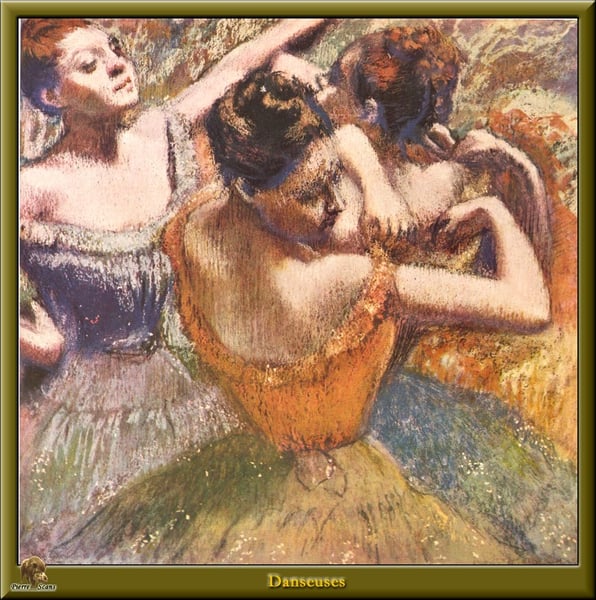
Expert analysis of Edgar Degas’s Dancers
Style: Impressionism · Genre: genre painting
Expert Analysis: "Dancers" by Edgar Degas
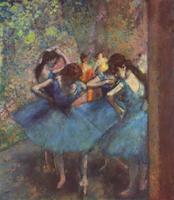
As an Impressionist genre painting, Edgar Degas's "Dancers" stands as a quintessential example of the movement's revolutionary approach to capturing modern life. The work's significance lies in its seamless fusion of two defining characteristics of Impressionism: a commitment to depicting contemporary, unidealized scenes (genre painting) and an innovative, often unconventional treatment of subject matter.
While many Impressionists focused on landscapes or leisure activities of the bourgeoisie, Degas deliberately turned to the disciplined, behind-the-scenes world of ballet. "Dancers" is not a grand, finished performance; rather, it is a fleeting, intimate moment—a rehearsal, a pause, a glimpse of the physical labor behind the art. This choice exemplifies Impressionism’s fascination with transient, everyday experiences over historical or allegorical narratives. The genre-painting tradition typically elevated domestic or humble scenes, and Degas elevates it further by making the ballet studio—a space of work rather than spectacle—his central subject.
Within the Impressionist canon, Degas’s use of asymmetrical framing (often likened to the effects of snapshot photography or Japanese ukiyo-e prints) creates a sense of immediacy and movement. The dancers are caught mid-gesture, their bodies rendered with a tension that speaks to the physicality of their craft. This not only reinforces the Impressionist priority on capturing the "moment" but also challenges traditional academic composition, where figures would be arranged in a stable, harmonious manner.
By situating "Dancers" firmly within the genre-painting tradition, Degas also validates the importance of ordinary, often overlooked subjects. The painting is significant because it refuses to glamorize; instead, it finds beauty in the awkward stretches, tired poses, and repetitive practice of dancers—an authentic slice of nineteenth-century Parisian life that no other movement had so thoroughly explored. In doing so, Degas expands Impressionism’s scope from pure sensory perception (light, color) to a deeper, almost ethnographic observation of human activity.
Ultimately, "Dancers" is a masterwork that demonstrates how Impressionism could be both visually radical and structurally modern, using the tools of a new artistic language to celebrate the quiet dignity of labor and movement.
Visually similar
20 works with related composition and palette
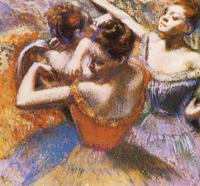
Dancers
Edgar Degas

Ballerinas Adjusting Their Dresses
Edgar Degas

Blue Dancers
Edgar Degas

Four Dancers
Edgar Degas
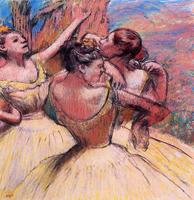
Three Dancers
Edgar Degas

Dancers
Edgar Degas

Two Dancers (pastel on paper)
Edgar Degas

Four Dancers
Edgar Degas

Red Ballet Skirts
Edgar Degas

Three Dancers, Green Blouses
Edgar Degas

Four Ballerinas on Stage
Edgar Degas
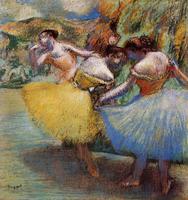
Three Dancers
Edgar Degas

Dancers
Edgar Degas

Dancers in the Wings
Edgar Degas

Dancers in the Wings
Edgar Degas

Ballet Scene
Edgar Degas

Dancers, Pink and Green
Edgar Degas

Two Dancers in Green Skirts, Landscape Scener
Edgar Degas

Dancers in Green and Yellow
Edgar Degas
Dancers in Blue
Edgar Degas