
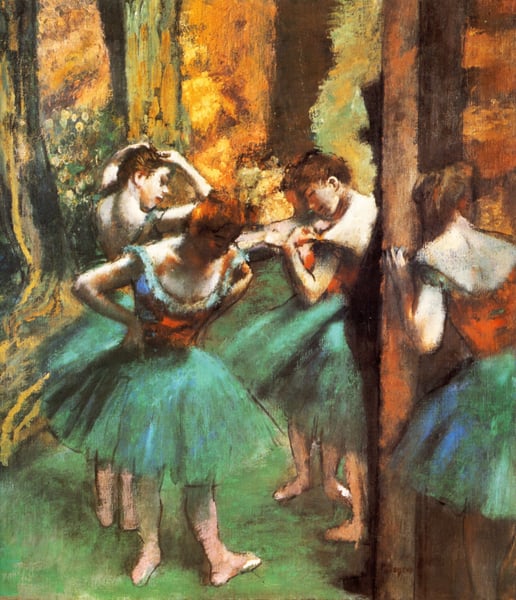
Expert analysis of Edgar Degas’s Dancers, Pink and Green
Style: Impressionism · Genre: genre painting
Expert Analysis: "Dancers, Pink and Green" (c. 1890) by Edgar Degas
Edgar Degas’s Dancers, Pink and Green epitomizes the Impressionist fascination with modern life, but through a distinctly idiosyncratic lens. While his peers painted landscapes and leisure scenes en plein air, Degas obsessively returned to the ballet studio—not the glamorous stage, but the raw, unguarded moments of rehearsal. This painting is significant for three reasons: its radical composition, its treatment of color and light, and its psychological depth.
Composition and Influence of Photography
Degas crops the figures dramatically, as if through a camera’s viewfinder. Two dancers dominate the foreground—one in pink, one in green—while a third is truncated by the frame. This off-center, snapshot-like arrangement (a hallmark of Japanese ukiyo-e prints and early photography) creates a sense of fleeting movement. The dancers are caught mid-gesture, not posing for a portrait but lost in their own world—adjusting a strap, bending to tie a slipper. Degas rejects classical balance for the immediacy of a stolen glance.
Color and Light as Atmosphere
The title’s “pink and green” is deceptive: Degas uses them not as local colors but as relational tones wrapped in artificial light. The pink tutu glows against the greenish backstage shadows, while the dancers’ skin takes on a chalky, gaslight pallor. This interplay—cool greens, warm pinks, and acidic yellows—disrupts any sense of natural daylight, emphasizing the constructed environment of the theater. Degas’s pastel technique (he often applied pastel over monotype prints) gives the surface a powdered, evanescent quality, as if the image might dissolve.
Psychological Significance
More than a “genre painting” of daily life, Degas reveals the physical labor and personal tension behind the balletic ideal. The dancer in green appears fatigued, her hip cocked, her gaze averted—a stark contrast to the poised stance of the pink-clad figure. Degas captures the paradox of the ballet: disciplined grace paired with bodily exhaustion. This unglamorous intimacy makes the work proto-modernist, anticipating the psychological realism of the 20th century.
Legacy within Impressionism
While Monet dissolved form into light, Degas fused line and color to depict modern Paris. Dancers, Pink and Green stands as a masterclass in how Impressionism could be not just about atmosphere, but about the complicated humanity hidden behind the spectacle.
Visually similar
20 works with related composition and palette
Dancers in Blue
Edgar Degas
Three Dancers, Green Blouses
Edgar Degas

Ballet Scene
Edgar Degas
Three Dancers, Blue Skirts, Red Blouses
Edgar Degas
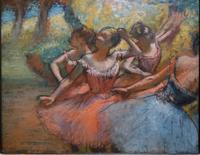
Four Ballerinas on Stage
Edgar Degas

Three Dancers in Pink
Edgar Degas
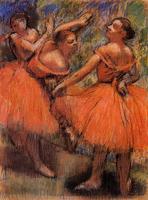
Red Ballet Skirts
Edgar Degas
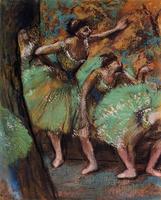
Dancers
Edgar Degas
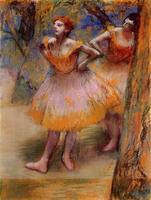
Two Dancers
Edgar Degas
Ballet Scene
Edgar Degas

Two Dancers in Green Skirts, Landscape Scener
Edgar Degas
Four Dancers
Edgar Degas
Dancers in Green and Yellow
Edgar Degas
Blue Dancers
Edgar Degas
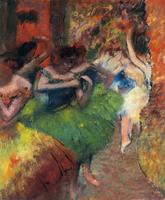
Dancers in the Wings
Edgar Degas
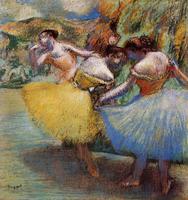
Three Dancers
Edgar Degas

Dancers
Edgar Degas
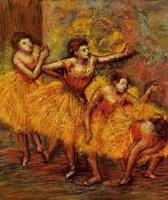
Four Dancers
Edgar Degas
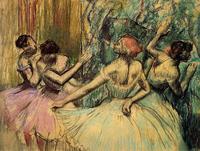
Dancers in the Wings
Edgar Degas
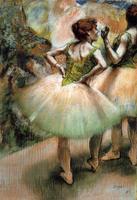
Dancers, Pink and Green
Edgar Degas