Expertenanalyse zu Edgar Degass Portrait of Zacherie Zacharian
Stil: Impressionism · Genre: portrait
Expert Analysis: “Portrait of Zacherie Zacharian” by Edgar Degas
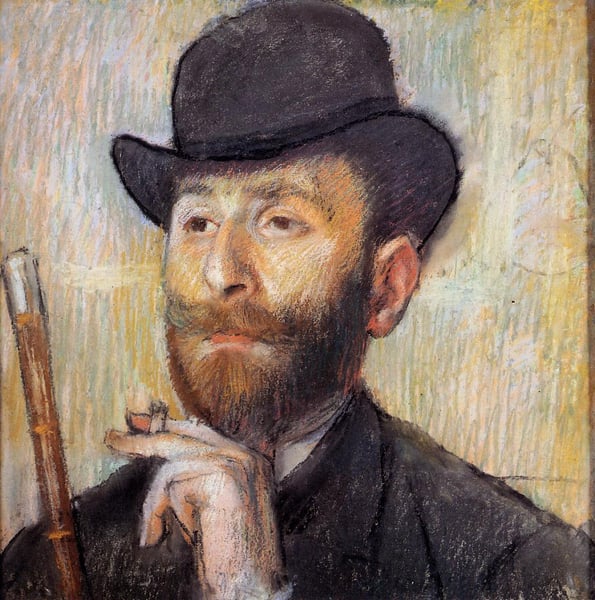
Edgar Degas’s Portrait of Zacherie Zacharian exemplifies the artist’s radical departure from conventional portraiture while firmly situating the work within the broader Impressionist movement. Although Degas is often associated with ballet dancers and racehorses, his portraiture reveals a deep, psychologically acute engagement with his sitters—a quality that sets him apart from many of his Impressionist contemporaries.
Stylistic Significance
Degas avoids the static, formal posing typical of academic portraiture. Instead, he adopts a candid, almost snapshot-like composition, likely influenced by his interest in photography and Japanese ukiyo‑e prints. The sitter, Zacherie Zacharian—a relatively obscure figure, possibly a friend or fellow artist—is not idealized. Degas captures an unguarded moment, focusing on the subject’s posture, gaze, and the subtle play of light across the face. This approach underscores Impressionism’s core ambition: to render the fleeting, the momentary, and the subjective experience of perception.
Technical Innovation
Although the supplied facts do not specify medium, Degas frequently used pastels for portraits in his later career, a choice that allowed for both vibrant color and rapid, gestural mark-making. In this work, the handling of light and shadow suggests a loose, broken brushstroke—characteristic of Impressionist technique—but with Degas’s signature structural discipline. The result balances spontaneity with a rigorous sense of form, revealing the artist’s background in academic draftsmanship and his desire to modernize it.
Psychological Depth
Zacharian’s expression is ambiguous—neither aloof nor warmly engaged. This ambiguity invites the viewer to speculate on the subject’s inner life, a hallmark of Degas’s best portraits. By presenting the sitter slightly off-center and at an oblique angle, Degas challenges the viewer to move beyond surface likeness and into the realm of character and mood. This psychological penetration, combined with the formal innovations, makes Portrait of Zacherie Zacharian a significant example of how Impressionism expanded the possibilities of portraiture—transforming it from a record of identity into a study of human presence in the modern world.
Museum / Gallery
Visuell ähnlich
20 Werke mit ähnlicher Komposition und Farbpalette
Portrait of Minguell
Pablo Picasso
Portrait of Isidore Gauguin
Paul Gauguin
Jacques Eugene Spuller
Pierre-Auguste Renoir
Self Portrait
Eliseu Visconti
Self-Portrait
Paul Cezanne
Portrait of Eugene Manet (study)
Edgar Degas
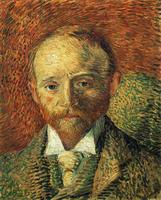
Portrait of Alexander Reid
Vincent van Gogh
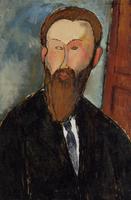
Portrait of the Photographer Dilewski
Amedeo Modigliani
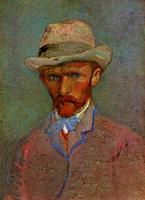
Self-Portrait with Gray Felt Hat
Vincent van Gogh
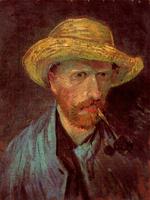
Self-Portrait with Straw Hat and Pipe
Vincent van Gogh
Self Portrait
Henri Martin
Bernard Lemaire
Suzanne Valadon
Self-Portrait with Dark Felt Hat
Vincent van Gogh
Self-Portrait with a Beret
Claude Monet
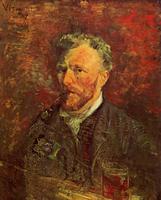
Self-Portrait with Pipe and Glass
Vincent van Gogh
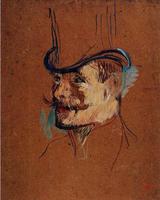
William Warrener
Henri de Toulouse-Lautrec
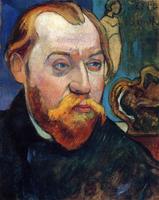
Portrait of Louis Roy
Paul Gauguin
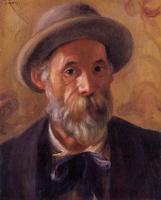
Self-Portrait
Pierre-Auguste Renoir
Self Portrait with a Grey Felt Hat
Vincent van Gogh
Portrait of Stephane Mallarme
Pierre-Auguste Renoir