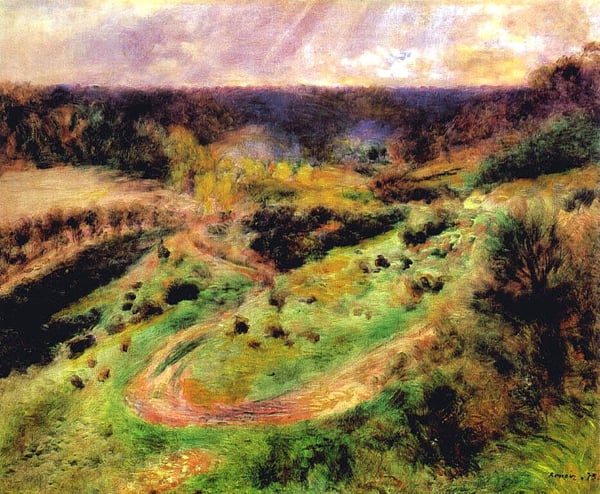
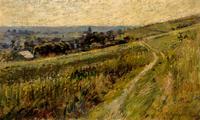
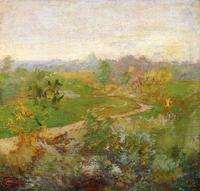
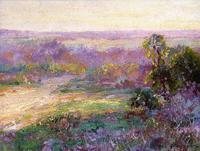
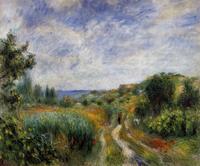
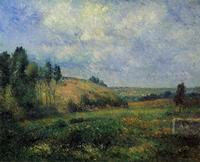
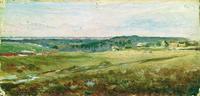
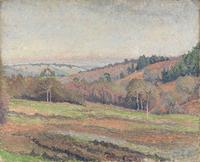
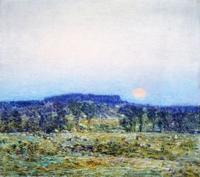
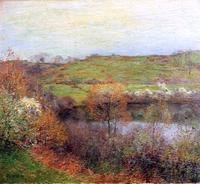
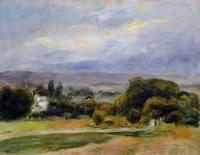
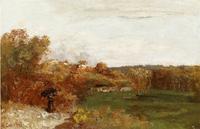
Pierre-Auguste Renoir’s Landscape at Wargemont is a significant work within the Impressionist movement, exemplifying the core principles of the style through its genre as a landscape. As an artist closely associated with the Impressionists, Renoir here demonstrates the movement’s radical shift away from academic painting: rather than depicting a grand historical or mythological scene, he elevates an ordinary, transient view of nature—a hillside, trees, and sky—into a subject worthy of serious artistic attention. This emphasis on capturing the fleeting effects of light and atmosphere on a rural landscape aligns with the Impressionist goal of rendering the artist’s immediate visual impression. The work’s significance lies in how it anchors Renoir’s broader oeuvre within the landscape genre, showcasing his ability to blend the spontaneity of plein air painting with a balanced, harmonious composition. For viewers, it represents a quintessential Impressionist landscape: a bright, lively scene that prioritizes color, light, and the sensation of a moment over precise detail, thereby reinforcing Renoir’s role in revolutionizing modern art.