Analisi esperta di Bust of a laughing young man di Rembrandt
Stile: Baroque · Genere: portrait, tronie
Expert Analysis of Bust of a Laughing Young Man by Rembrandt
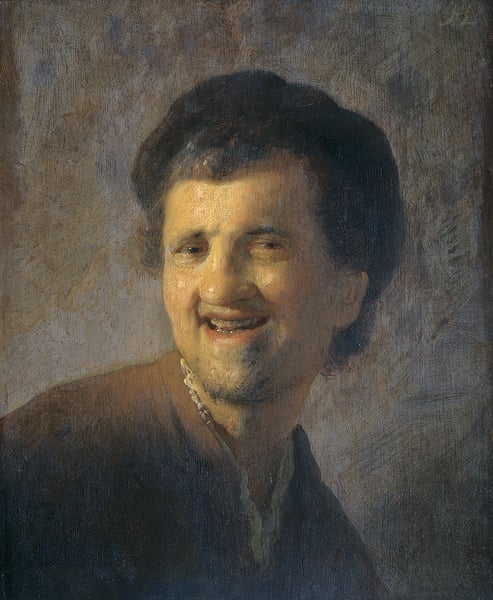
Rembrandt’s Bust of a Laughing Young Man is a masterful example of the Baroque tronie (a type of character study rather than a formal portrait) and a landmark in the artist’s exploration of human emotion. Painted in the Dutch Baroque tradition, the work demonstrates Rembrandt’s unparalleled ability to capture fleeting psychological states through vivid expression, dynamic brushwork, and dramatic lighting.
Significance within the Baroque Style
The painting epitomizes the Baroque emphasis on movement, emotion, and theatricality. Rembrandt employs a strong chiaroscuro (contrast of light and shadow) to isolate the young man’s laughing face from a dark, undefined background, focusing the viewer’s attention entirely on the spontaneous joy of the moment. The light catches the curve of the cheek, the crinkling eyes, and the parted lips, freezing a split-second of genuine laughter—a feat of illusionistic virtuosity that aligns with the Baroque fascination with capturing life’s fleeting truths.
Significance as a Tronie
Within the genre of the tronie—a study of a specific type or expression rather than a commissioned portrait—this work is exceptional. Unlike Rembrandt’s formal portraits, which often convey gravitas or status, the Laughing Young Man celebrates raw, unguarded emotion. The figure is not an identifiable sitter but an archetype of youthful mirth, allowing Rembrandt to experiment freely with physical and psychological realism. The loose, almost sketch-like handling of the hair and clothing contrasts with the refined rendering of the face, underscoring the artist’s attention to the transient nature of laughter.
Enduring Impact
This painting stands as a precursor to the psychological depth that would define Rembrandt’s later works. It demonstrates his belief that true character lies not in static dignity but in life’s most candid moments. The work’s significance endures as a testament to Rembrandt’s ability to merge technical brilliance with profound human empathy—a hallmark of his artistic genius and a high point of Baroque portraiture.
Museum / Gallery
Visivamente simili
20 opere con composizione e palette affini
The Merry Peasant
Adriaen van Ostade
Self-portrait
Rembrandt
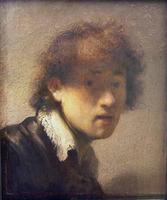
Self-portrait at an early age
Rembrandt
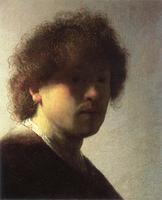
Self-portrait as a Young Man
Rembrandt
Bust of a man, allegory of Bacchus
Marià Fortuny
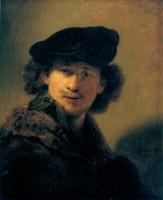
Self-portrait with beret
Rembrandt
Portrait of a fisherman
Ernst Meyer
Self-portrait
Eugene Carriere
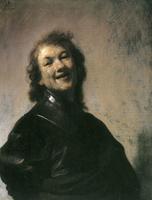
The Young Rembrandt as Democritus the Laughing Philosopher
Rembrandt
The cellist
Maurice Quentin de La Tour
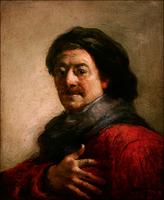
Self Portrait with Beret
Frank Mason
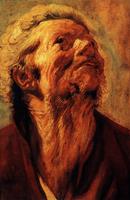
Study of the head of Abraham Grapheus
Jacob Jordaens
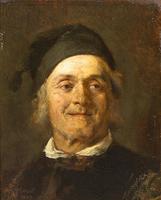
Portrait of a Man
Wilhelm Hensel
Portrait of a Man
Wilhelm Hensel
Self-portrait
Rembrandt
Self-portrait in at the Age of 63
Rembrandt
Portrait of the Artist at His Easel, detail of the face
Rembrandt
Bust Of Man, allegory of Bacchus
Marià Fortuny
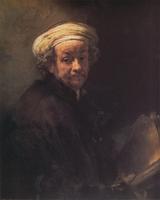
Self-portrait as the Apostle Paul
Rembrandt
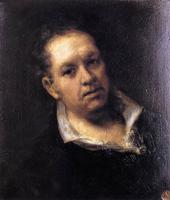
Self Portrait
Francisco Goya