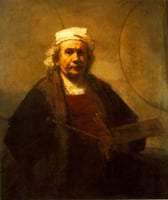
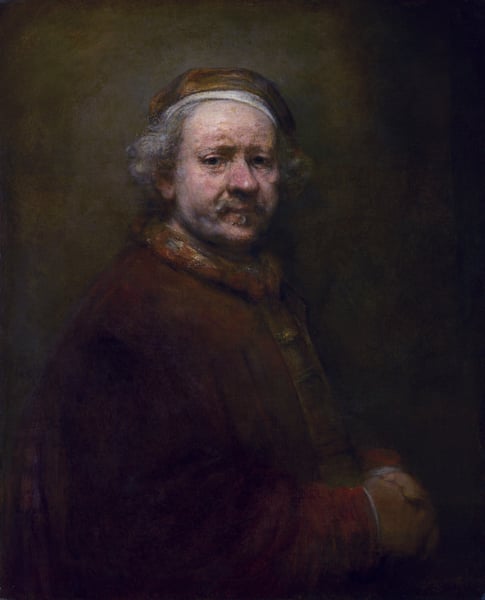
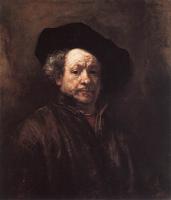
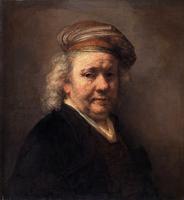
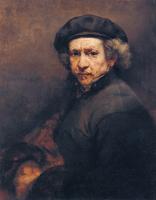
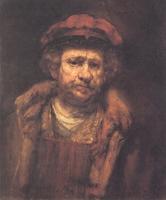
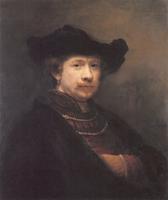
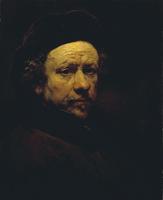
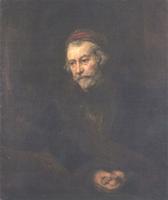
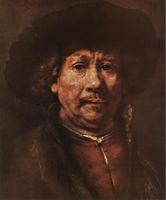
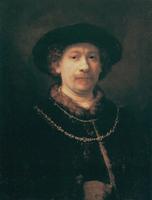
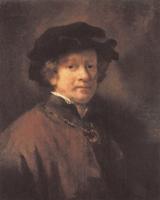
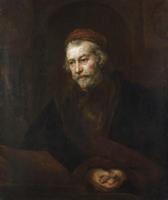
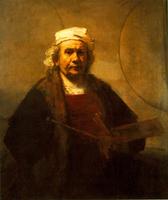
Based solely on the supplied facts, the significance of "Self-portrait at the Age of 63" by Rembrandt lies in its synthesis of the Baroque style's dramatic intensity with Tenebrism's stark chiaroscuro, while operating as both a self-portrait and a tronie—a Dutch genre study of an exaggerated expression or character type.
As a late work by a master of the Baroque, it embodies the era’s fascination with psychological depth and mortal contemplation. The use of Tenebrism—with its sharp contrasts between deep shadow and selective illumination—focuses attention on the face and hands, heightening the emotional and introspective quality. By being categorized as a tronie, the painting transcends mere likeness: it becomes an exploration of old age, wisdom, and vulnerability, embedding universal human experience within a personal image. This dual identity—as a record of the artist’s own aging and as a timeless tronie—makes the work a powerful example of Rembrandt’s ability to infuse a conventional genre with profound artistic and emotional significance.