Análisis experto de Self-Portrait in a Plumed Hat de Rembrandt
Estilo: Baroque, Tenebrism · Género: self-portrait
Expert Analysis of "Self-Portrait in a Plumed Hat" by Rembrandt
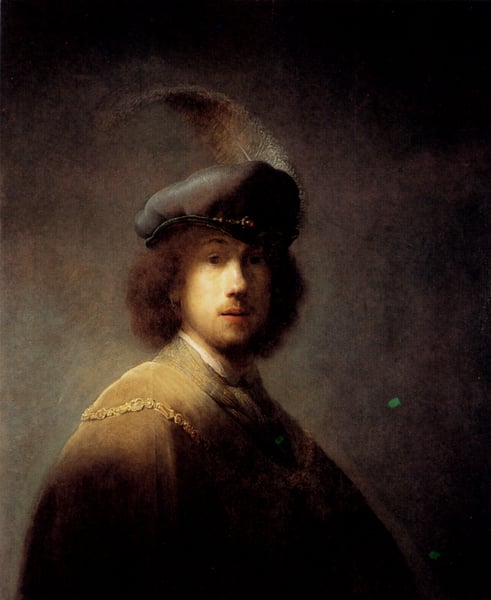
This work stands as a compelling example of Baroque self-portraiture, distinguished by its masterful use of tenebrism—a dramatic chiaroscuro technique that Rembrandt employed to heighten psychological intensity and formal dynamism. The Baroque style’s emphasis on theatricality, emotion, and the fleeting moment is concentrated in the artist’s own gaze, while the tenebrist treatment plunges the background into deep shadow, forcing light to carve the face and the plumed hat into sculptural relief.
Significance within style and period:
- Rembrandt’s reinvention of the self-portrait: Unlike earlier, more impersonal or allegorical self-depictions, Rembrandt transforms the genre into a vehicle for raw introspection. The plumed hat—a flamboyant, almost performative accessory—signals the artist’s self-conscious engagement with his own public persona, a hallmark of Baroque individualism.
- Tenebrist mastery: The extreme contrast between light and dark does more than model form; it creates a sense of inner life. The light catches the sitter’s eye and the delicate bristles of the plume, while shadow swallows the rest, focusing attention on the subject’s psychological state—a quintessential Baroque concern with transient human emotion.
- Emblem of artistic ambition: The hat, a symbol of wealth and artistic license, aligns with the Baroque fascination with vanitas and the fleeting nature of earthly success. By depicting himself in such attire, Rembrandt asserts his status as a master composer of light and narrative, elevating the self-portrait from mere likeness to a dramatic statement of identity.
In sum, this painting is significant because it condenses the core Baroque ambitions—dramatic storytelling, emotional immediacy, and technical virtuosity—into a single, intensely personal image, while demonstrating how Rembrandt’s use of tenebrism could transform a simple self-portrait into an eternal, searching dialogue between artist and viewer.
Museum / Gallery
Visualmente similares
20 obras con composición y paleta relacionadas
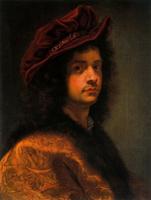
Autorretrato Corredor De Vasari
Giovanni Battista Gaulli
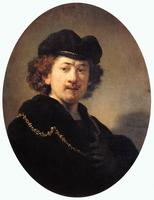
Self-portrait with Hat and Gold Chain
Rembrandt
Self-portrait with Beret and Gold Chain
Rembrandt
Young Man with a Red Beret
Jan Lievens
Self-portrait
Rembrandt
Self Portrait Behind a Parapet
Ferdinand Bol
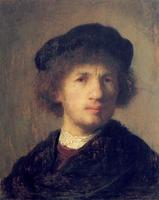
Self-portrait
Rembrandt
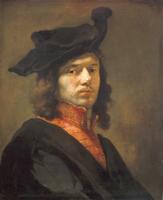
Self Portrait
Carel Fabritius
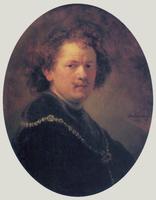
Self-portrait
Rembrandt
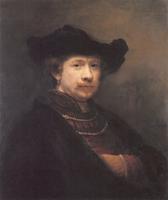
Self-portrait
Rembrandt
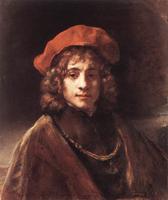
Titus, the Artist's son
Rembrandt
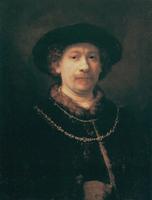
Self-portrait
Rembrandt
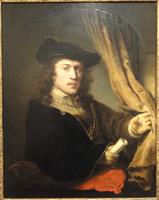
Self-Portrait
Ferdinand Bol
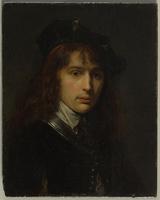
Self Portrait
Gerrit Dou
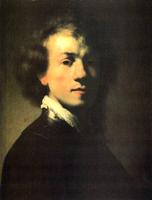
Self-portrait
Rembrandt
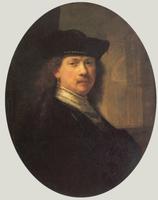
Self-portrait
Rembrandt
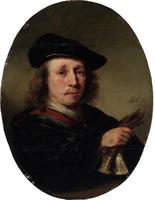
4 Portrait of a Man
Ferdinand Bol
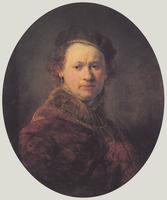
Self-portrait
Rembrandt
Self-portrait at the Age of 34
Rembrandt
Self-portrait with Gorget and Beret
Rembrandt