Analisi esperta di Little Self-portrait di Rembrandt
Stile: Baroque, Tenebrism · Genere: self-portrait, tronie
Expert Analysis: Little Self-portrait by Rembrandt van Rijn
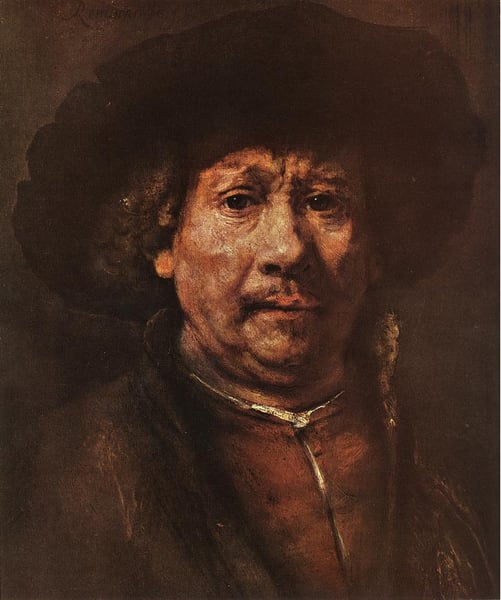
Rembrandt’s Little Self-portrait (c. 1628–1629) is a masterful convergence of Baroque drama and Tenebrist technique, transformed into an intimate tronie—a study of character rather than a conventional likeness. While Rembrandt would later produce larger, more philosophically charged self-portraits, this small-format work is significant for its raw, experimental vitality, revealing the young artist’s obsessive investigation of light, emotion, and identity.
Technical Innovation: Tenebrist Chiaroscuro
True to the Baroque love of theatricality, Rembrandt plunges most of the composition into deep shadow, allowing only a single, sharp beam of light to rake across the face and the white collar. This extreme contrast—hallmark of Tenebrism—does more than create volume; it concentrates attention on the artist’s expressive eyes and slightly parted lips, as if caught mid-thought. The dark background is not empty but alive with subtle glazes, inviting the viewer to feel the weight of the surrounding obscurity. This treatment of light as an emotional and psychological agent anticipates Rembrandt’s mature works.
Genre: Self-Portrait as Tronie
At its core, this painting is a tronie—a Dutch Baroque genre depicting an exaggerated facial expression or type, often in exotic costume. Here Rembrandt uses his own face as a laboratory. The unkempt hair, the furrowed brow, and the slight smirk are not meant solely as a faithful record of appearance; they are a study of fleeting emotion, a Baroque obsession with capturing the ephemeral. By portraying himself as a pensive, almost melancholic figure, Rembrandt elevates the personal portrait into a universal meditation on the artist’s inner life—a theme that would dominate his entire oeuvre.
Significance in Rembrandt’s Evolution
The Little Self-portrait is crucial because it demonstrates Rembrandt’s departure from the polished, idealized self-images of his contemporaries. He does not flatter himself; he seeks truth. The rough, visible brushwork in the hair and the scratchy highlights on the nose are deliberate, almost sketch-like—a bravura display of painterly freedom that would influence generations. This work marks the moment when Rembrandt began to conflate the self-portrait with the tronie, turning his own face into a vehicle for psychological and artistic inquiry. It is a small panel with enormous consequence: a declaration that the artist’s own experience, rendered through dramatic light and raw emotion, is worthy of high art.
Visivamente simili
20 opere con composizione e palette affini
Self-portrait
Rembrandt
Self-portrait
Rembrandt
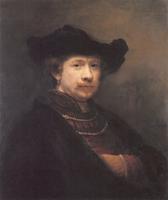
Self-portrait
Rembrandt
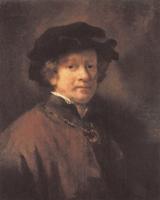
Self-portrait
Rembrandt
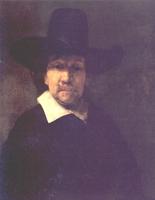
The Poet Jeremia de Decker
Rembrandt
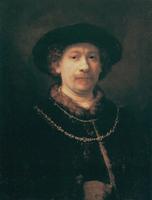
Self-portrait
Rembrandt
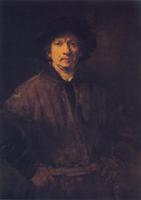
Large Self-portrait
Rembrandt
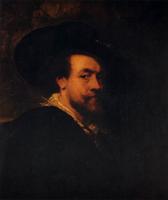
Self-Portrait
Peter Paul Rubens
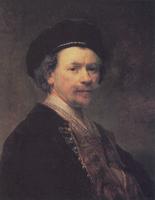
Self-portrait
Rembrandt
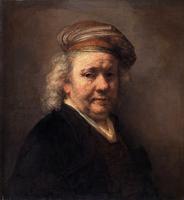
Self-portrait
Rembrandt
Portrait of a Man
Frans Hals
Self-portrait with Hat and Gold Chain
Rembrandt
The painter Jan Asselyn
Frans Hals
Self-portrait
Rembrandt
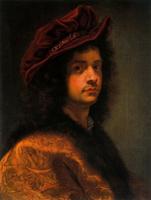
Autorretrato Corredor De Vasari
Giovanni Battista Gaulli
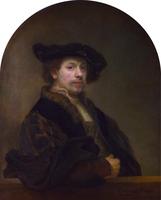
Self-portrait at the Age of 34
Rembrandt
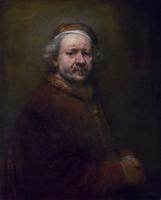
Self-portrait in at the Age of 63
Rembrandt
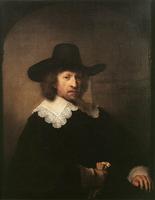
Portrait of Nicolas van Bambeeck
Rembrandt
Self Portrait
Carel Fabritius
Portrait of a Man holding Gloves
Frans Hals