
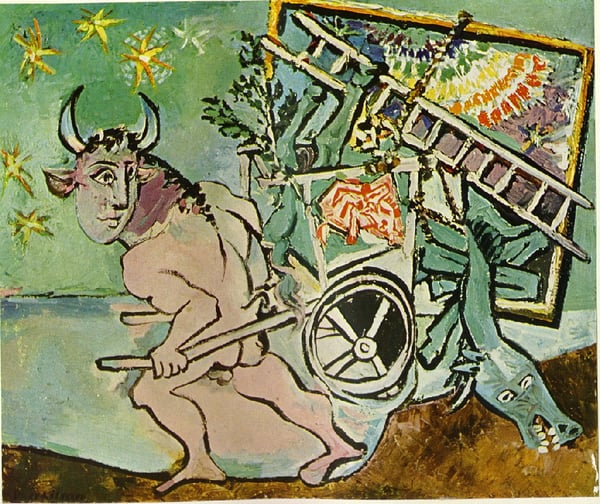
Expertenanalyse zu Pablo Picassos Minotaur transports a mare and foal
Stil: Expressionism, Surrealism · Genre: mythological painting
Expert Analysis: "Minotaur transports a mare and foal" by Pablo Picasso
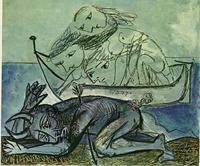
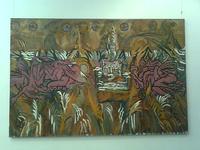
Pablo Picasso’s Minotaur transports a mare and foal stands as a compelling fusion of Expressionist emotional intensity and Surrealist dream logic, anchored in the timeless genre of mythological painting. Executed during the 1930s—a period in which the Minotaur became a recurring alter ego for the artist—the work transgresses conventional narrative to probe themes of power, bestiality, and unconscious desire.
Significance within Expressionism and Surrealism:
Picasso channels Expressionism through distorted, visceral forms and a charged, somber palette that amplifies the psychological tension. The Minotaur—half-man, half-bull—embodies raw, primal force, while the mare and foal evoke vulnerability and fertility. This juxtaposition of predator and prey is rendered not with anatomical accuracy but with expressive exaggeration, emphasizing anguish and conflict. Simultaneously, the scene operates on a Surrealist register: the irrational coupling of a mythical beast with domestic animals, the ambiguous spatial setting (neither stable nor landscape), and the dreamlike suspension of logic invite interpretations of the unconscious. The Minotaur here is not merely a classical monster but a personal symbol for Picasso—representing his own struggles with violence, creativity, and sexuality.
Mythological Reinvention:
Unlike traditional depictions of the Minotaur as a monstrous villain (e.g., in the Theseus myth), Picasso recasts the creature as an ambiguous, almost sympathetic figure caught in a grotesque act of transport. This reframing reflects the Surrealist interest in myth as a vehicle for exploring irrational human impulses. The mare and foal, too, may allude to themes of maternal protection, violation, or the cycle of life—common motifs in Picasso’s work from the 1930s, when his personal relationships were turbulent and the specter of war loomed.
What Makes It Significant:
The painting is a key example of how Picasso synthesized classic mythology with modern psychological concerns, bridging the raw emotive power of Expressionism and the radical freedom of Surrealism. It demonstrates his ability to transform a traditional subject into a deeply autobiographical and unsettling image—one that challenges the viewer to confront the primal drives lurking beneath civilization. In the broader context of Picasso’s oeuvre, this work foreshadows the violent, fragmented imagery of Guernica (1937) and solidifies the Minotaur as one of his most potent symbols of creative and destructive duality.
Visuell ähnlich
20 Werke mit ähnlicher Komposition und Farbpalette
Two and a pushcart
Kazimir Malevich
Mikula Selianinovich
Mikhail Vrubel
War
Marc Chagall
Madonna with the Sleigh
Marc Chagall
Cain and Abel
Marc Chagall
Study of chapter
Frantisek Kupka
St. Elijah’s Story
George Stefanescu
Carriage and Two Figures on a Road
Vincent van Gogh
Peasants
Pablo Picasso
Zigeunerin Mit Kind Vor Dem Planwangen
Otto Mueller
Composition
Corneliu Michailescu
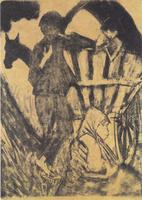
Zigeunerfamilie Am Planwagen
Otto Mueller
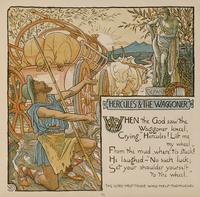
An illustration of the fable of Hercules and the Wagoner
Walter Crane
The man with the cart
Ivan Grohar
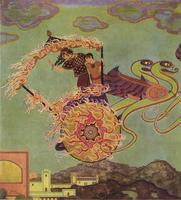
Medea (Tanglewood Tales, The Minotaur)
Edmund Dulac
Minotaur is wounded
Pablo Picasso
The Cattle Dealer
Marc Chagall
On the way to Sobakevich
Marc Chagall
Zigeunermadonna Mit Planwagen
Otto Mueller
Several Cases of Insincere Approaching a Tree
Dmytro Kavsan