Analisi esperta di Mao di Yu Youhan
Stile: Op Art, Pop Art · Genere: figurative
Expert Analysis: "Mao" by Yu Youhan
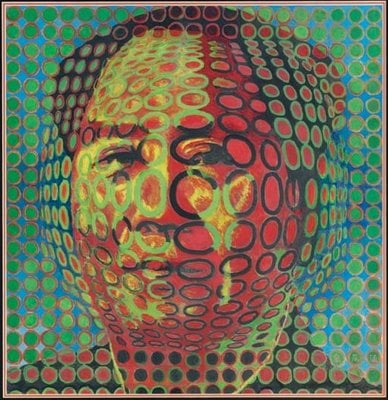
Yu Youhan's "Mao" stands as a pivotal work within the Chinese Political Pop movement of the 1990s, merging the formal strategies of Op Art and Western Pop Art to critically re-contextualize the iconography of Chairman Mao Zedong. The painting is significant for its dual engagement: it simultaneously deconstructs the sublime, propagandistic portrait of Mao while embracing the visual language of mass culture and optical illusion.
Formal Innovation: Op Art Meets Pop Art
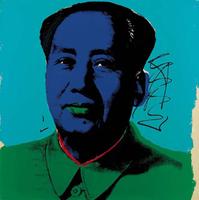
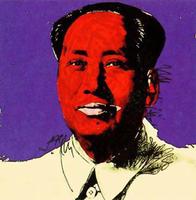
At first glance, the work presents the familiar, standardized portrait of Mao—a staple of Chinese revolutionary aesthetics. However, Yu Youhan subverts this image through a technique derived from Op Art: he fragments the face into shifting, repetitive patterns of dots and lines. These optical effects create a pulsating, almost psychedelic surface that disrupts the static, monolithic authority of the original propaganda image. The use of flat, high-contrast colors (often reds, yellows, and blues) recalls Andy Warhol’s screen-printed portraits, but Yu Youhan’s method replaces mechanical reproduction with hand-painted, vibrating patterns. This formal choice transforms Mao’s face into a decorative, commodity-like pattern, echoing the mass production of Mao badges and posters during the Cultural Revolution.
Critical Commentary: The Icon as Ornament
By combining the visual instability of Op Art with the reproducibility of Pop, Yu Youhan critiques the way political icons become hollowed out through overexposure. Mao’s portrait, once a sacred symbol of revolutionary zeal, is reduced to a decorative motif—a pattern that can be endlessly repeated, marketed, and consumed. The work thus reflects the shift in post-Mao China from revolutionary fervor to a market-driven, consumerist society. Yu Youhan’s Mao is not a figure of power but a ghostly, visually fragmented trace of a past ideology, rendered impotent by the very proliferation that once reinforced it.
Significance Within Art History
"Mao" is a landmark example of Chinese contemporary art’s negotiation with its own political history. Unlike Western Pop artists who drew from American consumer culture, Yu Youhan appropriates a local, authoritarian icon and subjects it to a globalized visual language (Op Art’s perceptual play, Pop’s deadpan replication). The result is a work that speaks to the international art world while remaining deeply rooted in China’s specific experience of political iconoclasm and commodification. It exemplifies how artists of the 1990s used stylistic pastiche to create a space for critical dialogue, balancing reverence and irony. In this sense, "Mao" is not merely a portrait but a meditation on how images—and the power they carry—dissolve under the pressure of repetition and visual overload.
Genere
Visivamente simili
20 opere con composizione e palette affini
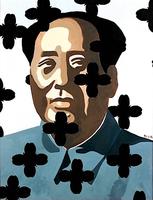
Mao: Pattern Print
Yu Youhan
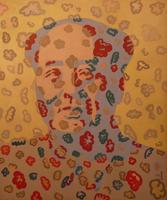
Mao Decorated
Yu Youhan
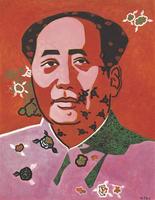
Mao Image in Rose
Yu Youhan
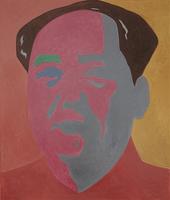
Mao
Yu Youhan
Mao Zedong: AO
Wang Guangyi
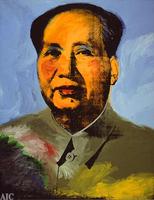
Mao
Andy Warhol
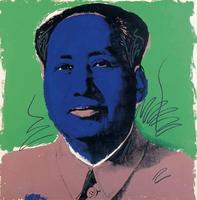
Mao
Andy Warhol
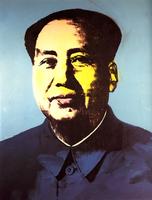
Mao
Andy Warhol
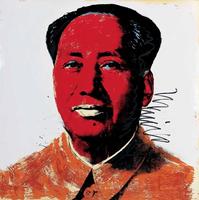
Mao
Andy Warhol
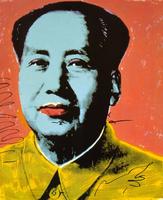
Mao
Andy Warhol
Mao
Andy Warhol
Mao
Andy Warhol
A Pocket Western Art History About Mao – Foreign Mao (Mondrian)
Yu Youhan
Sun Mu
Sun Mu
Mao Zedong
Romero Britto
Mao in an Easy Chair
Yu Youhan
Mao
Yu Youhan
Mao
Yu Youhan
Drag - Johnson and Mao
Jim Dine
Untitled
Sun Mu