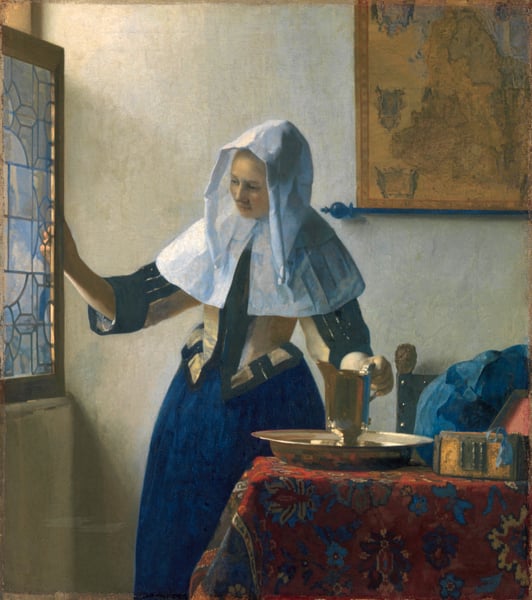
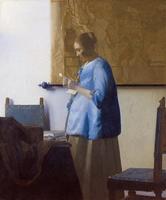
Analysis of "Young Woman with a Water Pitcher" by Johannes Vermeer
As a masterwork of Baroque genre painting, this artwork exemplifies the period's fascination with capturing intimate, everyday moments with heightened realism and refined optical effects. The painting depicts a woman absorbed in a simple domestic task—holding a water pitcher—transforming an ordinary action into a study of light, texture, and quiet contemplation. Vermeer’s treatment of light, a hallmark of Baroque naturalism, bathes the scene in a soft, diffuse glow that emphasizes the material qualities of the pitcher, the woman’s clothing, and the surrounding interior. The composition’s careful balance of geometry and stillness reflects the Baroque interest in order within the fleeting, while the subject’s absorbed gesture invites the viewer into a private, timeless world. As a genre painting, it elevates the routine of household life to the level of high art, demonstrating the Baroque era’s deep respect for both the sensual world and the dignity of everyday experience. Its significance lies in its power to make the ordinary feel monumental, blending technical brilliance with a profound sense of human presence.