Analisi esperta di Women making dresses di Kitagawa Utamaro
Stile: Ukiyo-e · Genere: genre painting
Expert Analysis of "Women making dresses" by Kitagawa Utamaro
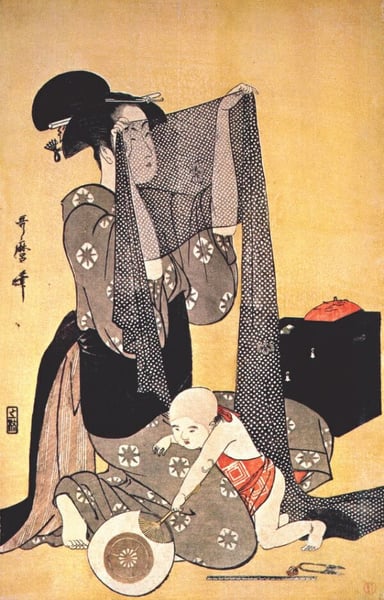
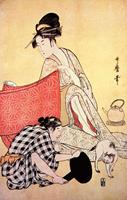
Kitagawa Utamaro’s Women making dresses is a quintessential example of the ukiyo-e genre painting tradition, yet it stands out for its intimate, almost ethnographic focus on female labor and domestic artistry. Created during the late Edo period (circa 1790s), the work belongs to Utamaro’s celebrated series of bijin-ga (pictures of beautiful women), but here the subjects are not courtesans or entertainers—they are ordinary women engaged in the quiet, skilled work of garment making.
Significance within Ukiyo-e and Genre Painting
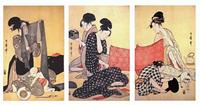
What makes this artwork remarkable is its elevation of mundane domestic activity to a subject worthy of refined artistic treatment. Utamaro captures the subtle gestures and absorbed concentration of the women as they cut, sew, and inspect fabric, revealing his mastery of line and composition. The flowing, rhythmic contours of their kimono sleeves and the delicate positioning of their hands mirror the precision required in dressmaking itself. The composition avoids dramatic action; instead, it emphasizes stillness and collaboration, with the figures arranged in a balanced triangular grouping that guides the viewer’s eye through the process.
Utamaro’s use of ukiyo-e techniques—bold outlines, flat areas of color, and a subtle gradation of tones—enhances the sense of tactile materiality. The fabrics depicted, likely silk or cotton, are rendered with careful patterns, reflecting both the artist’s attention to texture and the cultural importance of textile arts in Edo-period Japan. This work also underscores Utamaro’s psychological insight: the women’s downcast eyes and gentle postures convey a quiet dignity, challenging the period’s typical portrayal of women solely as objects of pleasure.
Broader Artistic Context
In the context of ukiyo-e genre painting, Women making dresses bridges the gap between high art and everyday life. While many ukiyo-e artists focused on the fleeting pleasures of the “floating world”—theaters, brothels, and festivals—Utamaro here celebrates the productive, unsung labor that sustained that very world. The piece thus offers a rare window into the lives of working women, making it a significant document of social history as well as a masterful demonstration of Utamaro’s ability to find beauty in the ordinary. Its careful observation and empathetic portrayal remain a touchstone for scholars studying the role of women in Edo-period visual culture.
Visivamente simili
20 opere con composizione e palette affini
Women making dresses
Kitagawa Utamaro
Women making dresses
Kitagawa Utamaro
Women making dresses
Kitagawa Utamaro
A Geisha in her Lover`s Room
Kitagawa Utamaro
Flower patterned cotton
Kitagawa Utamaro
Woman playing a poppin
Kitagawa Utamaro
Domestic Scene
Kitagawa Utamaro
Mother and Baby
Utagawa Kunisada II
The Hour of the Dragon
Kitagawa Utamaro
Women
Utagawa Kuniyoshi
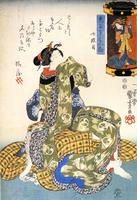
Women
Utagawa Kuniyoshi
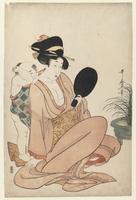
Mother and Child Gazing at a Hand Mirror
Kitagawa Utamaro
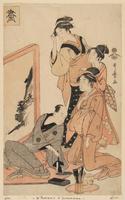
The four virtues
Kitagawa Utamaro
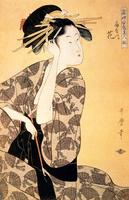
A scene on the bridge and beld
Kitagawa Utamaro
The Hour of the Dog
Kitagawa Utamaro
Upper Class
Kitagawa Utamaro
The Hour of the Hare
Kitagawa Utamaro
Bandō Hikosaburō III in the Role of Obiya Chōemon and Iwai Hanshiro IV in the Role of Shinanoya Ohan
Tōshūsai Sharaku
Hour of the Snake
Kitagawa Utamaro
Kabuki Actors Sawamura Sōjūrō III as Nagoya Sanza, and Segawa Kikunojō Iii as the Courtesan Katsuragi
Tōshūsai Sharaku