Expert analysis of Max Ernst’s Illustration to "A Week of Kindness"
Style: Surrealism · Genre: illustration
Expert Analysis: Max Ernst’s Illustration to “A Week of Kindness” (First French Period, Surrealist Collage-Novel)
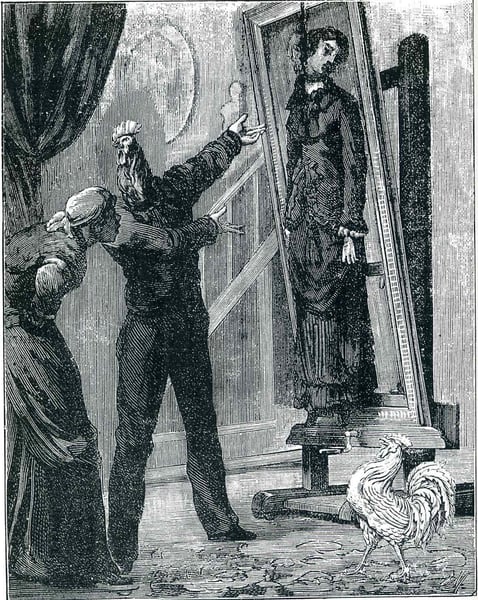
Max Ernst’s Illustration to “A Week of Kindness” (1934) stands as a landmark of Surrealist visual narrative, executed during his prolific First French period—the years when he was most deeply embedded in the Parisian Surrealist movement and pioneering the technique of collage. This work is part of Ernst’s seminal novel-collage Une Semaine de Bonté (A Week of Kindness), a book of 182 collaged illustrations that reimagines the nineteenth-century dime novel as a theater of the unconscious.
Significance within the Surrealist Style and the Genre of Illustration
-
Revolutionizing the “Illustration” Genre: Ernst subverts the traditional role of illustration as a faithful visual accompaniment to text. In A Week of Kindness, the images are the narrative. The book has no continuous prose; only cryptic captions. Each collage functions as an autonomous, dreamlike episode where Ernst dismantles Victorian-era wood engravings and recombines them into uncanny, hybrid scenes. This transforms illustration from a secondary craft into a primary Surrealist tool for revealing the irrational.
-
Collage as the Core of Surrealist Automatism: Ernst treated collage as “the systematic exploitation of the chance encounter of two or more unrelated realities on an incongruous plane”—a core Surrealist principle. The Illustration to “A Week of Kindness” juxtaposes disparate imagery (often human limbs, architectural fragments, birds, and industrial objects) to produce a startling psychological charge. The effect is neither wholly abstract nor strictly representational, but a hauntingly plausible impossible space where the laws of physics and logic are suspended.
-
Thematic Complexity and Dark Eroticism: A defining element of Ernst’s work from this period is its exploration of repressed desire, violence, and the uncanny. The Week of Kindness illustrations frequently depict figures with animal heads, severed hands, and ominous interiors. This particular illustration likely contributes to the book’s overarching structure of seven days, each named after an element (e.g., Sunday: Lion of Belfort, Monday: Water). Ernst’s imagery disrupts the polite veneer of the original source material (scraped from 19th-century catalogues and novels), exposing the latent anxieties of his own era—the rise of fascism, the fragility of identity, and the tyranny of bourgeois morality.
-
Historical Importance as a Hybrid Medium: Coming at the height of Surrealism’s first phase, this work bridges poetry and painting, word and image. It anticipates later experimental graphic novels and conceptual art. Ernst’s method—cutting and reassembling found prints—turns the artist into a bricoleur of the subconscious, making the ordinary (Victorian illustrations) deeply strange. The Illustration to “A Week of Kindness” is thus not merely an artwork but a key to understanding how Surrealism transformed the very act of seeing and reading.
In summary, the significance of this piece lies in its radical redefinition of illustration as a Surrealist weapon, its masterful use of collage to unlock unconscious imagery, and its place within one of the most influential artist’s books of the 20th century. Ernst’s First French period here achieves a perfect synthesis of craft, psychological depth, and rebellion against artistic conventions—a hallmark of his enduring influence.
Museum / Gallery
Visually similar
20 works with related composition and palette
Illustration to "A Week of Kindness"
Max Ernst
Illustration to "A Week of Kindness"
Max Ernst
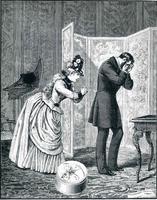
Illustration to "A Week of Kindness"
Max Ernst
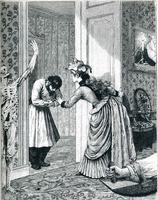
Illustration to "A Week of Kindness"
Max Ernst
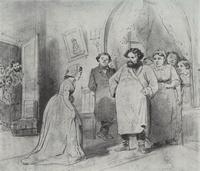
The arrival of a governess in a merchant's house
Vasily Perov
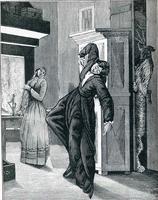
Illustration to "A Week of Kindness"
Max Ernst
Le Md De Peau De Lapin
Carle Vernet
Story Le Rubis Du Grand-lama
Edouard Riou
Illustration to "A Week of Kindness"
Max Ernst
Illustration to "A Week of Kindness"
Max Ernst
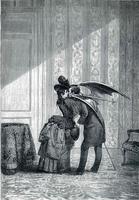
Illustration to "A Week of Kindness"
Max Ernst
The Haunted House
Simeon Solomon
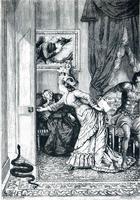
Illustration to "A Week of Kindness"
Max Ernst
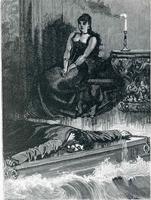
Illustration to "A Week of Kindness"
Max Ernst
Even so he cannot make her out
Francisco Goya
It is better to be idle
Francisco Goya
Don't scream, silly
Francisco Goya
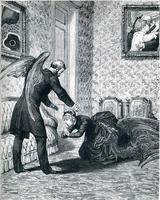
Illustration to "A Week of Kindness"
Max Ernst
TOUT VIENT À QUI SAIT ATTENDRE
John Leech
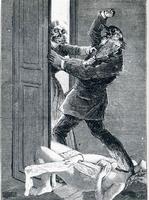
Illustration to "A Week of Kindness"
Max Ernst