Boy And Machine
Analisi esperta di Boy And Machine di Richard Lindner
Stile: Mechanistic Cubism · Genere: portrait
Expert Analysis: "Boy And Machine" by Richard Lindner
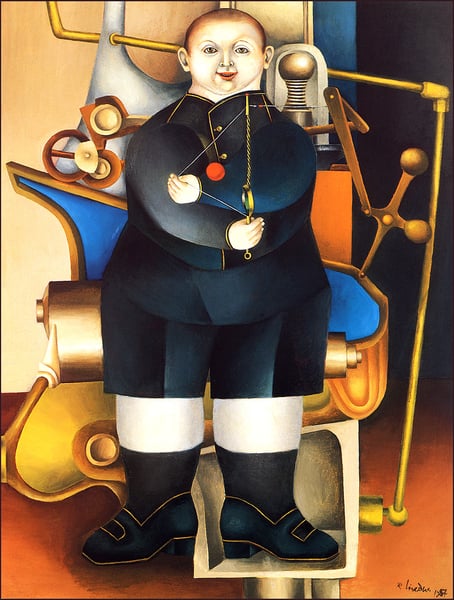
Richard Lindner’s Boy And Machine is a striking portrait that exemplifies the artist’s unique fusion of figuration and industrial geometry, a hallmark of his Mechanistic Cubism. Within this style, Lindner pushes Cubism’s traditional fragmentation of form into a colder, more precise vocabulary—one that mirrors the dehumanizing force of modern technology. The painting’s significance lies in how it reimagines the genre of portraiture: instead of capturing a naturalistic likeness, the boy’s face and body are rendered as interlocking machine parts, his features reduced to gears, cylinders, and angular planes. This mechanization of the human form becomes a potent metaphor for the alienation of the individual in an increasingly automated world.
Unlike earlier Cubist portraits by Picasso or Braque, which retained a sense of organic dynamism, Lindner’s “Mechanistic” approach introduces a rigid, almost clinical order. The boy appears both innocent and trapped, his identity subsumed by the very machine he stands beside—or perhaps within. This tension makes the work significant not only as an example of Lindner’s distinctive style but also as a critical commentary on the mid-20th-century anxiety surrounding technology, identity, and the loss of humanity. The painting stands as a landmark of Mechanistic Cubism, bridging earlier avant-garde abstraction with the emerging pop and dystopian sensibilities of its era.
Visivamente simili
20 opere con composizione e palette affini
Loutkář
Jindrich Styrsky
Boy
Richard Lindner
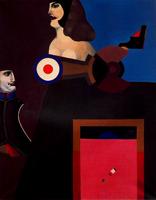
Napoleon Still Life
Richard Lindner
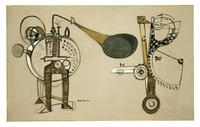
Antro II
Hedda Sterne
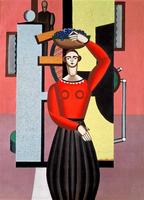
VINSKÖRD
Otto Gustav Carlsund
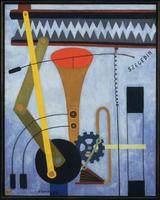
Silence
Georges Ribemont-Dessaignes
Frontal Setting
Leonid Sejka
Boy with machine
Richard Lindner
Marfruit
Modest Cuixart
Boy
Richard Lindner
Frontalna Postavka
Leonid Šejka
Love Parade
Francis Picabia
Dynamo machine
Natalia Goncharova
Louis II
Richard Lindner
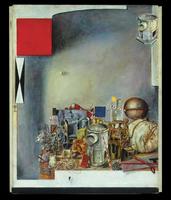
Untitled
Leonid Sejka
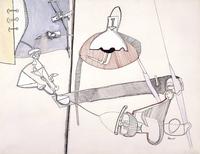
Untitled
Eva Hesse
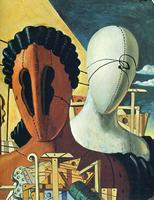
The Two Masks
Giorgio de Chirico
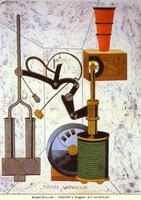
Love Parade
Francis Picabia
Hydrometric Demonstration
Max Ernst
Painting (formerly Machine)
Morton Schamberg