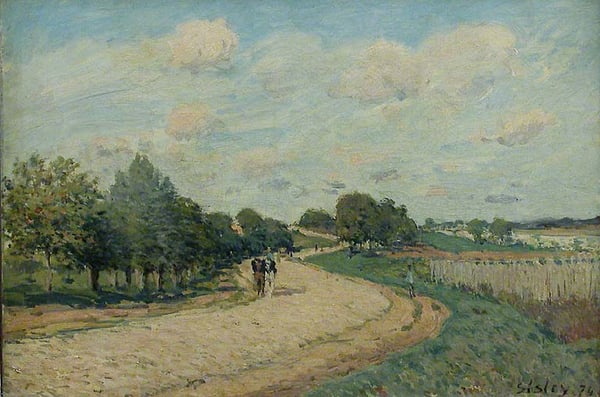
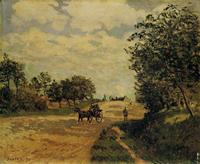
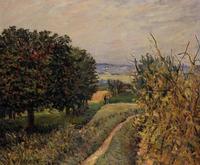
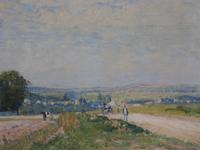
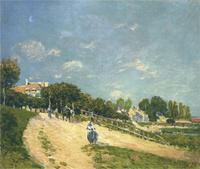
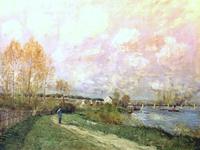
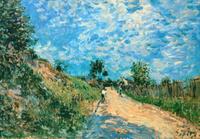
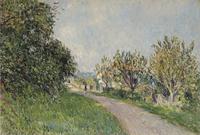
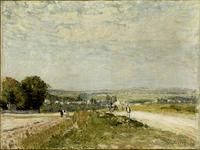
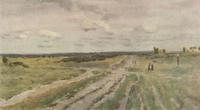
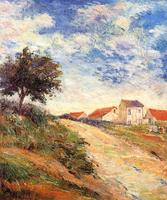
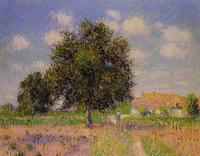
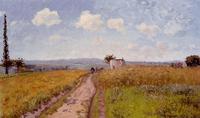
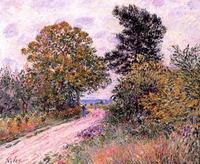
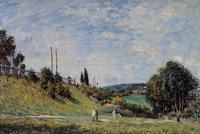
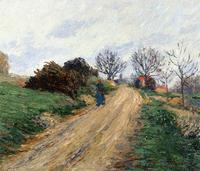
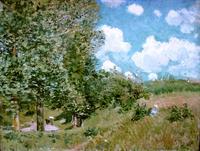
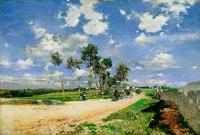
Alfred Sisley’s The Route to Mantes exemplifies the core tenets of Impressionism through its focused treatment of landscape as a vehicle for capturing fleeting atmospheric effects. As one of the most consistent Impressionists—rarely straying from pure plein-air landscape—Sisley here transforms a seemingly ordinary rural road into a study of shifting light and color. The work is significant for its subtle tonal harmonies and delicate brushwork, which convey the transient quality of a specific moment rather than a fixed, permanent scene. The composition draws the viewer’s eye along the path, inviting contemplation of nature’s ever-changing moods, a hallmark of the movement’s break from academic convention. Sisley’s dedication to atmospheric nuance, often favoring cool, silvery palettes over bolder contrasts, distinguishes this piece within the Impressionist canon, demonstrating how a simple route can become a masterful record of light and atmosphere.