
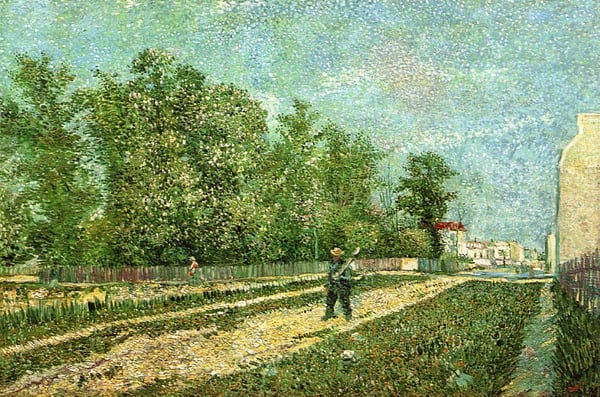
Man with Spade in a Suburb of Paris
Details
Expertenanalyse zu Vincent van Goghs Man with Spade in a Suburb of Paris
Stil: Neo-Impressionism, Pointillism · Genre: genre painting
Expert Analysis: "Man with Spade in a Suburb of Paris" by Vincent van Gogh
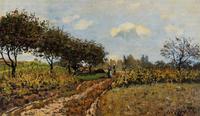
This painting represents a pivotal moment in van Gogh’s artistic development, bridging his early Dutch realism with the vibrant color and technique of his mature style. Executed during his transformative Paris period (1886–1888), it demonstrates his direct engagement with Neo-Impressionism and its signature pointillist method.
Technical and Stylistic Significance:
True to Neo-Impressionist principles, van Gogh applies paint in small, distinct dots and dashes of pure color, intended to blend optically in the viewer’s eye. However, unlike Seurat’s meticulous, scientific approach, van Gogh’s touch is already more expressive and energetic—the strokes are slightly larger, more varied, and hint at the emotional intensity that would define his later work. The palette is lighter and brighter than his Dutch paintings, reflecting the influence of Impressionist plein-air practice and the suburban light of Paris.
Thematic Significance within Genre Painting:
As a genre painting, the work depicts an everyday laborer—a man with a spade—set against the fringes of the expanding city. This subject matter is significant because it aligns van Gogh with contemporary social concerns. The “suburb” is neither rural idyll nor urban center but a transitional space, often associated with the working class and the edges of industrial modernity. Van Gogh’s empathetic portrayal of a solitary worker echoes his lifelong commitment to representing the dignity of ordinary people. The figure’s isolation in a vast, open field also foreshadows van Gogh’s later themes of loneliness and toil.
Place within Van Gogh’s Evolution:
“Man with Spade in a Suburb of Paris” is a crucial laboratory piece. Here, van Gogh experiments with pointillism but refuses its cool detachment; he instead infuses the technique with raw, personal feeling. This tension between systematic method and emotional urgency would eventually lead him to abandon Neo-Impressionism in favor of the bold, swirling brushwork of his Arles period. The painting thus stands as a testament to van Gogh’s restless innovation—absorbing a cutting-edge style of the late 1880s and reshaping it in his own image.
Conclusion:
The work’s significance lies in its hybrid character: it is both a faithful Neo-Impressionist exercise and a proto-expressionist statement. It captures a fleeting moment of van Gogh’s search for a modern visual language, grounded in the social realities of Parisian outskirts. For art historians, it offers a rare glimpse of the artist bridging two worlds—the discipline of pointillism and the passion that would soon revolutionize modern art.
Museum / Gallery
Visuell ähnlich
20 Werke mit ähnlicher Komposition und Farbpalette
Suburbs of Paris
Vincent van Gogh
Walnut trees at sunset in early October
Alfred Sisley
The Riverbank at Petit-Gennevilliers
Claude Monet
Lane in the Vineyards at Argenteuil
Claude Monet
Path near Saint Cyr Vaudreuil
Gustave Loiseau
Edge of the Fountainbleau Forest Morning
Alfred Sisley
Untitled
Gustave Loiseau
Hill Path
Alfred Sisley
Poppy Field, Argenteuil
Claude Monet
Edge of the Forest in Spring, Evening
Alfred Sisley
Canal du Loing Chemin de Halage
Alfred Sisley
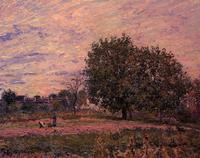
Walnut Trees, Sunset Early Days of October
Alfred Sisley
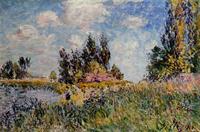
Landscape The Banks of the Loing at Saint Mammes
Alfred Sisley
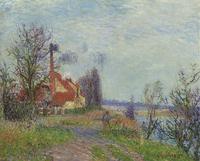
Paper Mill at Port Marly
Gustave Loiseau
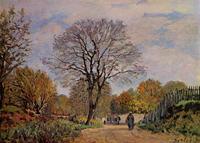
A Road in Seine et Marne
Alfred Sisley
Meadow
Claude Monet
Street in Rouen
Paul Gauguin
On the Road from Moret
Alfred Sisley
The Banks of the Seine
Vincent van Gogh
Path in the Country
Alfred Sisley