Expert analysis of Paul Serusier’s Woman in a Street
Style: Post-Impressionism · Genre: cityscape
Expert Analysis: "Woman in a Street" by Paul Sérusier
Style & Period Context:
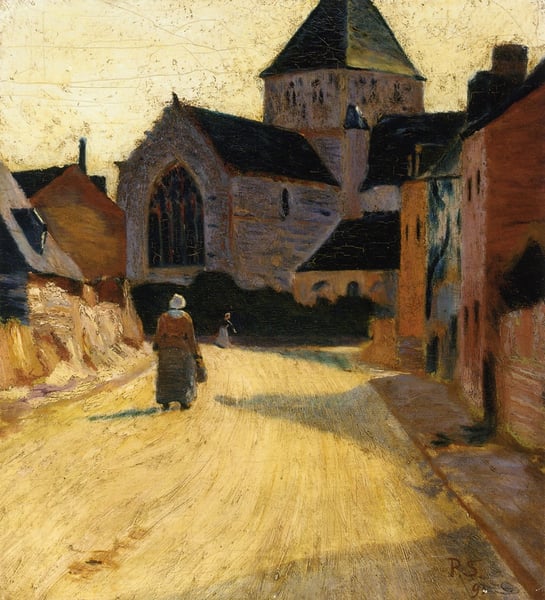
As a work of Post-Impressionism, Sérusier’s Woman in a Street embodies the movement’s departure from naturalistic representation toward symbolic color, flattened space, and expressive form. Unlike Impressionism’s fleeting light effects, Post-Impressionist works often prioritize structure, emotion, and abstract harmony. Sérusier, a leading member of the Nabi group, was particularly influenced by Paul Gauguin’s Synthetism—emphasizing pure color planes and simplified outlines to convey spiritual or emotional truth.
Genre & Subject Significance:
Though classified as a cityscape, the painting subverts traditional urban scenes. Instead of bustling crowds or architectural grandeur, Sérusier isolates a single female figure in a street, reducing the setting to a stage-like backdrop. This aligns with the Nabi interest in everyday life elevated to a symbolic, almost ritualistic plane. The “Woman” likely functions as a meditative anchor—her stillness contrasts with the implied movement of the street, inviting contemplation of modernity’s solitude.
Artistic Innovations:
- Flatness and Pattern: Sérusier flattens perspective, using bold, unmodulated color blocks to define the street, walls, and sky. This anti-illusionistic treatment recalls Gauguin and foreshadows Fauvism and Expressionism.
- Color Symbolism: Post-Impressionist use of non-naturalistic hues—possibly subdued earth tones or clashing accents—would imbue the scene with mood rather than realism. Even without specific palette data, the style suggests deliberate, emotionally charged color choices.
- Narrative Ambiguity: The work’s significance lies in its refusal to narrate. We see a woman in a street but no clear story. This openness invites viewers to project meaning—an early nod to the modern art principle that ambiguity invites deeper engagement.
Legacy:
Woman in a Street exemplifies how Sérusier and the Nabis transformed everyday urban motifs into talismanic images, bridging Post-Impressionism’s subjective vision and the emerging avant-garde’s quest for pure visual language. The painting stands as a quiet manifesto: even a simple street scene can become a vehicle for profound formal and emotional exploration.
Museum / Gallery
Visually similar
20 works with related composition and palette
Bennecourt
Claude Monet
Village Scene, Breton
Childe Hassam
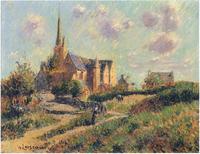
Notre Dame de la Clarte
Gustave Loiseau
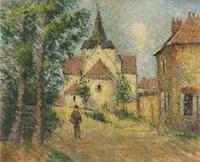
Village street
Gustave Loiseau
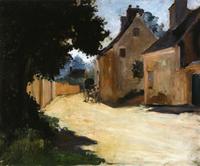
Village Street, Louveciennes
Pierre-Auguste Renoir
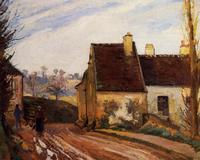
The Tumbledown Cottage near Osny
Camille Pissarro
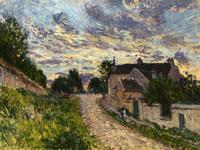
A Path in Louveciennes
Alfred Sisley
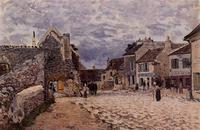
Village Street Grey Weather
Alfred Sisley
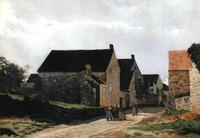
Street of Marlotte (also known as Women Going to the Woods)
Alfred Sisley
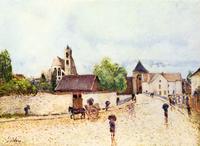
Loing at Moret in the rain
Alfred Sisley
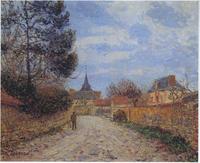
Church at Notre Dame by the Eure
Gustave Loiseau
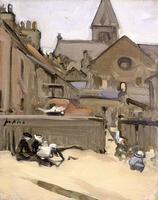
North Berwick Sands
Samuel Peploe
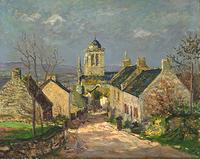
The descending street at Locronan
Maxime Maufra
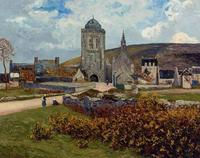
Breton Landscape
Maxime Maufra
Street in Rouen
Paul Gauguin
Cottage at Fairford, Gloucestershire
John Singer Sargent
The street of Hermitage, Pontoise
Camille Pissarro
Notre Dame des Agnes
Paul Gauguin
By the River at Vernon
Claude Monet
Rue du Canal, Moret-sur-Loing
Clarence Gagnon