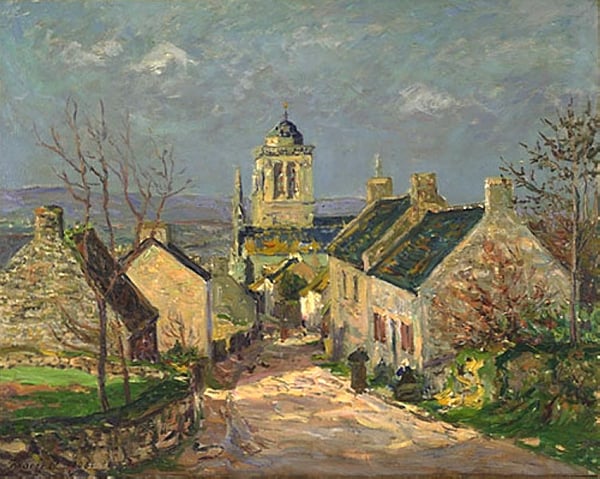
Analisi esperta di The descending street at Locronan di Maxime Maufra
Stile: Post-Impressionism · Genere: cityscape
Expert Analysis: "The Descending Street at Locronan" by Maxime Maufra
Maxime Maufra’s The Descending Street at Locronan is a quintessential example of Post-Impressionist cityscape painting, distinguished by its bold synthesis of structural form and atmospheric color. As a work from the late 19th or early 20th century—Maufra’s most productive period—it reflects the movement’s departure from Impressionist naturalism toward a more expressive, subjective interpretation of reality.
Significance within Post-Impressionism
Maufra, associated with the Pont-Aven School and influenced by Gauguin and the Symbolists, here applies two key Post-Impressionist strategies: simplified geometry and emotionally charged color. The descending street is rendered not as a mere topographical record but as a rhythmic composition of interlocking planes—roofs, walls, and the sloping cobbled path—that guide the eye downward with a sense of quiet drama. The palette likely employs deep, modulated earth tones contrasted with bright accents, typical of Maufra’s love for the Breton light and local stone. This use of color to convey mood (rather than naturalistic fidelity) aligns with Post-Impressionism’s core ambition: to prioritize the artist’s inner vision and the emotional resonance of a place.
Genre: Cityscape as Psychological Landscape
The choice of a descending street is itself significant. Rather than a static view, Maufra captures movement and transition—perhaps mirroring the passage of time or the viewer’s own journey into the heart of Locronan, a historic Breton town. The steep, winding perspective creates a sense of intimacy and enclosure, drawing the viewer into a world that feels both ancient and alive. This treatment transforms the cityscape from a simple chronicle into a meditation on space, light, and human habitation.
Why This Work Matters
Maufra’s The Descending Street at Locronan stands out for its ability to merge regional specificity with universal Post-Impressionist concerns. It exemplifies how artists of the period used the ordinary—a village street—to explore formal issues of depth, surface, and color harmony. The painting’s enduring appeal lies in its quiet power: a scene of daily life rendered with the gravity and poetry of a modernist vision. It remains a testament to Maufra’s skill in capturing the spirit of Brittany while advancing the expressive possibilities of Post-Impressionist cityscape.
Visivamente simili
20 opere con composizione e palette affini
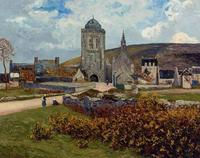
Breton Landscape
Maxime Maufra
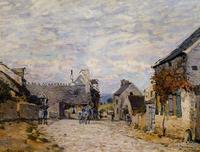
Village Street Louveciennes
Alfred Sisley
The House of Dr. Gachet in Auvers
Paul Cezanne
Bennecourt
Claude Monet
The Tumbledown Cottage near Osny
Camille Pissarro
Street in Veneux
Alfred Sisley
Street in Comrie, Perthshire
Samuel Peploe
The Turn in the Road at Auvers
Paul Cezanne
Quincy, Massachusetts
Childe Hassam
Street in Pontoise
Gustave Loiseau
A part of Jallais, Pontoise
Camille Pissarro
Village Street Grey Weather
Alfred Sisley
The Hamlet of Chantemesie at the Foot of the Rock
Claude Monet
View of Osny near Pontoise
Camille Pissarro
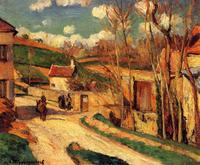
Crossroads at l'Hermitage, Pontoise
Camille Pissarro
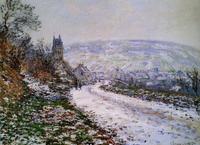
Entering the Village of Vetheuil in Winter
Claude Monet
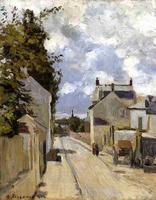
The street of Hermitage, Pontoise
Camille Pissarro
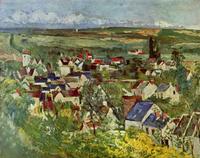
View of Auvers
Paul Cezanne
The Hanged Man's House in Auvers (The House of the Suicide)
Paul Cezanne
Rue a Ennery
Gustave Loiseau