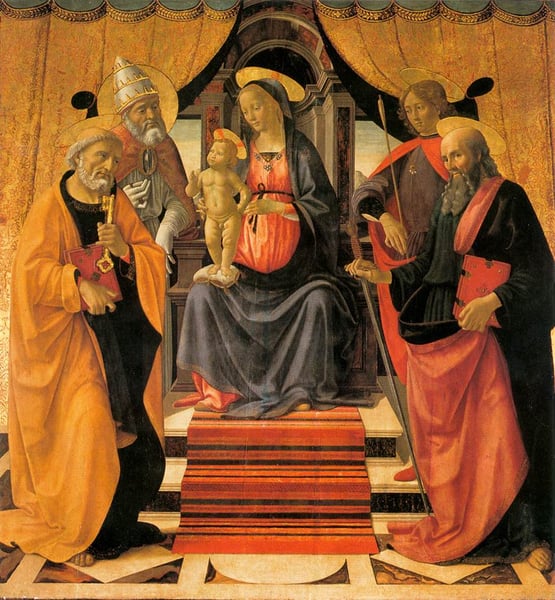
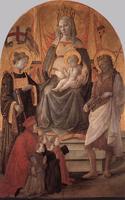
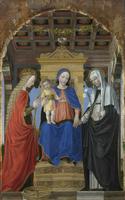
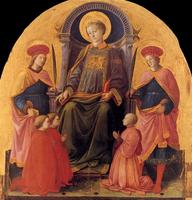
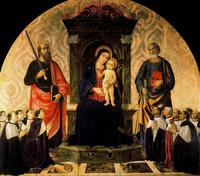
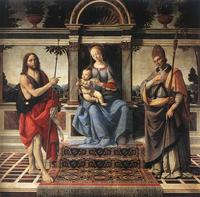
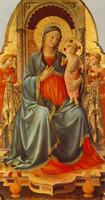
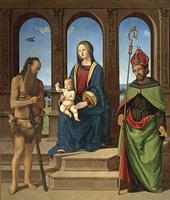
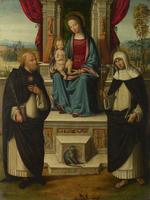
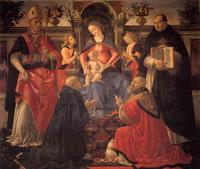
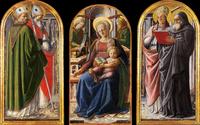
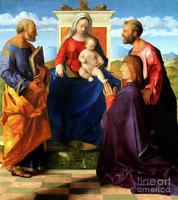
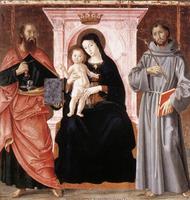
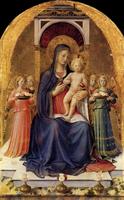
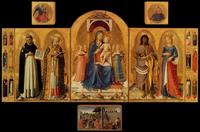
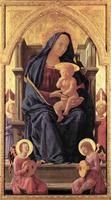
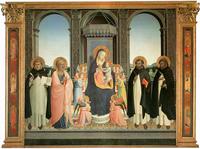
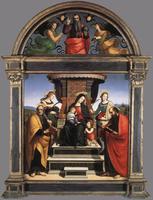
Based solely on the provided facts, the significance of Domenico Ghirlandaio's Madonna and Child Enthroned with Saints lies in its embodiment of the Early Renaissance style within the genre of religious painting. This period is characterized by a decisive shift from the flat, symbolic forms of the Middle Ages toward greater naturalism, spatial depth, and human warmth. As a work from this transitional era, the painting would demonstrate key innovations such as a clear, perspectival setting for the throne, lifelike modeling of the figures, and attention to contemporary details—making the sacred scene feel more approachable and grounded in a believable world. Ghirlandaio’s contribution, as an early Renaissance master working in this style, helps define the period's renewed interest in classical harmony and the celebration of human beauty, even within a devotional context.