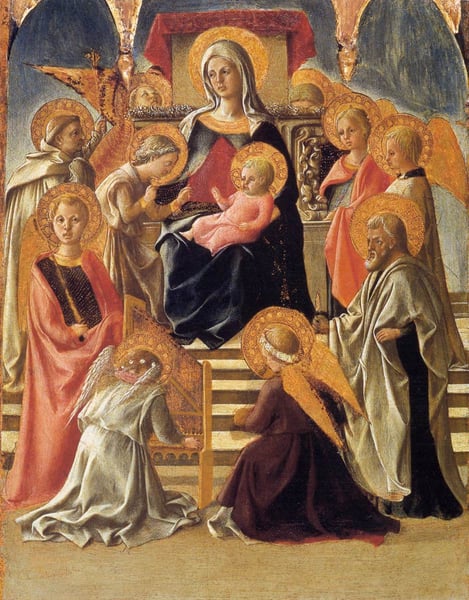
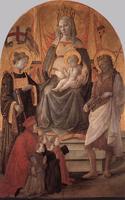
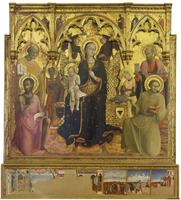
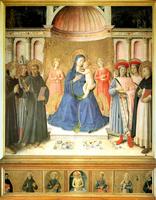
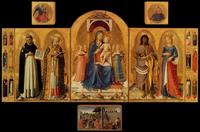
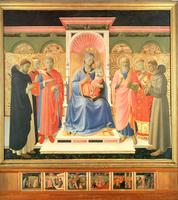
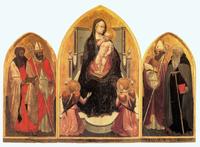
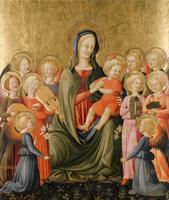
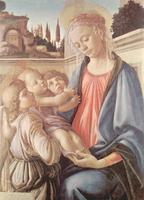
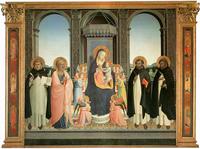
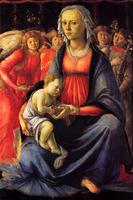
Based solely on the provided facts—that the artwork is Madonna and Child Enthroned with Saints, by Filippo Lippi, in the Early Renaissance style, and classified as a religious painting—its significance lies in how it embodies the core innovations of the Early Renaissance within a traditional devotional format. The work is significant as a religious painting of this period because it likely merges sacred iconography with a new naturalism and spatial coherence, moving beyond the flat, hieratic conventions of medieval art. Filippo Lippi's treatment of such a subject is emblematic of the era's shift toward humanizing religious figures—rendering the Madonna and Child with tender, approachable humanity while still maintaining their spiritual authority. The "enthroned" composition, surrounded by saints, anchors the scene in a convincing, three-dimensional space, demonstrating the period's embrace of perspective and volumetric form. Thus, the painting's importance rests on its role in translating timeless religious narrative into a visually grounded, emotionally resonant experience that defines the Early Renaissance.