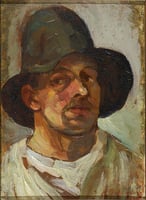
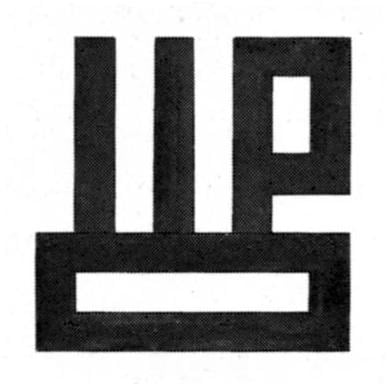
Monogram for J. J. P.
Expert analysis of Theo van Doesburg’s Monogram for J. J. P.
Style: Constructivism · Genre: design
Expert Analysis: "Monogram for J. J. P." by Theo van Doesburg
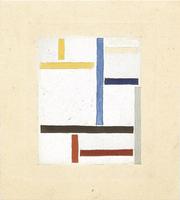
Theo van Doesburg, a founding figure of the De Stijl movement and a key proponent of Constructivism, created this monogram as a distilled exercise in geometric abstraction and functional design. The work belongs to the Constructivist tradition, which seeks to break down visual elements into their purest forms—lines, planes, primary colors, and minimal typography—while maintaining a rigorous structural logic.
Significance within the style and period:
- Integration of typography and geometry: Van Doesburg elevates a personal identifier (the initials "J. J. P.") into a dynamic, balanced composition, treating letters as modular, abstract shapes rather than mere signs. This reflects the Constructivist belief that art should serve everyday life, merging communication with visual order.
- Precursor to modern logo design: As a design piece, this monogram exemplifies the early 20th-century shift toward rational, non-representational branding—a direct ancestor of contemporary corporate identity and graphic design. Van Doesburg’s approach here anticipates the Bauhaus and later Swiss Style, where form follows function.
- De Stijl principles: The monogram likely employs a grid-based layout, right angles, and primary colors (red, blue, yellow) plus black/white, adhering to the movement’s aim—shared with Constructivism—to create universal, harmonious visual language through reduction.
By compressing a personal mark into a universal, abstract system, "Monogram for J. J. P." stands as a seminal work in Constructivist design, demonstrating how art can fuse with everyday communication without losing avant-garde rigor.
Visually similar
20 works with related composition and palette
Monogram design for Antony Cook
Theo van Doesburg
Tanglewood Tales
Virginia Frances Sterrett
Right part of a double-page frontispiece to a manuscript of religious texts, penned for Süleyman I. c. 1550
Ahmed Karahisari
Untitled
Erich Buchholz
Saphan
Omar Rayo
Vier verbundene Gruppen
Richard Paul Lohse
Untitled
Amilcar de Castro
Double Impression IV
Anni Albers
Bortnyik Sándor Függöleges Kompozició
Sandor Bortnyik
Three Compositions for Book Design (ending)
Vasyl Yermylov
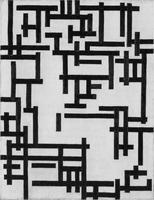
Composition XIII (Woman in studio)
Theo van Doesburg
Manifestations of Rumi
Nedaa Elias
Kunstmappe Schweizerische Mobiliar
Richard Paul Lohse
Muralmålning på manganblå grund
Otto Gustav Carlsund
Untitled
Amilcar de Castro
Clandestine Game XI
Omar Rayo
Composition
Theo van Doesburg
The Fourth 'Book of Schemes'. Album #1, the Second Folder
Valerii Lamakh

Green and Red - Figure and Ground
Richard Anuszkiewicz
Study for Composition XXV
Theo van Doesburg