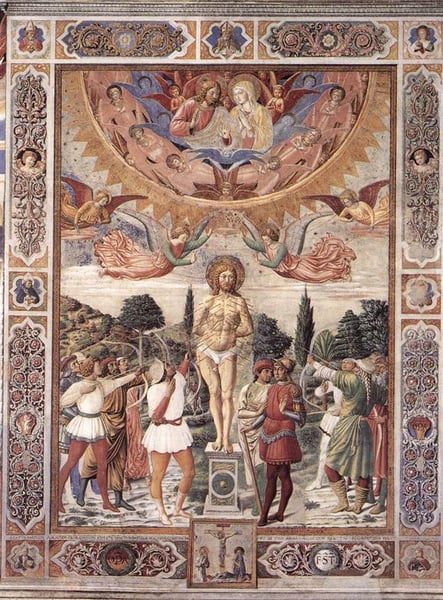
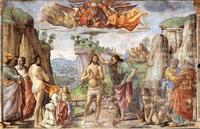
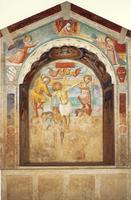
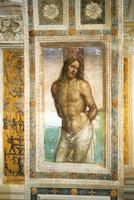
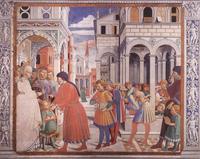
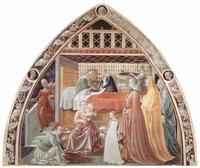
In Benozzo Gozzoli’s Martyrdom of St. Sebastian, the artist brings together the defining concerns of Early Renaissance religious painting: a newly naturalistic approach to the human figure, a clear narrative focus, and a luminous, decorative surface that still honors the sacred subject. Created within the Early Renaissance, this work marks a departure from the flat, hieratic forms of the Gothic era. Gozzoli grounds the saint’s suffering in a believable, spatial setting—likely a landscape or architectural backdrop—and depicts Sebastian’s body with careful anatomical attention, emphasizing both physical pain and spiritual composure. The significance lies in how Gozzoli balances the era’s emerging interest in perspective and human emotion with the devotional requirements of the religious genre: the martyr’s serene expression and the orderly composition invite contemplation rather than mere horror. In doing so, the painting stands as a key example of how Early Renaissance artists transformed traditional religious iconography into a more immediate, human-centered experience while retaining its solemn piety.