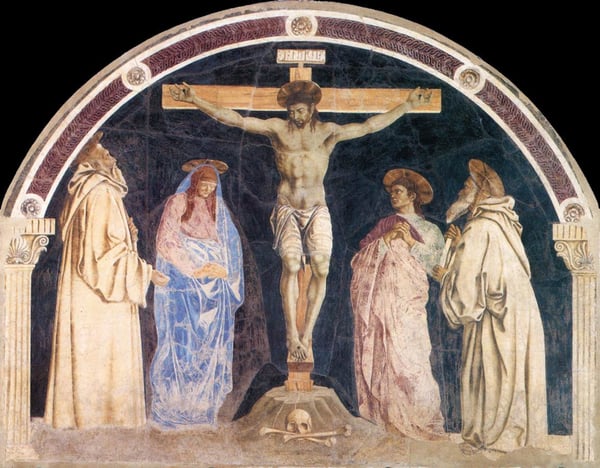
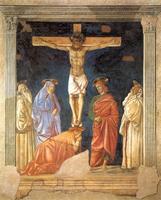
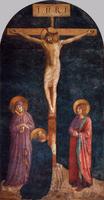
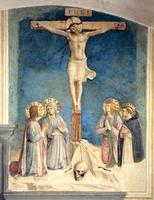
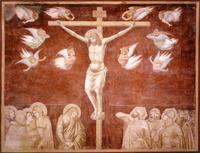
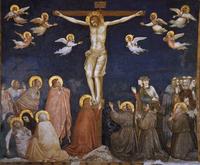
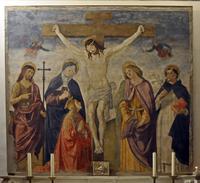
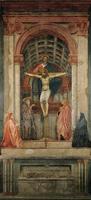
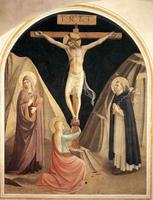
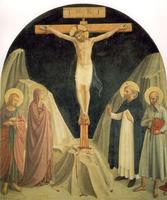
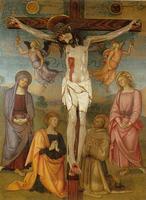
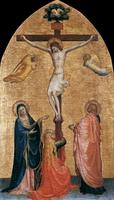
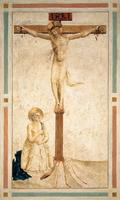
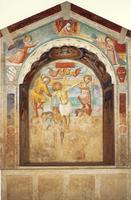
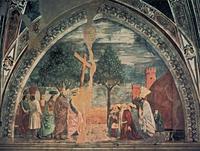
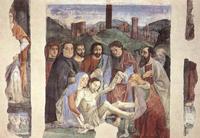
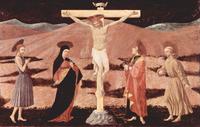
Based solely on the provided facts, the significance of Andrea del Castagno's Crucifixion lies in its position as a compelling example of the Early Renaissance religious painting genre. As an Early Renaissance work, it likely embodies the period's innovative shift toward greater naturalism, spatial clarity, and emotional directness in depicting sacred subjects. Castagno's treatment of such a central Christian theme would have moved away from the flat, symbolic conventions of Gothic art, introducing a more grounded, human portrayal of suffering and divinity. The significance here is not in a specific narrative detail, but in how the artwork demonstrates the stylistic transition of its era—using form and composition to make a familiar religious scene feel more immediate, tangible, and psychologically resonant for the viewer.