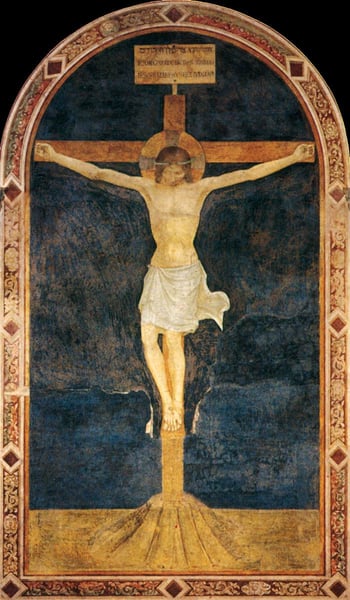
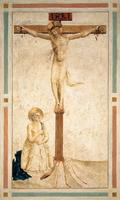
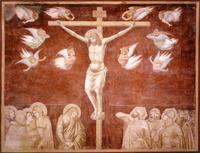
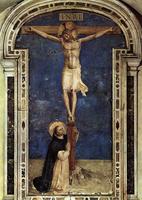
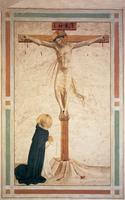
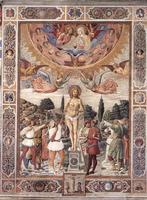
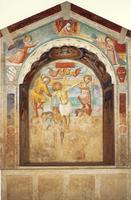
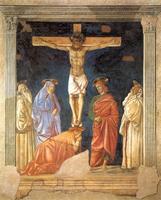
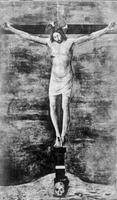
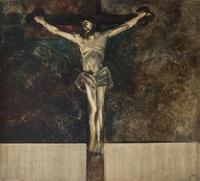
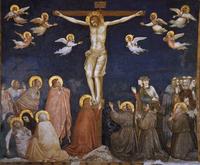
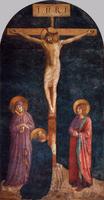
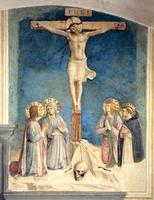
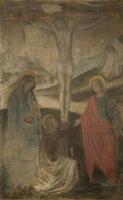
The "Crucified Christ" by Fra Angelico is a quintessential example of Early Renaissance religious painting. Its significance lies in how it synthesizes the spiritual intensity of medieval devotional art with the emerging Renaissance values of clarity, balance, and humanistic pathos. As an Early Renaissance work, it moves beyond the flat, gold-ground iconography of the Gothic era toward a more naturalistic—yet still deeply reverent—representation of the Crucifixion. Fra Angelico’s treatment here is notable for its serene, contemplative mood; the figure of Christ is both dignified and poignant, inviting quiet meditation rather than dramatic agony. This piece exemplifies the period’s shift toward harmonious composition, soft modeling of form, and an emphasis on the sacred narrative as an accessible, emotionally resonant scene—key hallmarks that would define the Renaissance transformation of religious art.