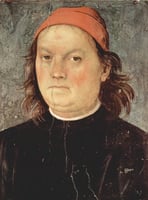
Pietro Perugino sanatçısının Martyrdom of St. Sebastian eseri hakkında uzman analizi
Tarz: High Renaissance · Tür: religious painting
Expert Analysis of "Martyrdom of St. Sebastian" by Pietro Perugino
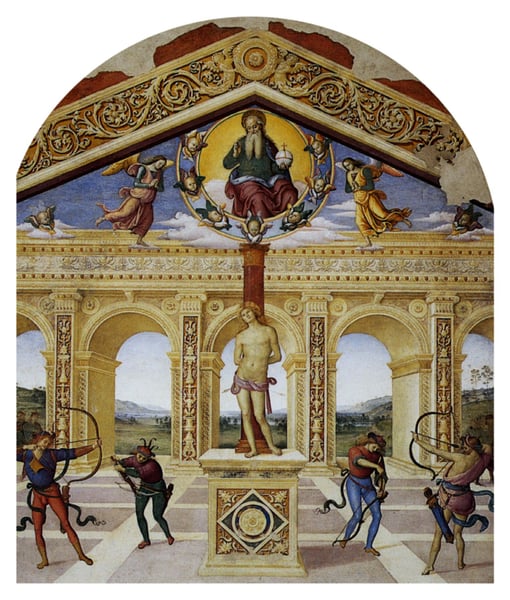
As a defining work of the High Renaissance, Perugino’s Martyrdom of St. Sebastian exemplifies the period’s pursuit of harmonious balance, idealized beauty, and serene spirituality. Painted during an era when artists sought to fuse naturalism with classical order, this religious painting stands as a masterclass in compositional clarity and emotional restraint.
Significance within the High Renaissance and Religious Painting:
-
Idealized Suffering: Unlike earlier, more visceral depictions of martyrdom, Perugino transforms violence into quiet grace. St. Sebastian is shown pierced by arrows, yet his expression remains calm and his pose almost dance-like—a hallmark of High Renaissance emphasis on dignified humanity over raw agony. This approach aligns with contemporary theological ideals of martyrdom as a peaceful union with the divine.
-
Harmonious Composition: Perugino employs a symmetrical, balanced arrangement typical of the High Renaissance. The saint stands centrally, flanked by meticulously rendered archers and a serene landscape that recedes into a luminous, atmospheric distance. The use of chiaroscuro is gentle, modeling figures with soft transitions of light and shadow to create an ethereal, otherworldly quality.
-
Landscape as Spiritual Metaphor: The background—a pastoral idyll of gentle hills, clear skies, and distant delicate trees—is not mere decoration. It reflects the High Renaissance belief that nature mirrors divine order. The tranquil setting contrasts with the act of violence, suggesting that Sebastian’s soul has already transcended earthly pain.
-
Influence on Later Masters: Perugino’s fusion of linear perspective, clear geometric structure, and emotional restraint directly influenced his pupil Raphael. This painting exemplifies the perfection of form that defined the High Renaissance—every figure, gesture, and spatial relationship works in unity to convey a sacred narrative without theatrical excess.
Conclusion: Perugino’s Martyrdom of St. Sebastian is significant because it crystallizes the High Renaissance ideal: suffering rendered beautiful, faith made serene, and religious narrative elevated to timeless, classical grace. It stands as a pivotal illustration of how this period redefined sacred art through humanism, harmony, and luminous calm.
Görsel olarak benzer
İlişkili kompozisyon ve renk paletine sahip 20 eser
Martyrdom of St. Sebastian
Benozzo Gozzoli
Zacharias Writes Down the Name of His Son
Domenico Ghirlandaio
Expulsion of Joachim
Domenico Ghirlandaio
Portrait of the Donor Francesca Pitti Tornabuoni
Domenico Ghirlandaio
Marriage of Mary
Domenico Ghirlandaio
Portrait of the Donor Giovanni Tornabuoni
Domenico Ghirlandaio
The Annunciation
Francesco del Cossa
The Annunciation
Pinturicchio
The Annunciation
Pietro Perugino
The Annunciation
Vittore Carpaccio
Annunciation
Filippo Lippi
The School of Tagaste
Benozzo Gozzoli
Annunciation
Filippo Lippi
The School of Tagaste
Benozzo Gozzoli
Angel Appearing to Zacharias
Domenico Ghirlandaio
Scenes from the Life of St. James
Andrea Mantegna
The Crucifixion
Pietro Perugino
St. Augustine Reading Rhetoric and Philosophy at the School of Rome
Benozzo Gozzoli
Annunciation with Saint Emidius
Carlo Crivelli
The Miracles of San Bernardino. The Healing of a Young
Pietro Perugino