Expertenanalyse zu Maerten van Heemskercks The Man of Sorrows
Stil: Mannerism (Late Renaissance) · Genre: religious painting
Expert Analysis of "The Man of Sorrows" by Maerten van Heemskerck
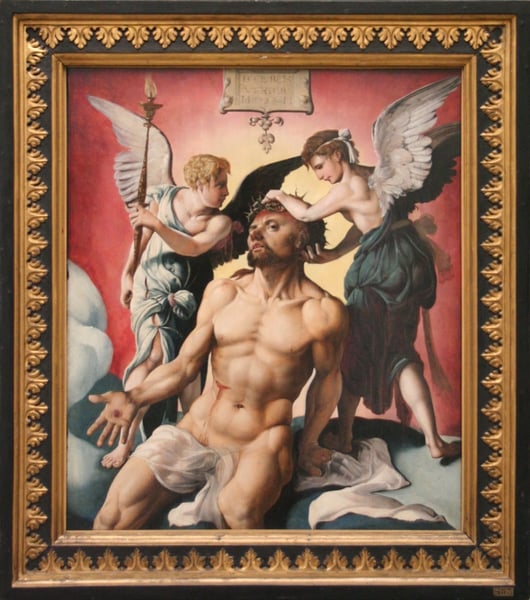
This work stands as a compelling example of Northern Mannerist religious painting, revealing how van Heemskerck synthesized the emotional intensity of late Renaissance piety with the stylized, intellectual complexity of the Mannerist aesthetic. The significance of "The Man of Sorrows" lies in its embodiment of Mannerism’s departure from High Renaissance balance and naturalism, instead favoring an exaggerated, highly expressive treatment of a deeply devotional subject.
Key Mannerist Features:
- Elongated, Contorted Anatomy: The figure of Christ is rendered with an unnatural elongation—especially in the limbs and torso—that heightens the sense of spiritual suffering rather than physical realism. This distortion, typical of Mannerism, serves to elevate the emotional and symbolic impact.
- Intense Emotionalism: Van Heemskerck amplifies Christ’s pathos through a dramatic, almost theatrical expression of pain. The tilted head, upward gaze, and visible wounds are not merely descriptive but become devices to provoke a visceral empathetic response from the viewer.
- Complex Composition and Spatial Ambiguity: The figure is typically set against a shallow, claustrophobic space or an abstract background, lacking the serene, rational perspective of earlier Renaissance works. This compression forces attention onto the tortured body and its symbolic attributes (crown of thorns, wounds, instruments of the Passion), emphasizing the theological mystery of the suffering Messiah.
- Contrasting Light and Livid Color: Mannerist works often employ unnatural, cool colors and stark lighting. Here, the pallid flesh of Christ, set against a dark or neutral ground, creates a spectral, haunting quality. The blood from the wounds provides stark, symbolic accents that draw the eye across the composition, guiding meditative focus on each wound.
Significance within Style and Genre: As a religious painting, "The Man of Sorrows" functions as an Andachtsbild (a devotional image meant for private contemplation). Van Heemskerck adapts this traditional Northern European theme to the Mannerist idiom, rejecting the calm, harmonious depictions of Christ’s passion found earlier. Instead, he presents a deliberately uncomfortable, angular, and psychologically charged image that mirrors the religious anxieties of the post-Reformation period. The artwork exemplifies how Mannerist artists in the Netherlands used formal exaggeration not merely for aesthetic effect, but as a tool to intensify spiritual experience, making the viewer acutely aware of Christ’s human agony and divine sacrifice. In this, "The Man of Sorrows" is a landmark of late Renaissance religious expression, where style becomes the vehicle for profound devotion.
Museum / Gallery
Visuell ähnlich
20 Werke mit ähnlicher Komposition und Farbpalette
Man of Sorrows
Maerten van Heemskerck
The Martyrdom of Saint Sebastian
Giulio Cesare Procaccini
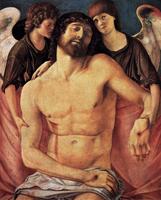
Dead Christ Supported by Angels
Giovanni Bellini
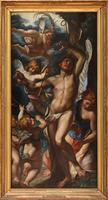
St Sebastian Tended by Angels
Giulio Cesare Procaccini
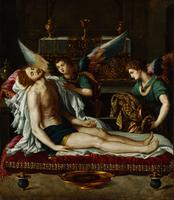
The Body of Christ Anointed by Two Angels
Alessandro Allori
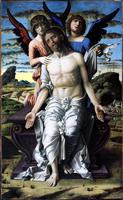
Christ of Pity supported by a cherub and a seraph
Andrea Mantegna
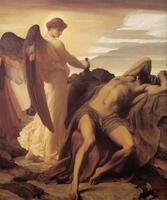
Elijah in the Wilderness
Frederic Leighton
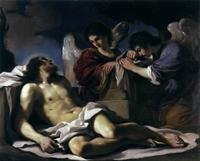
The Dead Christ Mourned by Two Angels
Guercino
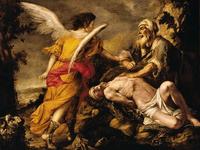
The Sacrifice of Isaac
Juan de Valdes Leal
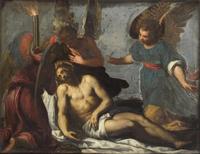
Toter Christus, Von Engeln Beweint
Palma il Giovane
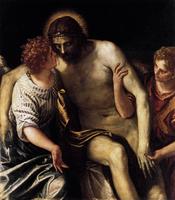
Dead Christ Supported by Two Angels
Paolo Veronese
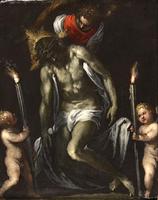
The Dead Christ Supported by An Angel with Two Putti Each Supporting a Cero
Palma il Giovane
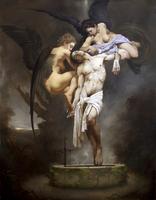
Redemption
Roberto Ferri
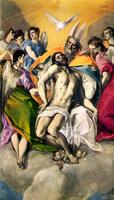
Ascension of Jesus
El Greco
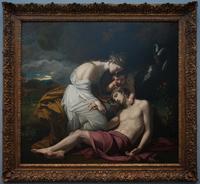
Venus Lamenting the Death of Adonis
Benjamin West
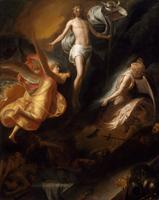
Resurrection of Christ
Samuel Dirksz van Hoogstraten
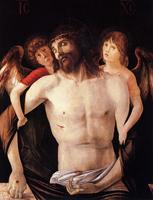
The Dead Christ Supported by Two Angels
Giovanni Bellini
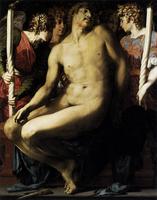
Dead Christ with Angels
Rosso Fiorentino
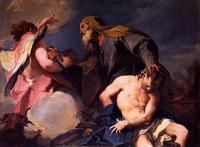
Sacrifice of Isaac
Giambattista Pittoni
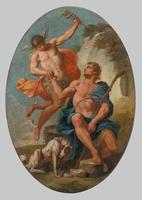
Mercury and Paris
Heinrich Schonfeld