
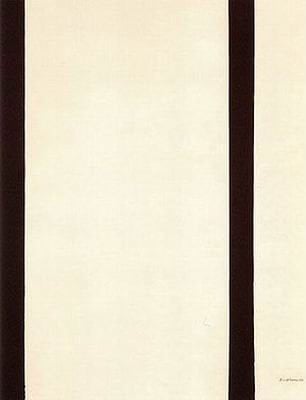
The Station of the Cross - Eighth Station
Details
Expert analysis of Barnett Newman’s The Station of the Cross - Eighth Station
Style: Color Field Painting · Genre: abstract
Expert Analysis: "The Station of the Cross – Eighth Station" by Barnett Newman
Barnett Newman’s The Station of the Cross – Eighth Station is a seminal work within the Color Field Painting movement, demonstrating the style’s radical departure from representational art toward pure abstraction. Executed in the mid-20th century, this piece is part of Newman’s landmark 14-painting series inspired by the Christian narrative of the Via Dolorosa.
Significance within Color Field Painting:
Newman, a leading figure of Color Field Painting, sought to distill painting to its most essential elements: color, scale, and spatial tension. In this work, he uses a stark, monochromatic palette—typically black and white or muted tones—to evoke the somber gravity of the Eighth Station (Jesus meets the women of Jerusalem). The composition is defined by his signature “zip”: a vertical stripe that both divides and unifies the canvas. This device creates a dynamic field of color that encourages contemplative, almost spiritual engagement, a hallmark of Color Field’s aim to produce transcendent emotional experiences through pure vision.
Abstract Genre and Conceptual Depth:
As an abstract work, Eighth Station rejects literal depiction in favor of symbolic resonance. Newman’s title and series reference a specific biblical episode, yet the absence of figures grounds the viewer in abstract form. The painting’s starkness—its field of color interrupted only by the zip—reflects themes of suffering, solitude, and human existence. This reduction aligns with Color Field’s philosophical underpinnings, where color and shape become vehicles for universal human concerns, moving beyond narrative to evoke a direct, visceral response.
Art-Historical Impact:
Newman’s Stations series, including this eighth panel, exemplifies the mature phase of Color Field Painting, pushing abstraction toward a kind of existential minimalism. The work’s significance lies in its ability to merge formal innovation with profound content, influencing later generations of abstract painters. By stripping art of anecdote, Newman demonstrates that color, scale, and line alone can bear the weight of history, spirituality, and emotion—a defining achievement of the Color Field movement.
Genre
Style
Visually similar
20 works with related composition and palette
Untitled Etching #1
Barnett Newman
Sumi Drawing
Anne Truitt
Number 17
John McLaughlin
White Fire I
Barnett Newman
The Station of the Cross - Thirteenth station
Barnett Newman
Vertical Band
Ellsworth Kelly
Canto III
Barnett Newman
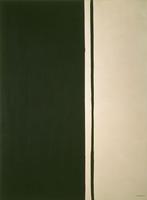
Black Fire I
Barnett Newman
Burnt Umber & Ultramarine Blue
Yun Hyong–keun
Number 17
John McLaughlin
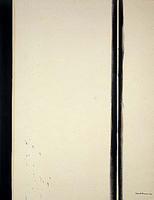
The Station of the Cross - Fourth Station
Barnett Newman
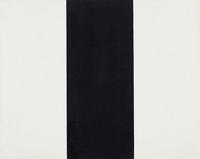
Number 11
John McLaughlin
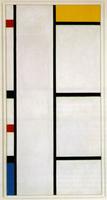
Composition No. III Blanc-Jaune
Piet Mondrian
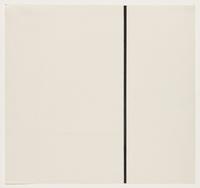
Vertical Line from the series Line Form Color
Ellsworth Kelly
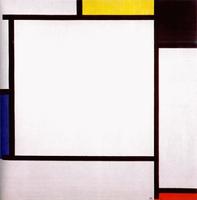
Composition 2
Piet Mondrian
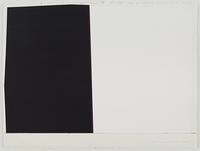
Summer 88, No. 6
Anne Truitt

Vertical Composition with Blue and White
Piet Mondrian

Composition III with Blue, Yellow and White
Piet Mondrian
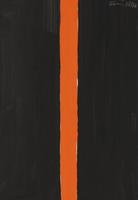
Untitled (Black and Orange)
Gunther Forg
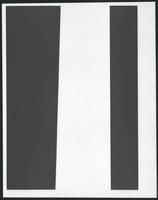
Black/White
Guido Molinari