Expert analysis of John McLaughlin’s Number 17
Style: Minimalism · Genre: abstract
Expert Analysis of "Number 17" by John McLaughlin
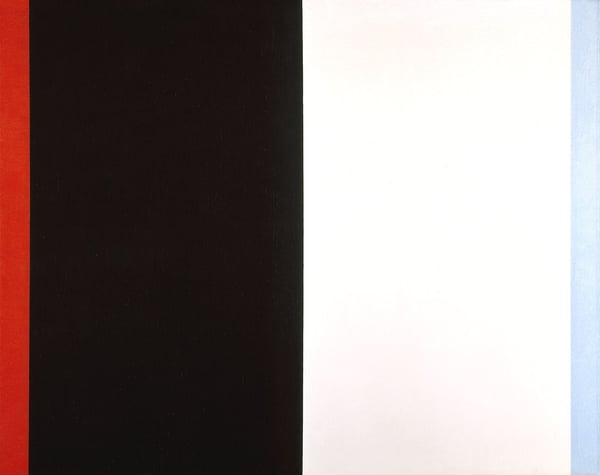
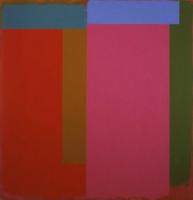
As a Minimalist abstract work, "Number 17" exemplifies the core principles of the movement: reduction to essential geometric forms, a restrained palette, and a deliberate focus on the viewer's perceptual experience. John McLaughlin, a key figure in American Minimalism, often synthesized ideas from De Stijl, Zen philosophy, and the hard-edge abstraction of the 1950s. His works are significant for their quiet, meditative quality, achieved through asymmetrical arrangements of rectilinear fields—usually black, white, and subtle grays—that create a dynamic tension between figure and ground.
In "Number 17," the interplay of vertical and horizontal elements likely generates a subtle, almost architectural balance, where negative space is as active as the painted shapes. This approach distinguishes McLaughlin from his Abstract Expressionist contemporaries, as he abandoned gestural spontaneity in favor of precise, impersonal compositions that invite contemplation. The work’s significance lies in its ability to push abstraction toward a radical economy of means, anticipating later Minimalist and concept-driven art while retaining a uniquely serene, spatial presence.
Visually similar
20 works with related composition and palette
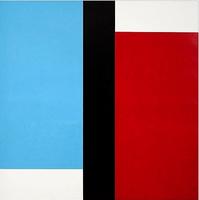
Adam and Eve (#2)
Frederick Hammersley
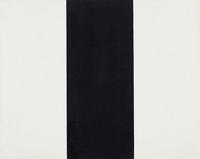
Number 11
John McLaughlin
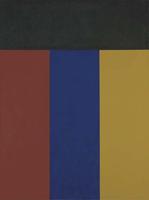
Elements V
Brice Marden
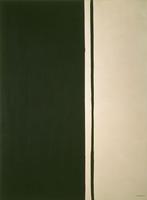
Black Fire I
Barnett Newman
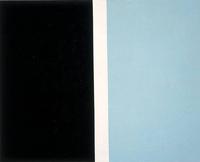
Number 14
John McLaughlin
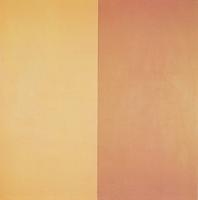
Blunder
Brice Marden
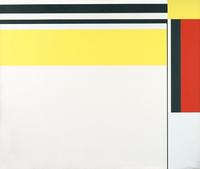
White, Black, Yellow, and Red
Ilya Bolotowsky
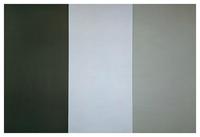
Grove Group III
Brice Marden
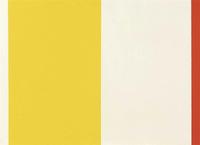
Untitled
John McLaughlin
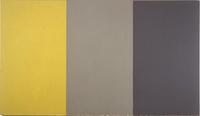
Range
Brice Marden
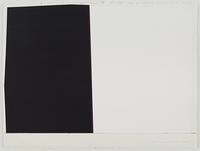
Summer 88, No. 6
Anne Truitt
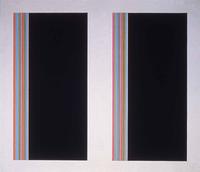
Looking Glass
Gene Davis
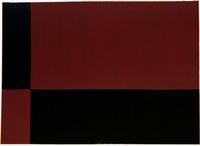
7 Nov '62
Anne Truitt
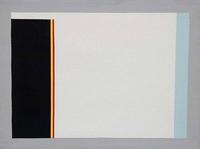
Untitled
Gene Davis
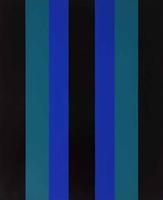
Parallèles bleues
Guido Molinari

Midnight Blue
Barnett Newman
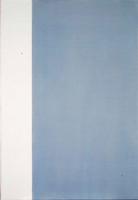
Ligne rouge II n°19
Genevieve Asse
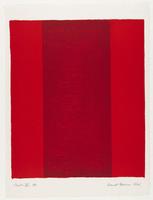
Canto XVI
Barnett Newman
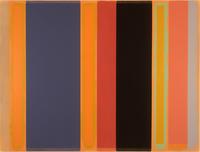
Sevastipol
Doug Ohlson
Marker California
Doug Ohlson