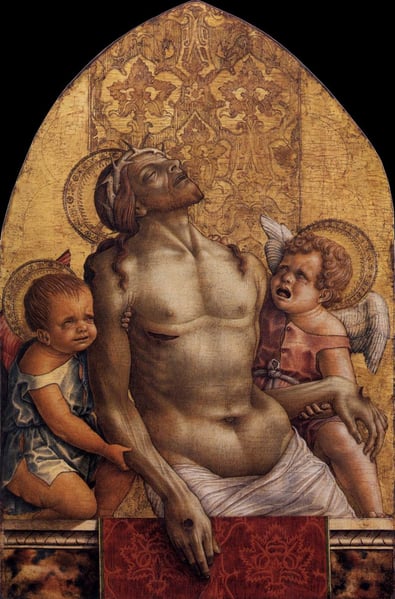
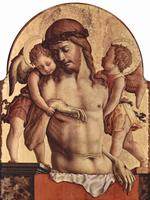
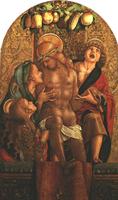
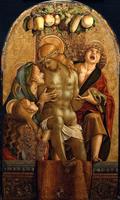
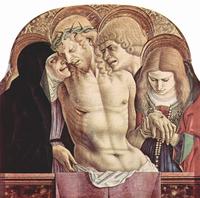
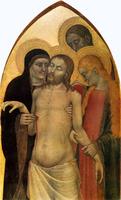
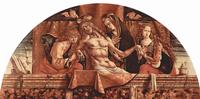
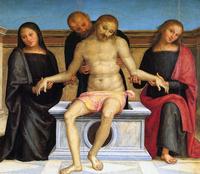
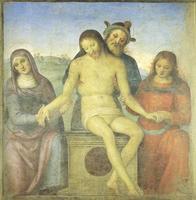
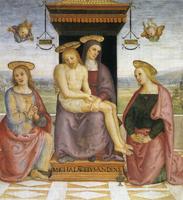
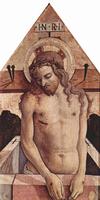
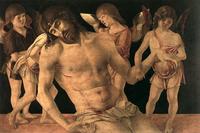
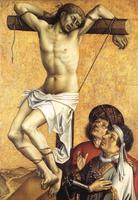
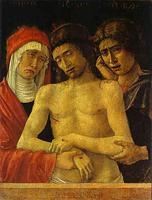
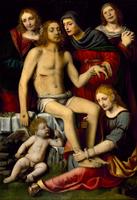
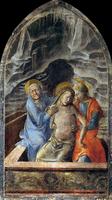
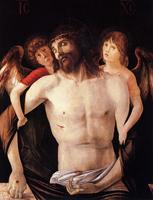
Based solely on the provided facts—that Carlo Crivelli's Pietà is an Early Renaissance religious painting—its significance lies in how it exemplifies the key transitional qualities of its style and period within the religious genre.
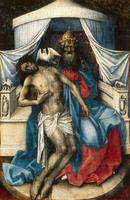
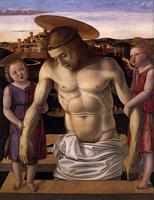
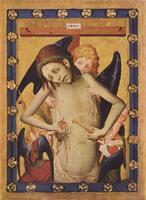
As an Early Renaissance work, this Pietà would be significant for its shift away from the flat, symbolic treatments of the Middle Ages toward greater naturalism and emotional expressiveness. Within the genre of religious painting, the subject of the Pietà (the Virgin Mary mourning the dead Christ) was a central vehicle for exploring human grief and divine sacrifice. Crivelli’s version likely contributes to this period’s emphasis on tactile realism—such as the realistic rendering of flesh, tears, and fabric—while still retaining the decorative gold backgrounds and meticulous detail characteristic of the earlier Gothic tradition. This places the work at a critical juncture where sacred iconography meets a new, more humanizing approach, making it significant as an example of how Early Renaissance artists balanced spiritual symbolism with a developing interest in the natural world and human emotion.