Analisi esperta di Near Saint Cyr di Gustave Loiseau
Stile: Post-Impressionism · Genere: landscape
Expert Analysis of "Near Saint Cyr" by Gustave Loiseau
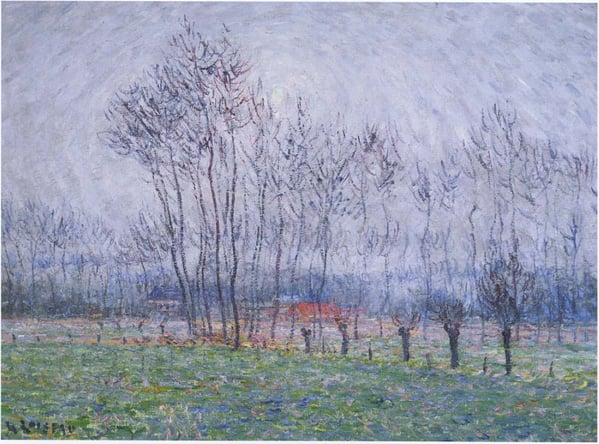
Gustave Loiseau’s "Near Saint Cyr" is a quintessential Post-Impressionist landscape that exemplifies the movement’s shift from the optical naturalism of Impressionism toward a more structured, expressive, and subjective rendering of nature. While Loiseau is often associated with the Pont-Aven school and the pure, separated brushwork of Neo-Impressionism, his mature work—as seen here—demonstrates a personal synthesis of fleeting light effects with a deliberative formal design.
Significance within Post-Impressionism:
The painting’s significance lies in its balance between atmospheric immediacy and compositional order. Loiseau does not merely record a transient moment; he constructs the landscape with rhythmic, woven brushstrokes that build up surfaces like tapestry. This technique, sometimes called “en treillis” (trellis-like), gives the foliage, sky, and water a tactile, vibrating quality that invites prolonged viewing. The subject—a rural scene near the village of Saint-Cyr—is typical of Loiseau’s devotion to the French countryside, yet the handling transforms the ordinary into a meditation on color and structure.
Key Stylistic Traits (as evident in the work):
- Color orchestration: Loiseau uses high-key, often unmixed hues to suggest the play of sunlight, but he subordinates local color to overall harmony. The greens, blues, and warm earth tones likely form a unified palette that evokes a specific time of day or season.
- Brushwork as structure: His characteristic short, comma-like strokes create a dense mesh that defines both form and atmosphere. This gives the painting a shimmering, almost woven surface that recalls the poetic realism of Pierre Bonnard or the structural rigor of Paul Cézanne, yet remains distinctly Loiseau’s own.
- Capturing the ephemeral: Like the Impressionists, Loiseau is fascinated by changing light and weather, but he frames those effects within a stable pictorial architecture. The result is a landscape that feels both alive and timeless—a hallmark of his contribution to Post-Impressionism.
Why It Matters:
"Near Saint Cyr" is significant because it represents Loiseau’s unique position as a bridge between the lyrical spontaneity of Impressionism and the more self-conscious, decorative concerns of early 20th-century modernism. Though his name is less widely known than Monet or Cézanne, Loiseau’s landscapes—such as this one—demonstrate how Post-Impressionism extended the possibilities of plein-air painting: no longer a simple record of sight, but a deeply personal, crafted response to the natural world.
Visivamente simili
20 opere con composizione e palette affini
Rainy Weather at Hampton Court
Alfred William Finch
Landscape in Snow
Gustave Loiseau
Snow Effect at Eragny
Camille Pissarro
Landscape in Winter with Fog
Gustave Loiseau
The Effect of Snow, Sunset, Eragny
Camille Pissarro
A Meadow in Moret
Camille Pissarro
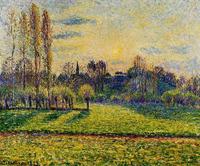
View of Bazincourt, Sunset
Camille Pissarro
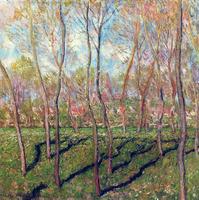
Trees in Winter, View of Bennecourt
Claude Monet
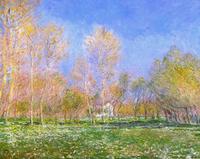
Springtime in Giverny
Claude Monet
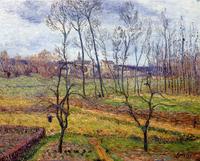
Overcast Weather at Nesles la Vallee
Gustave Loiseau
At Montreuil, France
James Charles
Trees by the River
Gustave Loiseau
Flood Near Nantes
Gustave Loiseau
Springtime Landscape at Giverny
Claude Monet
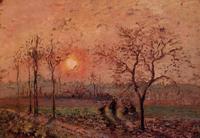
Sunset
Camille Pissarro
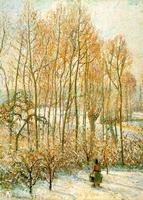
Morning Sunlighton the Snow, Eragny-sur-Epte
Camille Pissarro
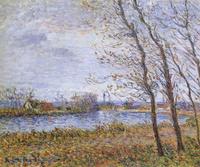
Port Pinche at the Turn of the Seine
Gustave Loiseau
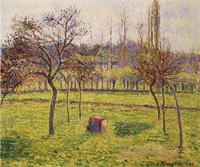
Apple Trees in a Field
Camille Pissarro
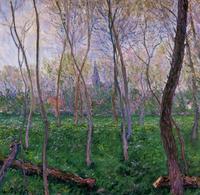
Bennecourt
Claude Monet
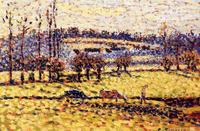
Meadow at Bazincourt
Camille Pissarro