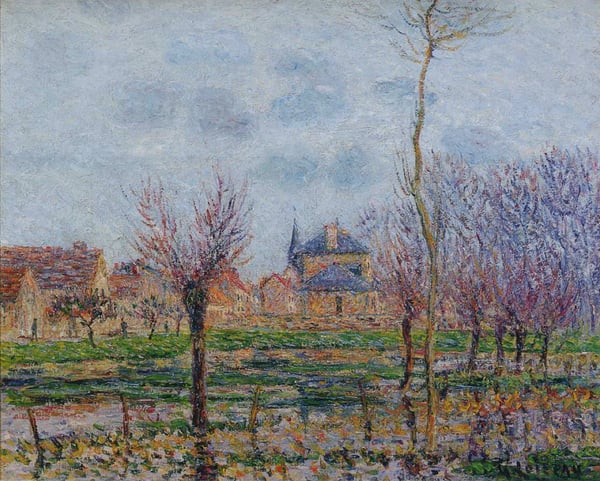
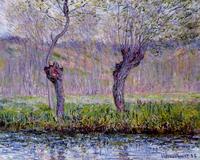
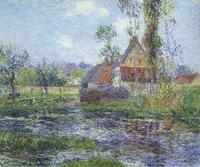
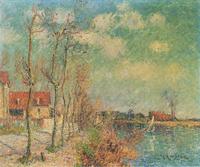
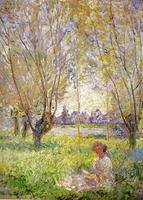
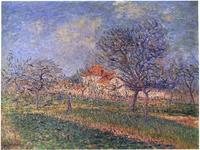
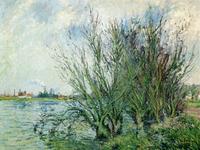
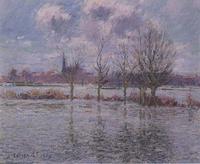
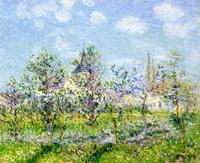
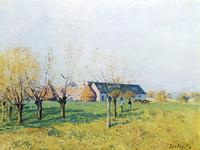
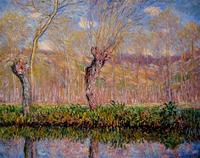
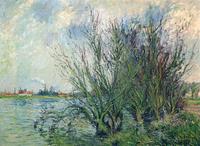
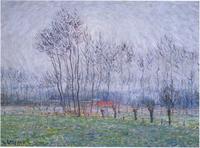
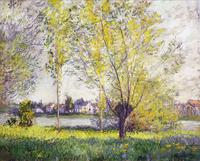
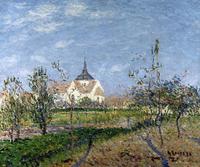
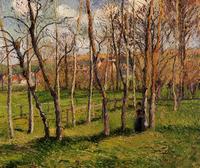
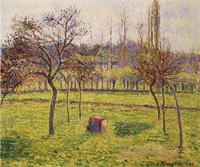
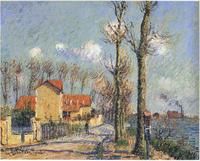
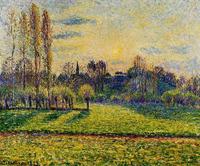
As a Post-Impressionist landscape, Gustave Loiseau's Saint Cyr du Vaudreuil exemplifies the movement's departure from Impressionism's direct optical transcription toward a more structured, expressive use of color and form. The significance of this work lies in its emphasis on the artist's subjective interpretation of the scene—rather than capturing a fleeting moment of light, Loiseau employs deliberate brushwork and heightened color harmonies to evoke a particular mood or rhythmic sensation in the viewer. Within the Post-Impressionist period, landscapes were often vehicles for personal vision; here, the composition balances naturalistic representation with a constructed, almost decorative arrangement, reflecting the broader shift toward individual expression that defined the era.