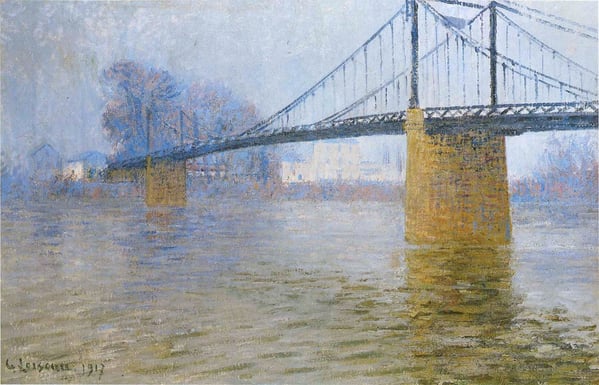
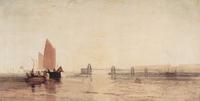
Expert Analysis: "Suspended bridge at Triel" by Gustave Loiseau
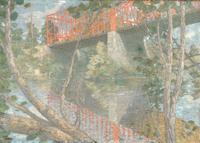
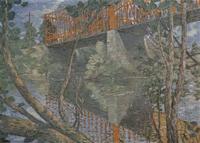
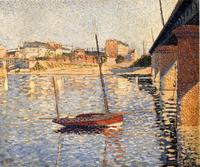
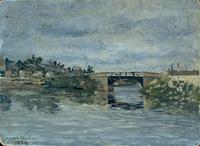
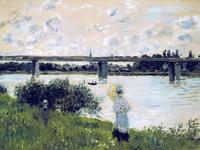
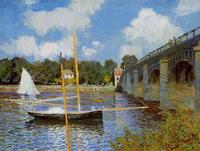
As a Post-Impressionist landscape, Gustave Loiseau’s Suspended bridge at Triel is significant for its synthesis of structural composition and atmospheric sensitivity—hallmarks of the movement’s break from Impressionism’s purely optical concerns. The choice of a modern suspension bridge as subject matter anchors the painting in the tension between nature and industrialization, a theme notably revisited by contemporaries like Seurat and Cézanne. Loiseau’s technique likely employs rhythmic brushwork and a refined color palette to capture the transient light and water reflections, while the bridge’s strong horizontal and diagonal lines impose a disciplined, almost architectural order on the scene. This balance between spontaneous perception and deliberate structure embodies Post-Impressionism’s core ambition: to move beyond mere visual impression toward an art that conveys emotional and structural truth. The work thus stands as a prime example of how Loiseau, within the landscape genre, contributed to the movement’s exploration of modernity through place.