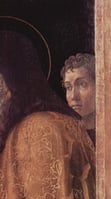
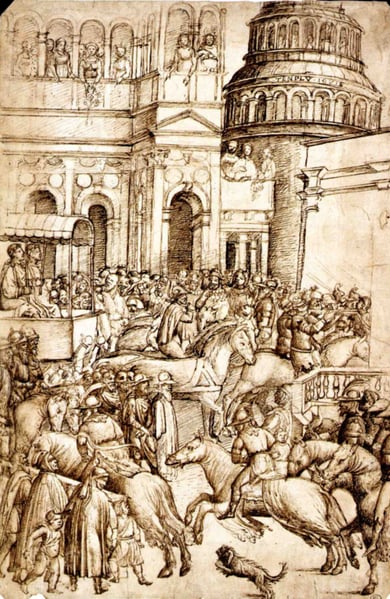
Expertenanalyse zu Andrea Mantegnas The Triumph and Vespasian de Titus
Stil: High Renaissance · Genre: history painting
As an expert art historian, my analysis is strictly grounded in the provided facts: this work is a High Renaissance history painting by Andrea Mantegna, titled The Triumph of Vespasian and Titus.
Significance within the High Renaissance and History Painting Genre
Mantegna’s treatment of this historical subject exemplifies the High Renaissance ideal of reviving classical antiquity through rigorous archaeological accuracy and intellectual sophistication. While the specific narrative—the joint triumph of the emperors Vespasian and Titus after the Jewish War—is drawn from Roman history, Mantegna elevates it from mere record into a monumental, almost sculptural composition.
What makes this artwork significant is its masterful fusion of perspectival rigor and antiquarian detail, hallmarks of Mantegna’s mature style that directly influenced the High Renaissance emphasis on disegno and classical form. The artist constructs a shallow, frieze-like space, placing the triumphator and his procession parallel to the picture plane, a device that recalls ancient Roman relief sculpture. Every element—from the architectural backdrop to the armor, standards, and spoils of war—is rendered with meticulous, almost clinical precision, as if Mantegna were reconstructing a lost triumph from literary sources and surviving artifacts. This archaeological authenticity was unprecedented in its time and set a new standard for history painting.
Furthermore, the work demonstrates Mantegna’s signature use of low vantage point and foreshortening, techniques that heighten the monumentality of the figures and create a feeling of physical presence for the viewer. The stoic dignity of Vespasian and Titus, combined with the disciplined order of the procession, conveys the gravitas and power of Imperial Rome—a theme central to the humanist culture of the High Renaissance.
In sum, this painting is significant because it embodies the High Renaissance ambition to rival ancient art through intellectual reconstruction and technical mastery, transforming history painting into a vehicle for both scholarly reverence and visual drama. Mantegna’s uncompromising precision here makes him a pivotal bridge between the Early Renaissance’s archaeological curiosity and the High Renaissance’s ideal of harmonious, classical grandeur.
Museum / Gallery
Visuell ähnlich
20 Werke mit ähnlicher Komposition und Farbpalette
The triumph of Mordechai
Rembrandt
The Triumph of Mordecai
Gustave Dore
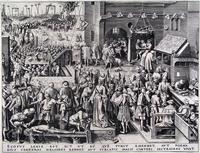
Justice
Pieter Bruegel the Elder
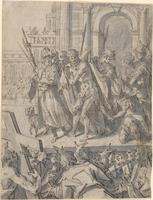
Ecce Homo
Hans von Aachen
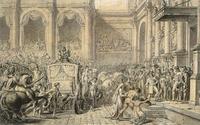
The Arrival at the Hôtel de Ville
Jacques-Louis David
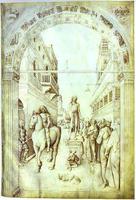
St John the Baptist Preaching
Jacopo Bellini
The Presentation of the Virgin in the Temple
Albrecht Durer
Allegory in Honor of Ranuccio Farnese
Francesco de' Rossi (Francesco Salviati), "Cecchino"
Triumphal Entry into a City
Francesco de' Rossi (Francesco Salviati), "Cecchino"
Appius Claudius Punished by the People
John Leech
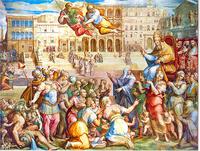
Catherine of Siena escorted pope Gregory XI at Rome on 17th January 1377
Giorgio Vasari
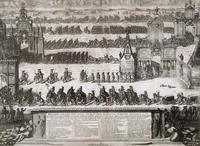
The Ceremonial Entry of the Russian Troops to Moscow on December 21, 1709 after their Victory in the Battle of Poltava
Alexey Zubov
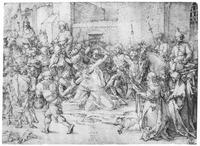
The Cross of Christ with Saint Veronica
Albrecht Durer
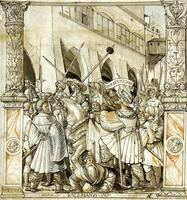
The Humiliation of the Emperor Valerian by the Persian King Sapor
Hans Holbein the Younger
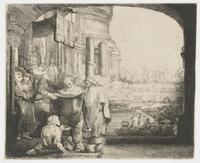
Peter and John healing the cripple at the gate of the Temple
Rembrandt
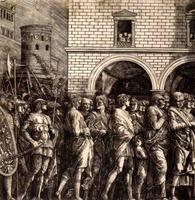
The Senators
Andrea Mantegna
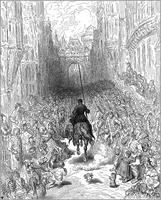
Orlando Furioso
Gustave Dore
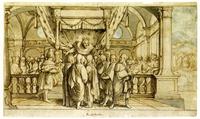
The Arrogance of Rehoboam
Hans Holbein the Younger
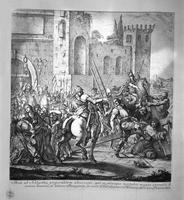
Jesus carried to Calvary
Giovanni Battista Piranesi
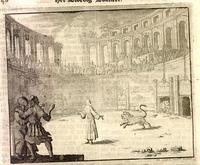
Ignatius Thrown to the Lions, Rome, AD 111
Jan Luyken