Analisi esperta di In Sundborn Church di Carl Larsson
Stile: Art Nouveau (Modern) · Genere: genre painting
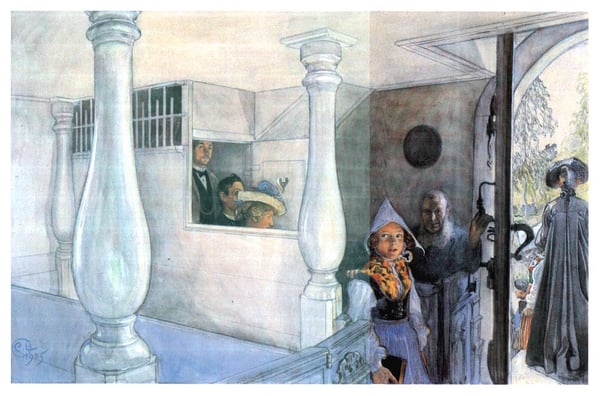
In "In Sundborn Church," Carl Larsson masterfully bridges the intimate world of genre painting—scenes of everyday life—with the decorative elegance of Art Nouveau. The work’s significance lies in its ability to elevate a mundane, domestic moment (likely a family or community scene within a church) into a harmonious, stylized composition. Larsson applies Art Nouveau’s hallmark flowing lines, organic motifs, and emphasis on pattern to a realistic interior, transforming religious and communal space into a modern celebration of beauty in daily existence. By doing so, he challenges the era’s academic hierarchies that placed history painting above genre, demonstrating that a quiet church visit could be as visually and emotionally profound as any grand narrative. The piece exemplifies how Art Nouveau’s modern sensibility sought to integrate art into every aspect of life—here, even within a place of worship.
Visivamente simili
20 opere con composizione e palette affini
The Studio
Carl Larsson
A Day of Celebration
Carl Larsson
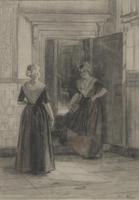
Amsterdam Orphan Girls
Nicolaas van der Waay
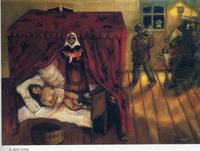
Birth
Marc Chagall
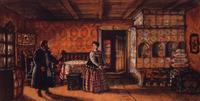
Room in the house of Prokofy Pazukhin
Boris Kustodiev
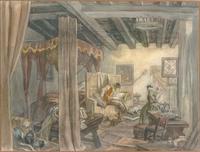
The Life of St. Ignatius Loyola. Plate 1. Ignatius recovers from his wounds at Loyola.
Carlos Saenz de Tejada
Study for `The wardrobe'
Walter Sickert
After the Evening Prayer
Xavier Mellery
The Studio
George Bellows
Mother in Interior
Jan Mankes
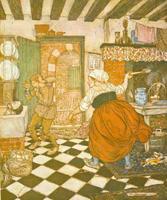
Many's the beating he had from the broomstick or the ladle
Arthur Rackham
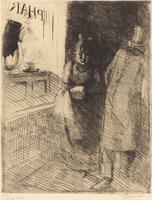
Prostitution
Paul-Albert Besnard
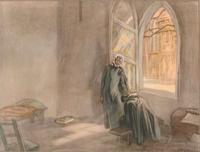
The Life of St. Ignatius Loyola. Plate 4. Ignatius and his friend, Francis Xavier, at the university of Paris. What does it profit a man if he gains the whole world but suffers the loss of his soul.
Carlos Saenz de Tejada
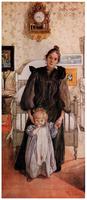
Karin and Kersti
Carl Larsson
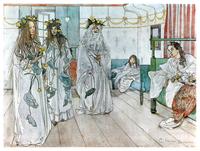
For Karin's name day
Carl Larsson
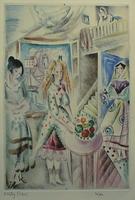
Intérieur d'Atelier
Mily Possoz
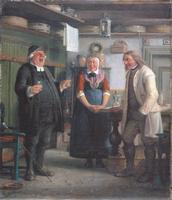
Per Degn ("Per, the deacon") sings for a glass of akvavit, An incident from the Ludvig Holberg comedy, Erasmus Montanus (Act 1, scene 4)
Wilhelm Marstrand
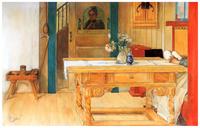
Sunday Rest
Carl Larsson
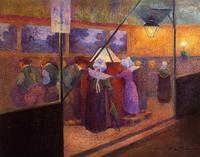
The Magic Lantern
Ferdinand du Puigaudeau
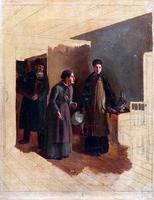
The arrival of rural teachers
Vasily Perov