Analisi esperta di Village of Plums di Toshi Yoshida
Stile: Sōsaku hanga · Genere: cityscape
Expert Analysis: "Village of Plums" by Toshi Yoshida
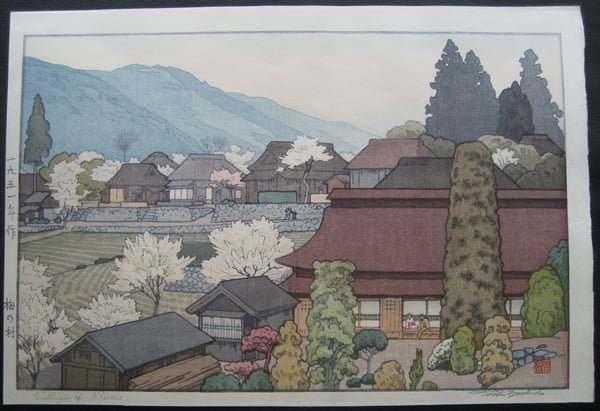
Toshi Yoshida’s “Village of Plums” stands as a quintessential example of the Sōsaku hanga movement, which revolutionized Japanese printmaking in the 20th century. Unlike the traditional ukiyo-e collaborative workshop system, Sōsaku hanga (meaning “creative prints”) demanded that the artist personally execute every step—from initial drawing to carving the woodblocks to printing—making each work a direct, unmediated expression of the artist’s vision. This print vividly demonstrates that ethos.
Significance within Sōsaku hanga
The work marks a departure from the decorative, often idealized landscapes of earlier Japanese prints. Instead, Yoshida captures a specific, lived-in place—a village during plum blossom season—with an intimate, almost documentary clarity. The plum trees, laden with blossoms, are rendered in bold, gestural carving that retains the tactile energy of the artist’s hand-cut lines. This raw, expressive quality is a hallmark of Sōsaku hanga, prioritizing the artist’s personal response over commercial polish.
Stylistic Fusion
Yoshida masterfully synthesizes Western perspective (evident in the receding roadway and structured composition) with traditional Japanese sensitivity to seasonal change and atmosphere. The soft, layered gradation of the sky and the muted, earthy palette reflect the influence of the shin-hanga (new print) movement’s painterly effects, yet the bold outlines and unblended color planes assert a modernist, self-assertive graphic language. This hybridity—a key achievement of Yoshida’s generation—positions “Village of Plums” as a bridge between Edo-period craft and modern artistic autonomy.
Artistic Legacy
Toshi Yoshida, son of the famed Hiroshi Yoshida, was a pivotal figure in post-war Japanese printmaking. In “Village of Plums”, he elevates a humble rural scene to a meditation on transience and place. The plum blossom, a classic symbol of renewal, here becomes a vehicle for personal expression rather than mere decoration. The print’s significance lies in its quiet rebellion: by asserting the artist’s singular hand in every mark, it embodies the Sōsaku hanga belief that a print is not a reproduction but an original work of art.
Visivamente simili
20 opere con composizione e palette affini
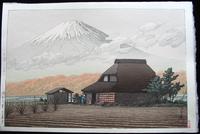
Mount Fuji from Narusawa in Autumn
Hasui Kawase
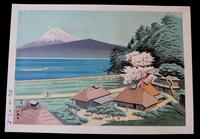
Spring View of Mount Fuji
Asano Takeji
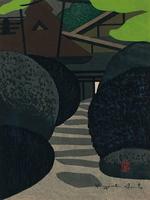
Shisen-do, Kyoto (B)
Kiyoshi Saito
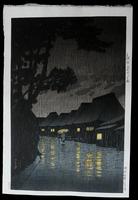
Rainy Night at Maekawa
Hasui Kawase
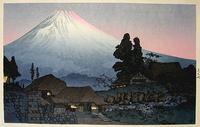
Fuji from Mizuchubo
Shotei Takahashi
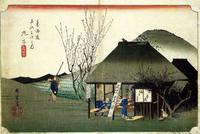
Mariko Mabutsu Chaya
Hiroshige
Dawn at Isawa in the Kai province
Katsushika Hokusai
Shrine of the Paper-Makers, Fukui
Toshi Yoshida
Hodogaya, Shinkame Bashi, Station 5
Hiroshige
View of Kalchreut
Albrecht Durer
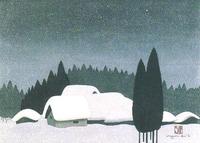
Aizu Winter
Kiyoshi Saito
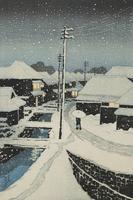
Evening Snow at Terashima Village
Hasui Kawase
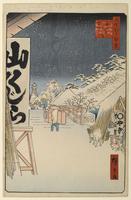
114. Bikuni Bridge in Snow
Hiroshige
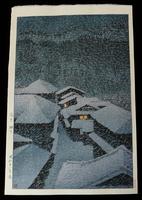
Snow Storm at Hatakudari
Hasui Kawase
Farmhouse Under Snowy Trees
Hasui Kawase
The Tea plantation of Katakura in the Suruga province
Katsushika Hokusai
Enoshima in the Sagami province
Katsushika Hokusai
White Plum in the Farmyard
Toshi Yoshida
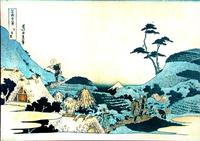
Landscape with two falconers
Katsushika Hokusai
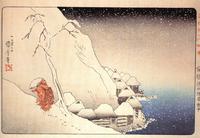
Nichiren going into exile on the island of Sado
Utagawa Kuniyoshi