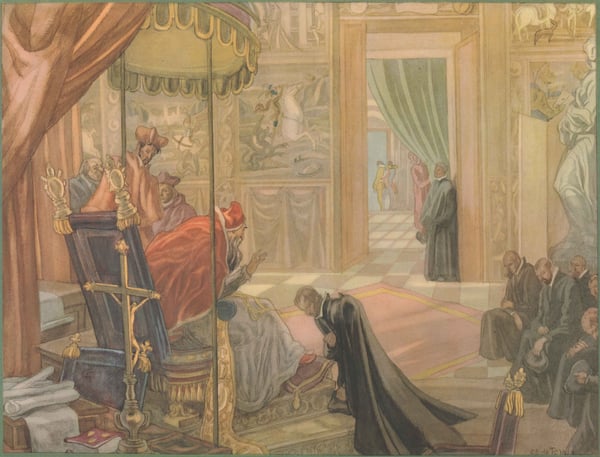
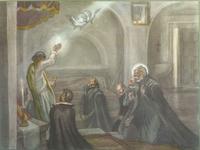
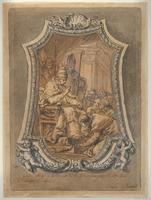
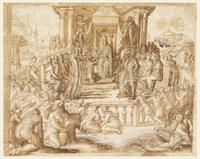
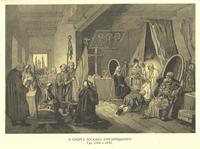
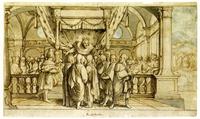
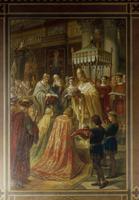
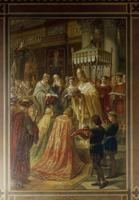
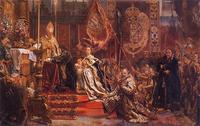
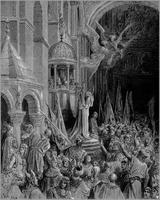
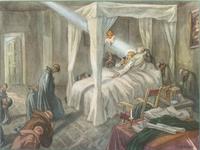
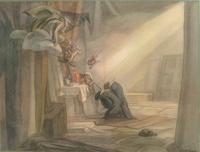
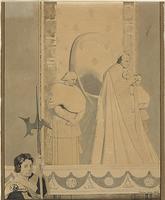
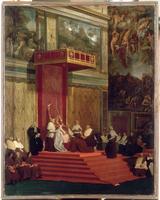
This artwork, Plate 7: Pope Paul III approves the Society of Jesus 27th September 1540 Regimini Militantes from Carlos Saenz de Tejada’s series The Life of St. Ignatius Loyola, is significant for its bold synthesis of a traditional history-painting subject with the modern decorative language of Art Nouveau. While Art Nouveau is typically associated with organic, sinuous forms, floral motifs, and allegorical or secular subjects, Saenz de Tejada adapts its flowing lines and elegant stylization to a specific, momentous religious-historical event: the papal confirmation of the Jesuit order via the bull Regimini Militantis Ecclesiae.
The work’s importance lies in its modernist reinterpretation of sacred history, eschewing the heavy chiaroscuro and theatricality of Baroque religious painting in favor of a flattened, rhythmic composition and refined contour—hallmarks of the Art Nouveau aesthetic. By treating a canonical Catholic narrative with the same sinuous grace applied to contemporary posters or decorative panels, the artist bridges the late 19th-century revival of craftsmanship and the early 20th-century desire to revitalize historical subject matter. The resulting image is both a respectful chronicle of the Society of Jesus’ founding and a fresh, visually harmonious statement that aligns religious authority with modern artistic sensibility.