Analisi esperta di Bell Tower in the Rain at Okuyama di Hasui Kawase
Stile: Shin-hanga · Genere: cityscape
Expert Analysis: "Bell Tower in the Rain at Okuyama" by Hasui Kawase
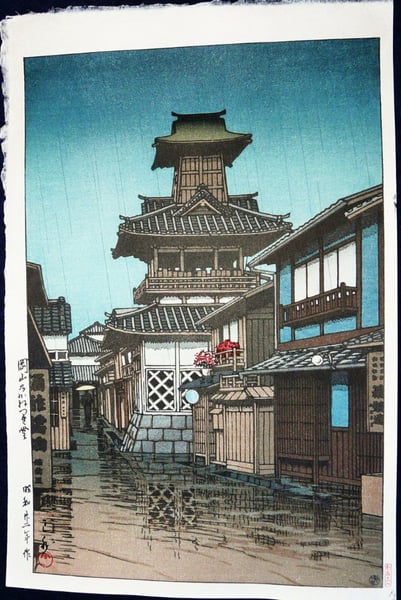
Hasui Kawase’s Bell Tower in the Rain at Okuyama is a quintessential work of the Shin-hanga (New Print) movement, which flourished in early 20th-century Japan. Shin-hanga sought to revive the collaborative woodblock print tradition of ukiyo-e while incorporating Western techniques such as naturalistic perspective, atmospheric light, and a softer, more painterly tonal range. This cityscape exemplifies Hasui’s mastery of mood and weather, themes that define his legacy as one of the movement’s leading landscape and cityscape artists.
Significance within the Shin-hanga Style:
- Atmospheric Realism: Hasui was celebrated for capturing transient weather conditions—rain, snow, mist—with lyrical precision. Here, the rain transforms a mundane bell tower into a poetic, melancholic scene. The diagonal streaks of rain, muted grays, and blurred outlines convey both physical and emotional chill, demonstrating Shin-hanga’s departure from the crisp, outlined forms of classic ukiyo-e toward a more impressionistic, Western-influenced ambience.
- Modern Cityscape as Subject: While traditional ukiyo-e often featured famous landmarks or pleasure quarters, Shin-hanga artists like Hasui focused on everyday, often overlooked corners of modernizing Japan. Okuyama is likely a quiet suburb or rural-urban fringe; the bell tower—perhaps a local temple or school—becomes a symbol of local identity rendered with quiet dignity. This elevates the ordinary to the iconic, a hallmark of Shin-hanga’s urban sensibilities.
- Technical Collaboration: Like all Shin-hanga prints, the work resulted from a triad: artist (Hasui), carver, and printer. The subtle gradations of gray in the wet sky, the soft ink bleeds suggesting rain, and the precise carving of the bell tower’s architecture highlight the exceptional craftsmanship that Shin-hanga revived. Hasui worked closely with publisher Watanabe Shōzaburō, who insisted on high-quality materials and methods that honored ukiyo-e but allowed for modern effects.
Genre and Period Context: As a cityscape within Shin-hanga, this print contributes to a broader genre that captured Japan during its rapid industrialization and Westernization—yet without the frenetic energy of Tokyo’s Ginza or neon signs. Instead, Hasui offers a tranquil, retrospective view, aligning with the Japanese aesthetic of mono no aware (the pathos of things). The rain emphasizes impermanence and solitude, themes that resonate deeply in both traditional Japanese poetry and early 20th-century artistic introspection.
Why It Matters: Bell Tower in the Rain at Okuyama is significant because it exemplifies the Shin-hanga movement’s ability to synthesize Japanese woodblock tradition with modern Western pictorial space and emotional resonance. It showcases Hasui’s unparalleled skill in rendering atmosphere—rain here is not merely a weather event but a filter for memory and mood. The print stands as a testament to the resilience of the woodblock medium in an age of photography and mass reproduction, proving that a handcrafted print could rival any painting in depth and expression. For collectors and scholars, it represents a high point of 20th-century Japanese printmaking, where tradition met innovation without losing its soul.
Visivamente simili
20 opere con composizione e palette affini
Kiyamachi Street, Kyoto
Asano Takeji
Rain at Nissaka
Hasui Kawase
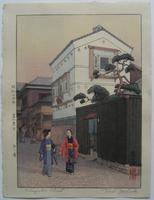
Kikuzaka Street
Toshi Yoshida
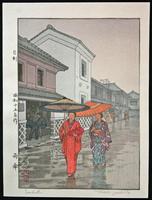
Umbrella ("Amagasa")
Toshi Yoshida
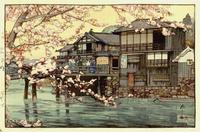
Hayase
Hiroshi Yoshida
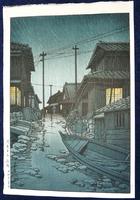
Night Rain at Kawarako, Ibaraki
Hasui Kawase
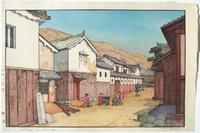
Village in Harima
Toshi Yoshida
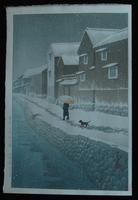
Show at Shinkawabata
Hasui Kawase
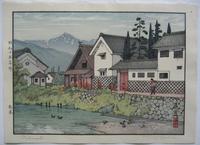
Matsumoto
Toshi Yoshida
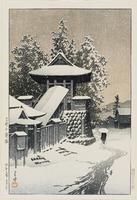
Bell Tower at Mt. Kôya
Hasui Kawase
Summer in Aizu
Kiyoshi Saito
Kabuki Theatre
Hasui Kawase
Snow at Hiunkaku Temple, Kyoto
Asano Takeji
Zenstu Temple in Sanshu
Hasui Kawase
Untitled
Keisai Eisen
13. Shitaya Hirokōji
Hiroshige
Rainy Season at Ryoshimachi
Hasui Kawase
Rain in Kiyomizu Temple
Asano Takeji
2.Nostalgia 91x116.8cm, Photo Printed on Canvas, Acrylic, Mother of Pearl, 2020
Oh Myung Hee
In a Temple Yard
Hiroshi Yoshida