Analisi esperta di Barracks di Taras Shevchenko
Stile: Realism · Genere: genre painting
Expert Analysis: "Barracks" by Taras Shevchenko
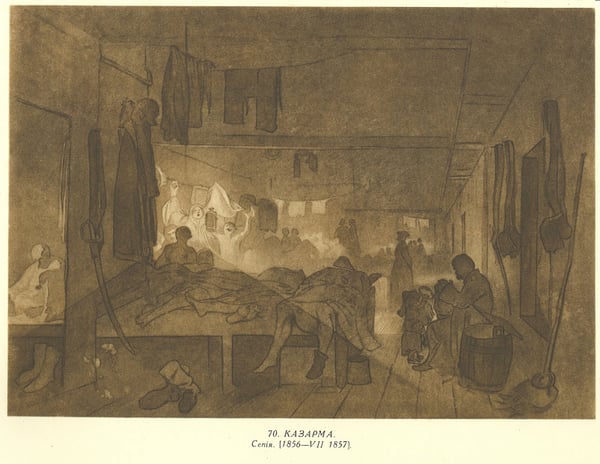
Executed in the Realist tradition, Taras Shevchenko’s "Barracks" stands as a powerful genre painting that exemplifies the movement’s core mission: to depict the unvarnished truths of everyday life, especially those of the marginalized and oppressed. Within the 19th-century Realist milieu—a reaction against Romantic idealization—Shevchenko’s work carries profound social significance.
The painting’s significance lies in its unflinching portrayal of the crowded, grim conditions endured by serfs or the urban poor in Imperial Russia/Ukrаine. As a genre scene, it moves beyond mere observation to become a document of human suffering and dignity. Shevchenko, himself a former serf, brings an insider’s empathy: the cramped interior, the slumped postures, and the shadowed faces do not sensationalize but instead invite quiet contemplation of systemic injustice.
Stylistically, the work is anchored in Realism’s rejection of historical or mythological subjects. Instead, it elevates a quotidian, even degrading, situation into art worthy of serious attention. The composition likely emphasizes confinement and communal hardship, using muted earth tones and stark lighting typical of the movement. By focusing on the barracks—a symbol of forced labor or military conscription—Shevchenko aligns with contemporaries like Gustave Courbet, who insisted on painting “the manners, ideas, and appearance of my time.”
Ultimately, "Barracks" is significant because it transforms a specific social reality into a universal statement about resilience. It affirms Realism’s role as a tool for empathy and critique, making the invisible visible, and challenging audiences to confront the human cost of social structures. Shevchenko’s dual identity as poet and painter deepens this message, ensuring the artwork remains a touchstone of Ukrainian and European Realist art.
Visivamente simili
20 opere con composizione e palette affini
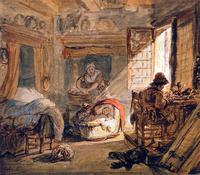
Cobbler and his family
Abraham van Strij
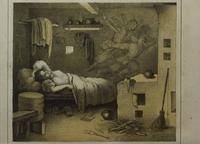
Hans Christian Andersen Fairy Tales
Mykola Murashko
Interior of an Inn
Adriaen van Ostade
The Chorus Girls
Jose Gutierrez Solana
Putting a Propagandist Under Arrest
Ilya Repin
Dancing Farmers
Adriaen van Ostade
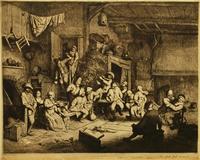
Dance at the Inn
Adriaen van Ostade
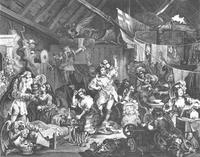
Strolling Actresses Dressing in Barn
William Hogarth
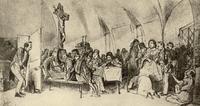
Repast
Vasily Perov
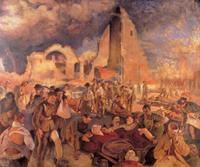
An Advanced Dressing Station in France
Henry Tonks
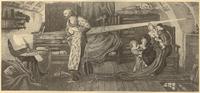
First observation of the transit of Venus by William Crabtree in 1639
Ford Madox Brown
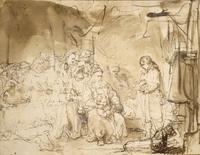
Joseph Recounting His Dreams
Rembrandt
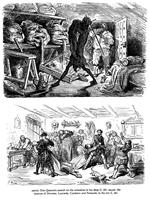
Don Quixote
Gustave Dore
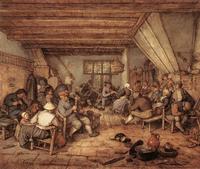
Feasting Peasants in a Tavern
Adriaen van Ostade
A Harlot's Progress, plate 5
William Hogarth
Dressing the Dead Girl (Dressing the Bride)
Gustave Courbet
The Scavengers
Jose Gutierrez Solana
Nativity
Paul Gauguin
The Family
Adriaen van Ostade
THE UNDERGROUND RAILWAYS
John Leech