Analisi esperta di Figures di Ding Yanyong
Stile: Expressionism · Genere: genre painting
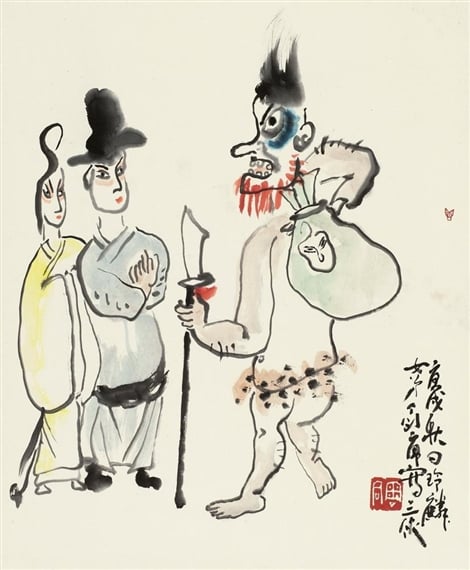
This artwork, "Figures" by Ding Yanyong, holds a unique place in modern art history as a groundbreaking fusion of Chinese ink traditions and Western Expressionist emotion. While categorized here as an Expressionist genre painting, its true significance lies in how Ding reshaped both idioms to create a new visual language.
Significance within the style:
Expressionism in early 20th-century Europe often channeled raw, psychological intensity through distorted forms and jarring colors. Ding Yanyong, who studied in Japan and was exposed to Fauvism and Expressionism, imported these ideas into the Chinese context. However, he did not simply imitate Western models. Instead, he translated the Expressionist impulse for subjective feeling through the spontaneity and economy of line found in Chinese xieyi (freehand) ink painting. In "Figures," the human subjects are likely rendered with swift, calligraphic brushstrokes that prioritize emotional energy over anatomical precision—a hallmark of his mature style.
Significance within the genre (genre painting):
As a genre painting depicting everyday life, "Figures" might appear deceptively simple. Yet Ding elevates the mundane by treating his subjects not as documentary records but as vessels for distilled emotion. His figures often seem caught in a state of existential stillness or quiet drama, their elongated or simplified forms echoing the nervous energy of both Chinese literati painting and European Expressionism. This work challenges the traditional Chinese hierarchy that ranked landscape above figural art, asserting that modern life itself is worthy of serious artistic expression.
Cross-cultural breakthrough:
Ding Yanyong’s greatest achievement—and the core significance of "Figures"—is his synthesis of East and West without subordinating one to the other. Where many Chinese artists of his generation either followed Western conventions outright or retreated into pure tradition, Ding forged a third path. He used the Expressionist license to distort form as a way to liberate Chinese brushwork from its classical restraint, while simultaneously using the ink medium’s transparency and aliveness to keep Expressionist color from becoming mere paint. "Figures" thus stands as a landmark in the modern Chinese art movement, demonstrating that emotional truth could be conveyed through a hybrid visual language—one that remains influential to this day for artists navigating between cultural identities.
Genere
Stile
Visivamente simili
20 opere con composizione e palette affini
Denouncement of Cao Cao
Ding Yanyong
Opera Figures
Ding Yanyong
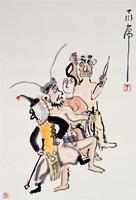
Persona
Ding Yanyong
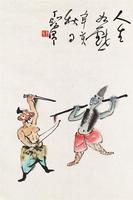
All the World's a Stage
Ding Yanyong
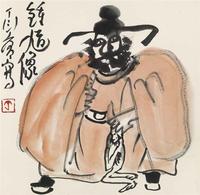
Zhong Kui
Ding Yanyong
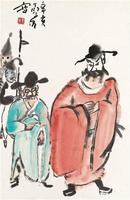
Opera Figures
Ding Yanyong
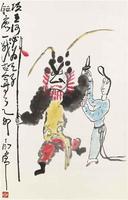
Opera Figures: Farewell my Concubine
Ding Yanyong
Taoist Immortals Celebrating Longevity
Tomioka Tessai
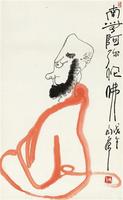
Figure
Ding Yanyong
Shoki and Demon, Edo period
Utagawa Kuniyoshi
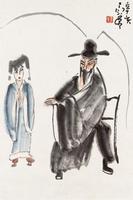
Opera Figures
Ding Yanyong
Hotei with his Treasure Bag
Hakuin Ekaku
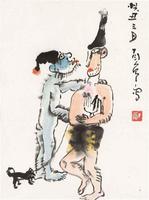
Opera Figures
Ding Yanyong
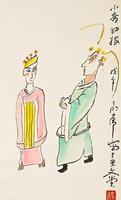
The Younger Qiao, a New Bride
Ding Yanyong
Eight Immortals
Ding Yanyong
Untitled
Sengai
The Seven Lucky Gods
Tsukioka Yoshitoshi
Li Bai's Drunken Calligraphy
Ding Yanyong
Lee Tae-Guay (Wayfarer with pumpkin)
Qi Baishi
Untitled (Figures)
Ike no Taiga