Expert analysis of Karl Schrag’s Anemones
Style: Expressionism · Genre: flower painting
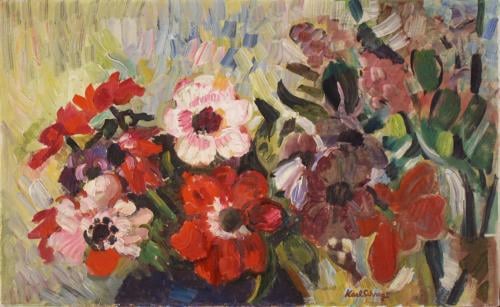
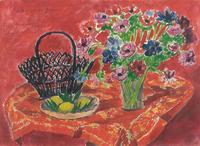
While the provided facts are limited, the significance of Karl Schrag's "Anemones" can be understood within its dual context as an Expressionist work and a flower painting.
In Expressionism, traditional still-life subjects like flowers are not rendered for botanical accuracy or decorative charm. Instead, they become vehicles for emotional intensity and subjective experience. Schrag's "Anemones" likely employs vibrant, non-naturalistic color, dynamic brushwork, and a sense of energy or tension that transforms the simple floral motif into an expressive statement.
As a flower painting, this work subverts the genre’s historic associations with tranquility and memento mori. Within Expressionism, the anemones—often symbols of fragility and passing beauty—may be charged with a more personal, psychological resonance. The painting's significance thus lies in how it uses the familiar language of flower painting to convey raw emotional force, aligning with the Expressionist goal of depicting inner reality over outer appearance.
Visually similar
20 works with related composition and palette
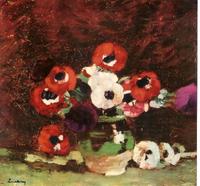
Anemone Flowers
Stefan Luchian
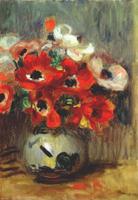
Anemones
Pierre-Auguste Renoir
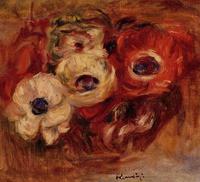
Anemones
Pierre-Auguste Renoir
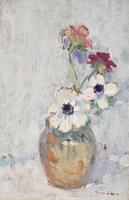
Anemone
Sever Burada
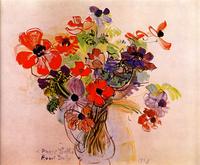
Anemones
Raoul Dufy
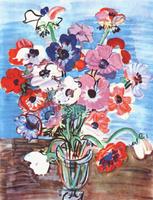
Anemones
Raoul Dufy
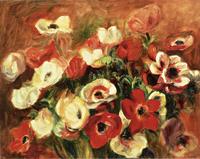
Spray of Anemones
Pierre-Auguste Renoir
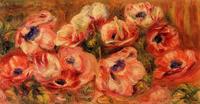
Anemones
Pierre-Auguste Renoir
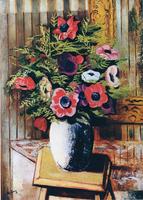
Untitled
Moise Kisling
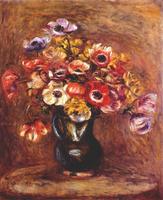
Anemones
Pierre-Auguste Renoir
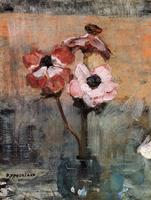
Anemones in a Vase
Piet Mondrian
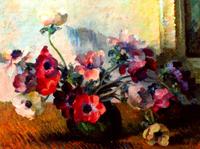
Still Life with Flowers
Stefan Popescu
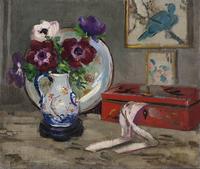
Still Life with a Box
Józef Pankiewicz
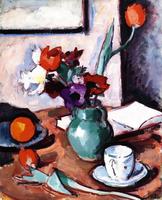
Flowers in a Green Vase
Samuel Peploe
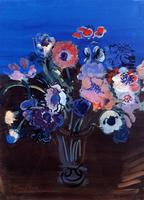
Anemones
Raoul Dufy
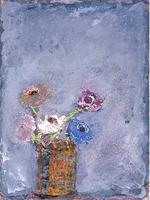
Anemonie in Rusted Can
Gandy Brodie
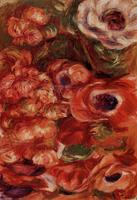
Anemonies
Pierre-Auguste Renoir
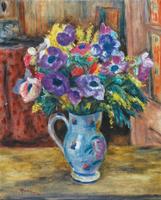
Anemony W Wazonie
Józef Pankiewicz
Vase d'anemones, citrons et panier sur la table
Andre Dunoyer de Segonzac
Flowers
Odilon Redon