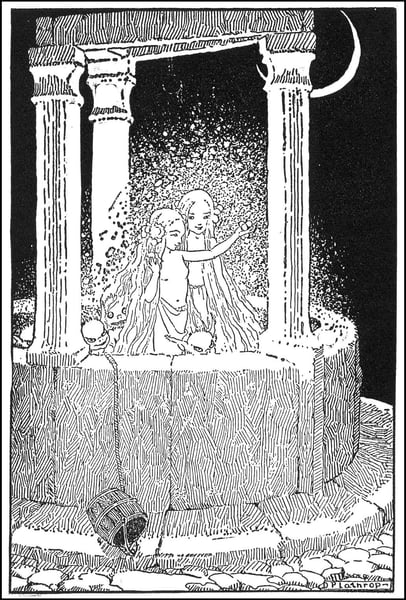
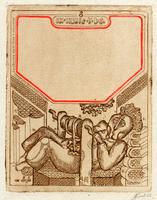
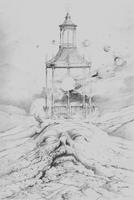
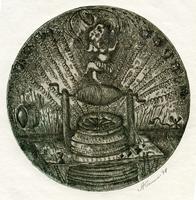
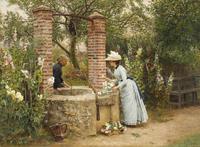
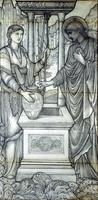
Dorothy Lathrop’s “The Treasure of Carcassonne” stands as a significant illustration within the Art Nouveau tradition by merging the movement’s signature organic elegance with the narrative demands of book illustration. The work exemplifies Art Nouveau’s modern, decorative aesthetic—characterized by sinuous, flowing lines and a harmonious integration of natural and architectural forms—while serving a clear storytelling purpose. Lathrop’s illustration demonstrates how the style could transcend pure ornamentation to evoke mood and place, capturing the legendary, treasure-laden atmosphere of the medieval French city. Its significance lies in this synthesis: the piece is both a refined specimen of Art Nouveau’s visual language and a functional, enchanting component of illustrated literature, showcasing the period’s commitment to elevating commercial art to the level of fine art.