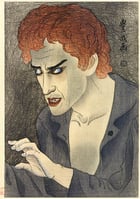
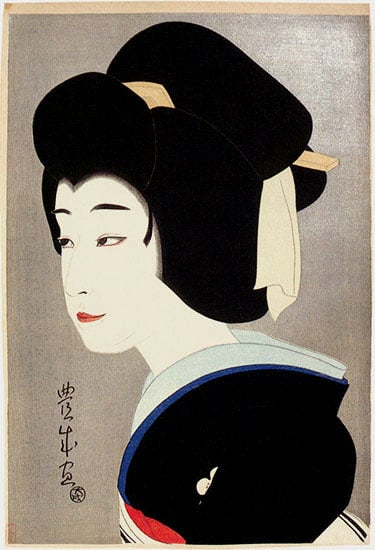
Yamamura Toyonari sanatçısının Sawamura Sonosuke I as Umegawa eseri hakkında uzman analizi
Tarz: Shin-hanga · Tür: yakusha-e
Expert Analysis: "Sawamura Sonosuke I as Umegawa" by Yamamura Toyonari
This print is a striking example of the Shin-hanga ("New Prints") movement’s revival of traditional yakusha-e (actor prints). Created by Yamamura Toyonari, a master of both painting and woodblock design, the work exemplifies how Shin-hanga artists modernized classic ukiyo-e genres while preserving their theatrical essence.
Significance within Shin-hanga and Yakusha-e:
-
Modernized Actor Portraiture – Unlike the bold, flat linework and aggressive compositions of earlier ukiyo-e actor prints (e.g., by Sharaku or Kunisada), Toyonari’s style reflects Shin-hanga’s emphasis on atmospheric subtlety and refined color harmony. The depiction of Sawamura Sonosuke I as Umegawa likely employs softer gradations (bokashi), a more naturalistic rendering of the actor’s features, and a delicate balance between figure and background—hallmarks of Shin-hanga’s departure from the mass-produced, formulaic actor prints of the late Edo period.
-
Collaboration with Skilled Carvers and Printers – Shin-hanga prints were produced through close collaboration between artist, carver, and printer. Toyonari’s use of luxurious paper, delicate embossing (karazuri), and mica or metallic pigments (if present) would elevate the portrait beyond mere documentation into a fine art object, appealing to early 20th-century collectors who sought a “modern ukiyo-e” revival.
-
Psychological Depth – The genre of yakusha-e traditionally captured a performer’s mie (climactic pose) or role type. Toyonari’s interpretation of Umegawa—a tragic courtesan role from the play Katsuragawa tsuyu no kototari—likely emphasizes introspective mood rather than dramatic action. The actor’s subtle expression and elegant posture reflect Shin-hanga’s interest in interiority and refined emotion, bridging kabuki’s stylized tradition with modern portraiture.
-
Toyonari’s Unique Contribution – As a lesser-known but highly skilled Shin-hanga artist, Toyonari specialized in bijinga (beautiful women) and yakusha-e. This print demonstrates his mastery of the ōban vertical format, using flowing kimono patterns and restrained color to focus attention on the actor’s character rather than spectacle.
Conclusion: This work is significant as a sophisticated fusion of kabuki tradition and early 20th-century print aesthetics, showing how Shin-hanga revitalized yakusha-e by prioritizing artistic quality, emotional nuance, and technical craftsmanship over mass-market appeal. It stands as a testament to Toyonari’s role in the movement’s effort to preserve and reinterpret Japan’s theatrical heritage for a modern audience.
Görsel olarak benzer
İlişkili kompozisyon ve renk paletine sahip 20 eser
Ichikawa Shocho II as Oman
Yamamura Toyonari
Bijin
Kiyokata Kaburagi
Portrait of Naniwaya Okita
Kitagawa Utamaro
Kabuki Actor Osagawa Tsuneyo II, Possibly in the Rôle of Ippei's Sister Osan
Tōshūsai Sharaku
True Beauties
Toyohara Chikanobu
Secret love
Kitagawa Utamaro
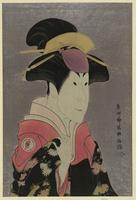
Segawa Tomisaburō as Yadorigi, Wife of Ogishi Kurando, by Tōshūsai Sharaku
Tōshūsai Sharaku
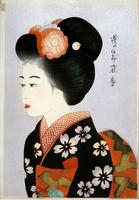
A Dancer of Kyoto
Yamamura Toyonari
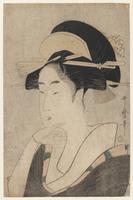
Large Head and Bust Portrait of Beauty
Kitagawa Utamaro
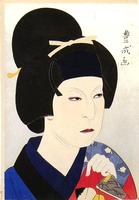
Nakamura Utaemon V as Owasa
Yamamura Toyonari
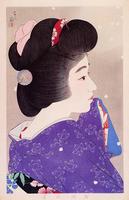
Misty Spring
Torii Kotondo
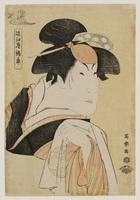
Kabuki Actor Nakayama Tomisaburō I as Ohisa, Wife of Sazanami Tatsugorō, Actually Teriha, the Younger Sister of Sadatō (aiban)
Tōshūsai Sharaku
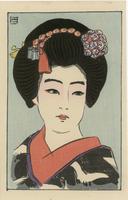
Gion no Nakako
Natori Shunsen
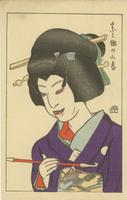
Sonosuke in the role of Koharu
Yamamura Toyonari
Nakamura Fukusuke as Ohan
Natori Shunsen
Iwai Hanshirō IV as San, the maid servant of Ukiyonosuke, actually Saeda, the younger sister of Sabanosuke
Tōshūsai Sharaku
Nakamura Utaemon as Hanako in Musume Dojoji
Natori Shunsen
Untitled
Kiyokata Kaburagi
The geisha kamekichi
Kitagawa Utamaro
Kotarō in the role of Yayoi
Natori Shunsen