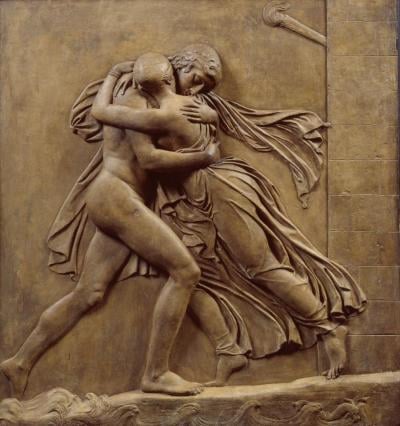
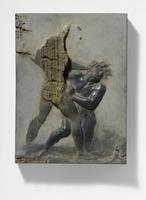
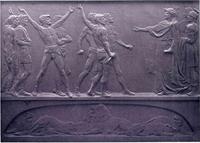
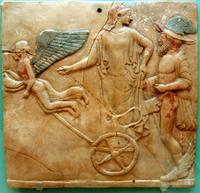
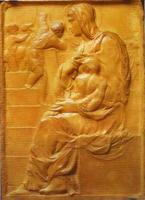
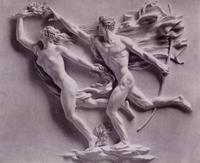
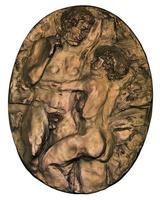
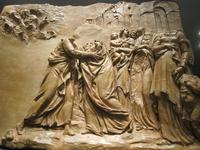
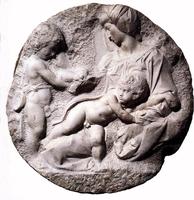
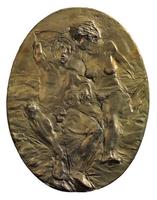
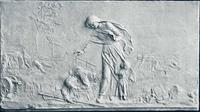
John Gibson’s The Meeting of Hero and Leander is a quintessential work of Neoclassical sculpture, embodying the movement’s core ideals of clarity, restrained emotion, and idealized form. As a sculpture, it translates a dramatic mythological narrative—the lovers’ tragic encounter—into a moment of poised equilibrium, typical of Neoclassicism’s preference for moral gravity over Baroque theatricality. Gibson’s treatment of the figures displays the rigorous anatomical precision and smooth, polished marble finish that defined the era’s pursuit of an antique aesthetic. The work’s significance lies in its demonstration of how Neoclassical sculptors elevated classical storytelling through balanced composition and serene grandeur, making it a key example of the style’s ambition to recover the noble simplicity of ancient art while infusing it with modern humanist sentiment.