Die prägenden Meisterwerke moderner und zeitgenössischer Kunst in New York
CE
Caleido Editorial Team9. Juni 202625 Min. Lesezeit0 Aufrufe
Das Museum of Modern Art in New York ist das einflussreichste Museum für moderne Kunst weltweit. Seit seiner Gründung 1929 hat das MoMA unser Verständnis davon geprägt, was moderne Kunst ist und sein kann. Seine Sammlung umfasst Malerei, Skulptur, Film, Design, Fotografie und Performance und repräsentiert die gesamte kreative Revolution des 20. und 21. Jahrhunderts.
Dieser Leitfaden stellt 30 wesentliche Werke vor, die man nicht verpassen sollte, von Van Goghs wirbelnder Sternennacht und Picassos bahnbrechenden Les Demoiselles d'Avignon bis hin zu Warhols ikonischen Campbell's Suppendosen und Monets immersiven Seerosen. Diese Werke zeichnen den Verlauf der Moderne nach.
Nutze die Checkliste, um zu verfolgen, welche MoMA-Meisterwerke du persönlich gesehen hast.
Vincent van Gogh · Post-Impressionism · sketch and study
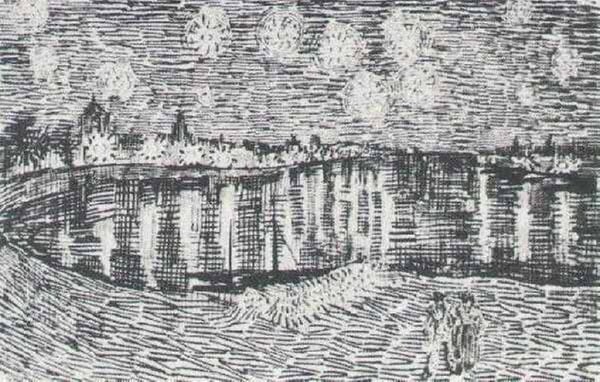
Sternennacht ist eines der bekanntesten Gemälde des niederländischen Künstlers Vincent van Gogh. Er malte das 73,7 × 92,1 cm große Bild im Juni 1889 in der südfranzösischen Kleinstadt Saint-Rémy-de-Provence im Stil des Post-Impressionismus bzw. frühen Expressionismus mit Ölfarben auf Leinwand. Das Bild ist seit 1941 im Besitz des Museum of Modern Art in New York City und wird dort unter dem Tit...
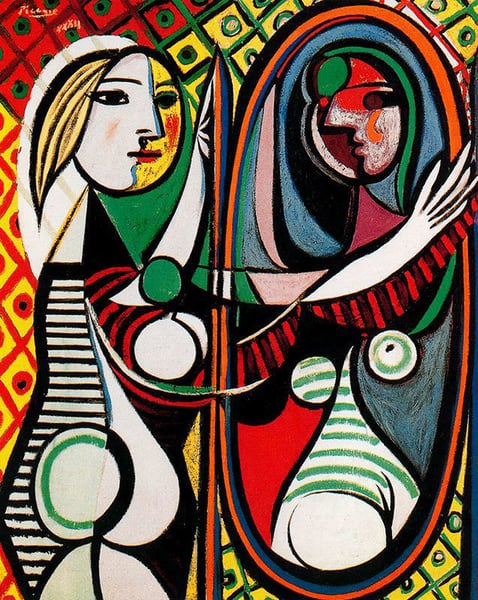
Les Demoiselles d’Avignon ist ein im Jahre 1907 von Pablo Picasso fertiggestelltes Gemälde. Es wird als Wendepunkt in der Geschichte der abendländischen Malerei angesehen und leitete zugleich den sich ankündigenden Kubismus ein. Das Werk befindet sich im Besitz des Museum of Modern Art in New York.
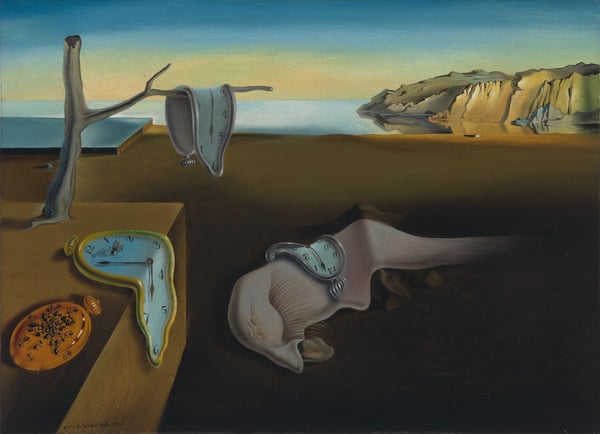
Die Beständigkeit der Erinnerung, auch Die zerrinnende Zeit oder Die weichen Uhren genannt, ist das bekannteste Gemälde des surrealistischen Malers Salvador Dalí aus dem Jahr 1931.
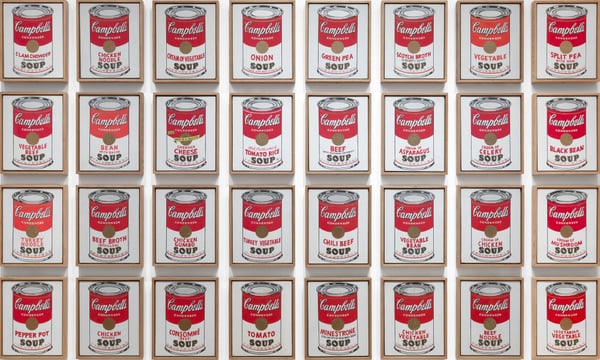
Campbell’s Soup Cans ist ein Kunstwerk des amerikanischen Künstlers Andy Warhol, das zwischen November 1961 und April 1962 hergestellt wurde. Es besteht aus 32 Leinwänden mit einer Höhe von jeweils 51 cm und einer Breite von 41 cm, die jeweils eine Sorte der von der Campbell Soup Company damals angebotenen Dosensuppen zeigen. Die Werke wurden im Siebdruckverfahren hergestellt und gehören zur Po...
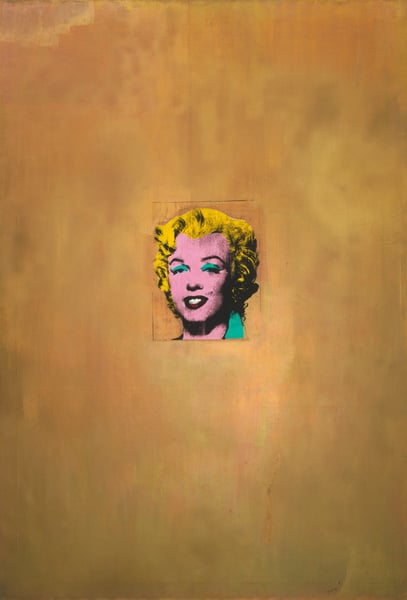
Gold Marilyn Monroe is a screenprint painting by Andy Warhol based on a photograph of the actress Marilyn Monroe's face centered on a large (6 ft 11 in (2.11 m) x 4 ft 9 in (1.45 m)) gold-painted canvas.[1][2] Warhol used silkscreen ink on synthetic polymer paint on canvas. It was completed in 1962, the same year as Monroe's death.[3] The image of Monroe is a direct copy of a close-up shot from...
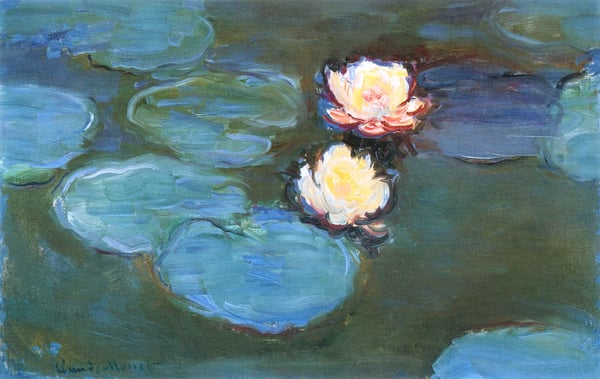
Water Lilies is a series of approximately 250 oil paintings by French Impressionist Claude Monet (1840–1926). The paintings depict his flower garden at his home in Giverny, and were the main focus of his artistic production during the last 31 years of his life. Many of the works were painted while Monet suffered from cataracts.
Andrew Wyeth · Contemporary Realism, RegionalismKunstwerk
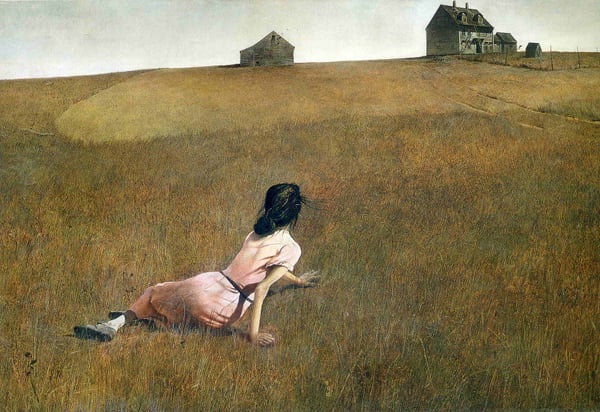
Andrew Wyeth · Contemporary Realism, Regionalism · genre painting
With her back to the viewer, Wyeth's subject Anna Christina Olson stares into the distance, looking out at her farmhouse in Cushing, Maine. Suffering from a degenerative muscular disease, Christina was unable to walk. Wyeth said that she was "limited physically but by no means spiritually" and that "the challenge was to do justice to her extraordinary conquest of a life which most people would ...
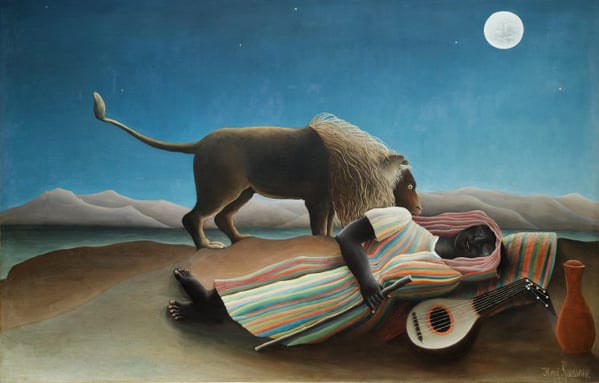
Henri Rousseau · Naïve Art (Primitivism) · genre painting
Die schlafende Zigeunerin ist ein Gemälde des französischen Malers Henri Rousseau aus dem Jahr 1897. Kunsthistorisch ist es sowohl der Kunstrichtung Post-Impressionismus, als auch der Naiven Malerei zuzuordnen. In der Zeit seiner Entstehung wurde es vom Publikum nicht verstanden und zurückgewiesen. Heute gehört es als Meisterwerk zur Sammlung des New Yorker Museums of Modern Art.
Henri Rousseau · Naïve Art (Primitivism) · allegorical painting
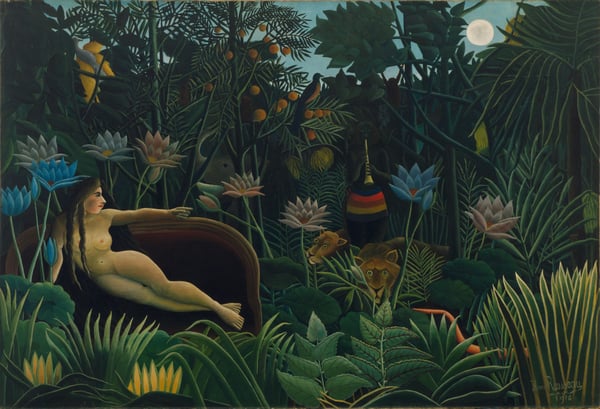
Created in the same year as his death, The Dream was Rousseau’s last painting, which was debuted only a few months before his untimely death. Upon its debut, Guillaume Apollinaire, referencing the negative reviews of previous years, exclaimed that this year, there would be no ridicule, as the painting exuded sheer beauty. With this piece, Rousseau brought together the exotic and the ordinary, t...
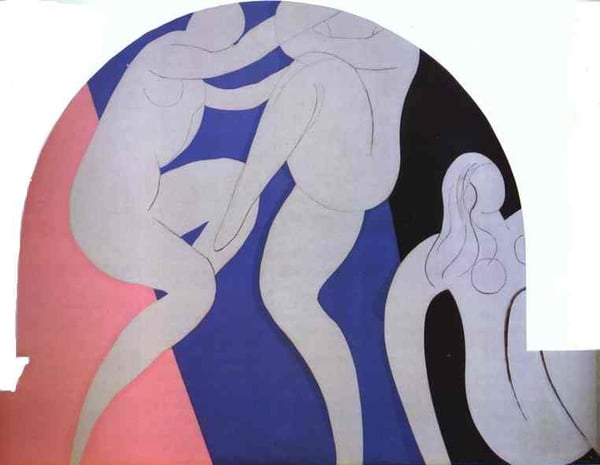
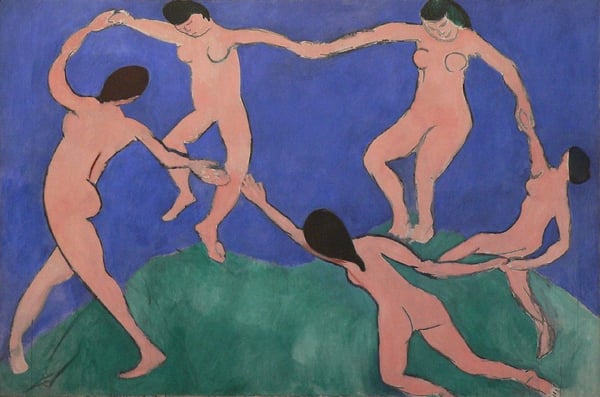
Der Tanz ist ein Gemälde von Henri Matisse. Matisse malte zwei Versionen vom Tanz. Die erste Fassung des Bildes von 1909 ist heute im Museum of Modern Art ausgestellt. Die zweite Fassung von 1909/10 befindet sich in der Eremitage. Sie war neben dem Gemälde La Musique eine Auftragsarbeit für den Moskauer Geschäftsmann und Kunstsammler Sergei Schtschukin.
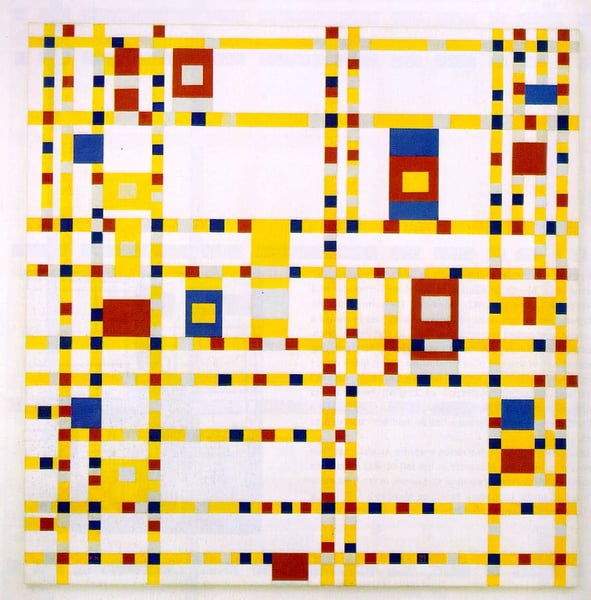
Considered Mondrian’s masterpiece, Broadway Boogie Woogie is a shimmering combination of multi-colored grid lines, complete with blocks of color, all in the primary palette. This piece represents another development in the unique style of the artist, which may have been the most profound. After the abandonment of representational forms in 1913 and the reconciliation of his spiritual concerns wi...
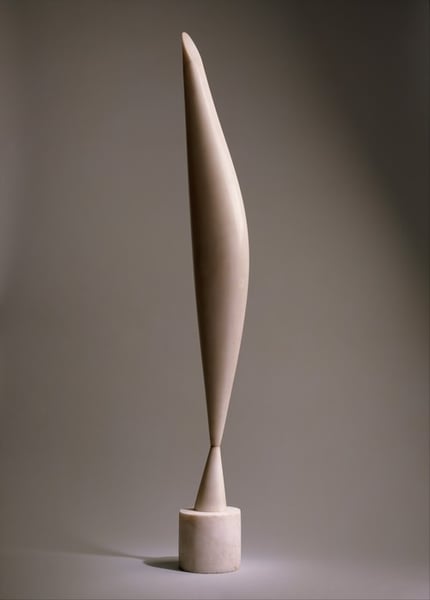
Bird in Space is a series of sculptures by Romanian sculptor Constantin Brâncuși. The original work was created in 1923 and made of marble. This sculpture is also known for containing seven marble figures and nine bronze casts. Brancusi created the piece over 14 times and in several mediums over a period of 20 years. It was sold in 2005 for $25.8 million, at the time a record price for a sculpt...
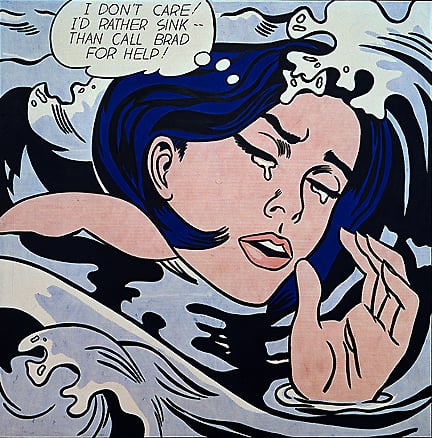
Drowning Girl is a 1963 American painting in oil and synthetic polymer paint on canvas by Roy Lichtenstein, based on original art by Tony Abruzzo. The painting is considered among Lichtenstein's most significant works, perhaps on a par with his acclaimed 1963 diptych Whaam!. One of the most representative paintings of the pop art movement, Drowning Girl was acquired by the Museum of Modern Art ...
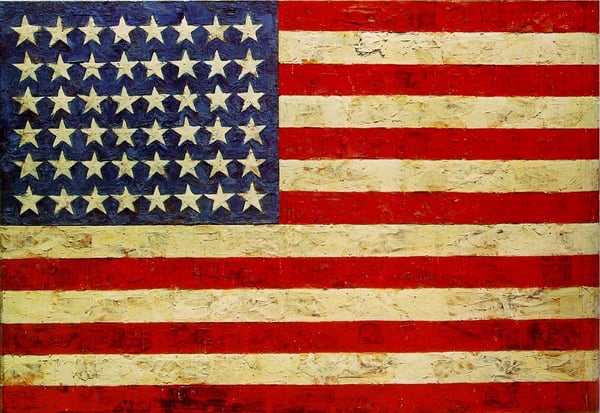
Eine Flagge ist eine abstrakte zweidimensionale Anordnung von Farben, Flächen und Zeichen in meist rechteckiger Form. Sie besteht in der Regel aus einem Tuch, aber auch andere Materialien wie Papier, Plastik oder Metall, finden Verwendung. Deren gemaltes Bild erfüllt oft dieselben Zwecke wie die eigentliche Flagge.
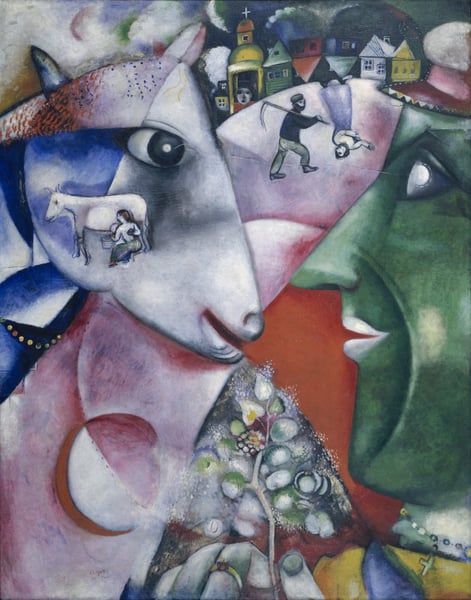
I and the Village is a 1911 oil-on-canvas painting by the Russian-French artist Marc Chagall created in 1911. It is exhibited at the Museum of Modern Art, New York.
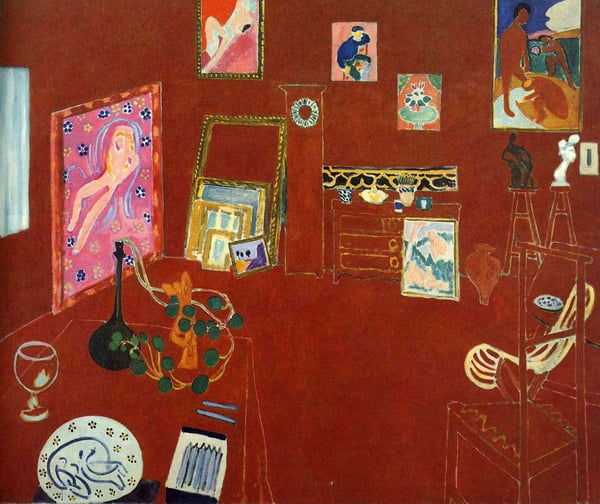
The Red Studio is an oil on canvas painting by French artist Henri Matisse from 1911. It is held in the collection of the Museum of Modern Art, in New York.
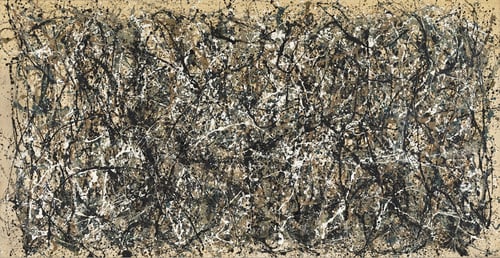
Number 1A, 1948 is a drip painting by Jackson Pollock created in 1948, exemplifying the abstract expressionist technique he developed during this period.
21
Three Musicians (1618)
Pablo PicassoKunstwerk
Diego Velazquez · Baroque · genre painting
Three Musicians is a Baroque genre painting by Diego Velázquez from 1618, depicting musicians in a domestic scene typical of seventeenth-century Spanish life.
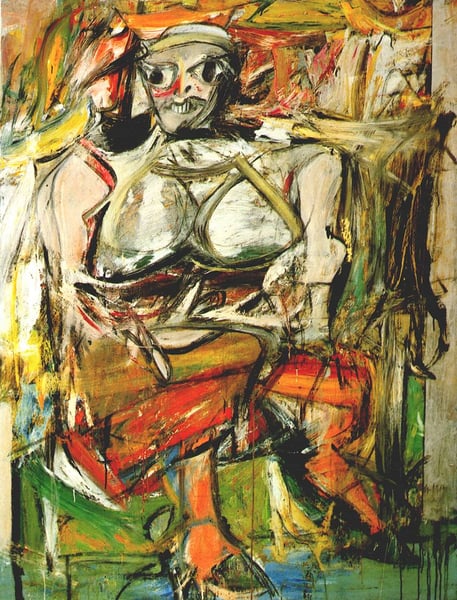
Willem de Kooning · Abstract ExpressionismKunstwerk
Willem de Kooning · Abstract Expressionism · portrait
'Woman I' is part of the 'Women' series that de Kooning presented at the Sidney Janis Gallery, causing controversy in the art world. The canvas is covered with vigorous, creamy, and silvery hues in a frenzy of vertical and horizontal gestures, from which a wide-eyed, large-breasted woman emerges, with blonde hair and a big smile. The figure appears constrained yet full of energy, and her taperi...
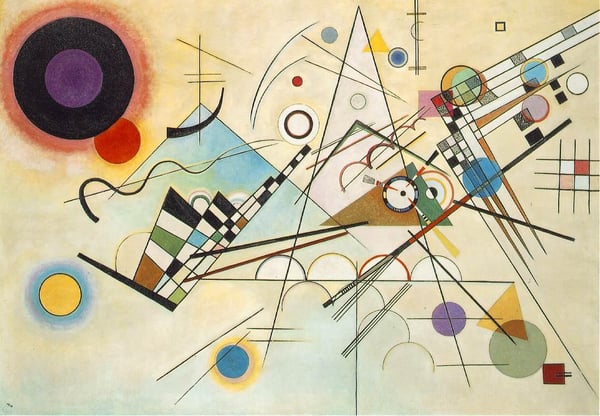
Composition VIII is an abstract work by Wassily Kandinsky from 1923. The painting employs geometric and non-representational forms characteristic of abstract art from that period.
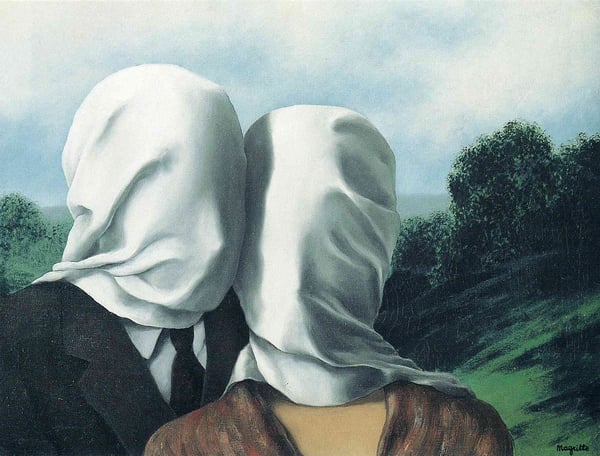
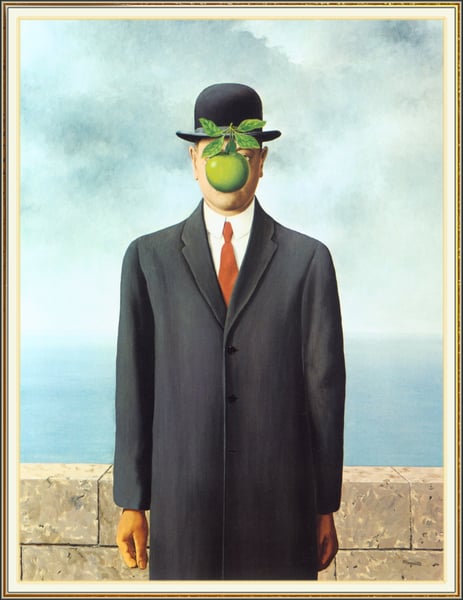
Magritte created two versions of this painting, of the same name, which both portray a large green apple in the middle of a room. This painting illustrates the many themes running through Magritte’s work. The first is the apple, which he uses to great lengths in many of his works, the most famous of which is The Son of Man, depicting a man wearing a bowling hat, with a green apple covering his ...
Georges Seurat · Pointillism, Neo-Impressionism · genre painting
Seated Bather depicts a seated figure, painted by Georges Seurat in 1883 using the pointillist technique characteristic of Neo-Impressionism. The work exemplifies Seurat's systematic application of small, discrete dots of color to build form and atmosphere, a method that became central to his artistic practice during this period.
26
The False Mirror
René MagritteKunstwerk
René Magritte
The False Mirror is a surrealist oil on canvas painting by René Magritte, from 1928. It depicts a human eye framing a cloudy, blue sky. In the depiction of the eye in the painting, the clouds take the place normally occupied by the iris. The painting's original French title is Le faux miroir.
Dance (I) is a Fauvist nude painting by Henri Matisse created in 1909. The work depicts figures in motion within the Fauvist idiom, characterized by the movement's bold use of color and simplified forms.
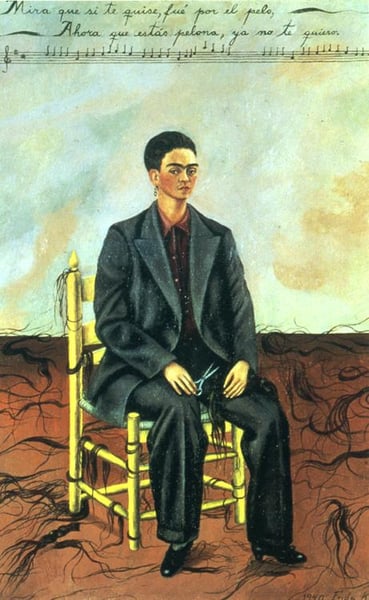
Self-Portrait with Cropped Hair is a painting by Frida Kahlo in which the artist depicts herself with shorn hair. The work employs the artist's characteristic style of unflinching self-representation, presenting a direct frontal gaze and meticulous attention to physiognomy.
Bar in den Folies Bergère ist ein Ölgemälde des französischen Künstlers Édouard Manet. Es entstand einige Monate vor seinem Tod im Frühjahr 1883 und zeigt eine Szene in dem Pariser Nachtclub Folies Bergère. Die Komposition wird von der Kritik als ein optisches Puzzle bezeichnet. Es stellen sich viele Fragen, die Anlass zu unterschiedlichen Spekulationen sind. Das Bild gilt als ein Wegbereiter d...
Noch keine Kommentare — sei der Erste.