Análisis experto de Poem 69-3 de Maki Haku
Estilo: Sōsaku hanga · Género: abstract
Expert Analysis: "Poem 69-3" by Maki Haku
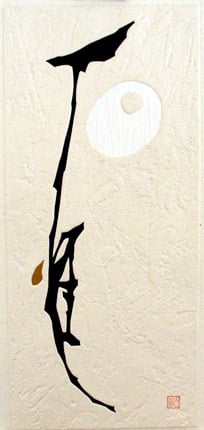
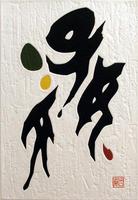
Maki Haku’s Poem 69-3 stands as a compelling example of the Sōsaku hanga (creative print) movement, a post-war Japanese print revolution that championed the artist as the sole creator—from carving and printing to composition. Within this context, the work’s abstract genre marks a significant departure from traditional ukiyo-e’s narrative or representational imagery, aligning with the movement’s embrace of personal expression and modern Western aesthetic influences.
What makes Poem 69-3 significant is its rigorous integration of calligraphic gesture with abstract form. Maki Haku, a master printmaker, often treated the print medium as a direct extension of brushwork, and here the “poem” likely refers to a visual transcription of rhythm or emotion rather than literal text. The work’s bold, carved lines and textured ink surfaces—hallmarks of Sōsaku hanga’s hand-printed process—create a dynamic tension between spontaneity and control. This piece exemplifies how the movement redefined Japanese printmaking: not as a reproduction of traditional subject matter, but as an autonomous, avant-garde art form. Its abstraction invites viewers to engage with pure form and materiality, bridging East Asian ink tradition and mid-20th-century international modernism.
Género
Estilo
Visualmente similares
20 obras con composición y paleta relacionadas
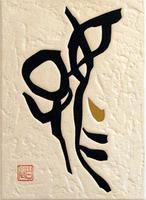
Poem 69-42
Maki Haku
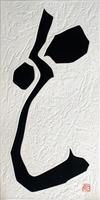
Work 73-45
Maki Haku
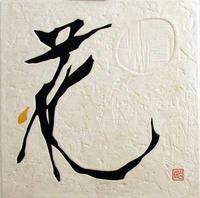
Poem 69-52
Maki Haku
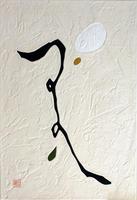
Poem 70-66
Maki Haku
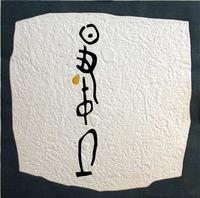
Poem Q
Maki Haku
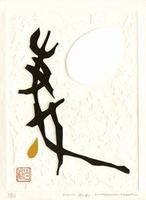
Poem 69-41
Maki Haku
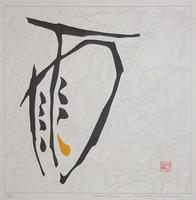
Poem 69-53
Maki Haku
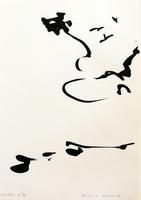
Birds in the clouds
Alfred Freddy Krupa
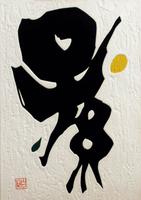
Poem 71-86 AP
Maki Haku
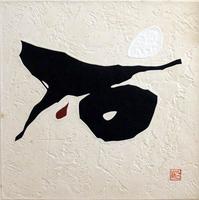
Poem 70-4
Maki Haku
Figure
Maki Haku
Poem 69-26
Maki Haku
Poem 69-8
Maki Haku
Poem 70-61
Maki Haku
Untitled
Jean Miotte
Tortoise A
Maki Haku
Dali's Moustache
Salvador Dali
Amsterdam
Pierre Alechinsky
Poem 71-84
Maki Haku
Work 73-18
Maki Haku